Listen to this Post
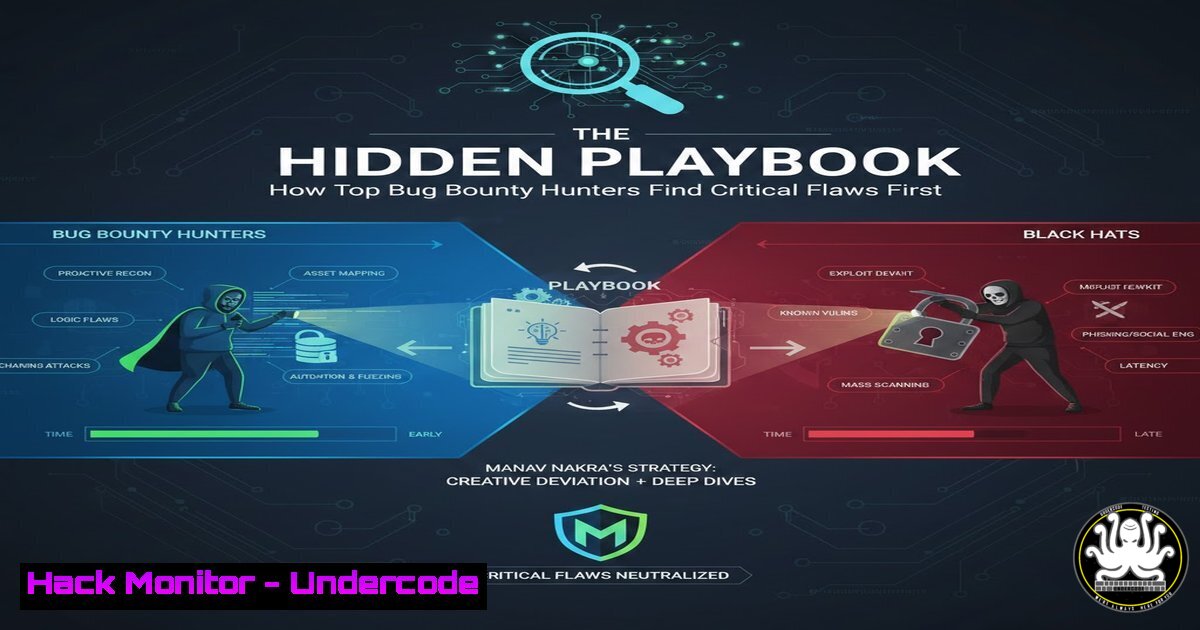
Introduction:
The digital frontier is under constant siege, with organizations racing to find vulnerabilities before malicious actors exploit them. This high-stakes game has given rise to the bug bounty ecosystem, where elite security researchers like Manav Nakra leverage their skills to uncover severe weaknesses in major corporations, earning recognition and rewards. Their work, often culminating in a public “Hall of Fame” entry or a “HIGH” severity bounty, represents the cutting edge of proactive, ethical cybersecurity defense, transforming individual expertise into collective security.
Learning Objectives:
- Understand the end-to-end methodology of a professional bug bounty hunter, from reconnaissance to proof-of-concept.
- Learn the specific tools and commands used for vulnerability discovery and validation across web applications and APIs.
- Develop the skills to responsibly document and report findings to meet the standards of major bug bounty platforms.
- The Art of Intelligent Reconnaissance (Passive & Active)
Extended Concept: Before testing a single endpoint, a successful hunter maps the entire attack surface. This involves discovering all domains, subdomains, and digital assets owned by a target company, which often reveals forgotten or misconfigured systems ripe for testing. This phase sets the stage for all subsequent testing.
Step‑by‑step guide:
- Passive Enumeration: Use tools to gather information without directly touching the target’s servers.
Command (Linux): `subfinder -d example.com -o subdomains.txt` (Uses Subfinder to find subdomains)
Command (Linux): `assetfinder –subs-only example.com | tee assets.txt` (Alternative using Assetfinder)
Tool: Use Sublist3r or Amass (amass enum -passive -d example.com) for broad discovery. -
Active Enumeration & Resolution: Probe the discovered subdomains to see which are live and what services they run.
Command (Linux): `cat subdomains.txt | httpx -silent -o live_subs.txt` (Httpx checks for live HTTP/HTTPS servers).
Command (Linux): `nmap -sV –top-ports 100 -iL live_subs.txt -oA nmap_scan` (Nmap scans for open ports and services on live hosts). -
Technology Fingerprinting: Identify the technologies (frameworks, CMS, server software) on each live asset to tailor your attacks.
Tool: Use Wappalyzer (browser extension) or `whatweb` command-line tool (`whatweb https://target.example.com`).
2. Vulnerability Discovery: Automating the Initial Hunt
Extended Concept: With a mapped target, hunters use automated scanners and fuzzers to identify common low-hanging fruit and potential injection points. This is not about blind exploitation but about efficiently finding “interesting” behaviors that warrant deep manual investigation.
Step‑by‑step guide:
- Automated Scanning (Use with Caution): Run controlled scans to identify obvious vulnerabilities. Be mindful of bounty program rules.
Tool: Configure Nuclei with community templates to check for known CVEs and misconfigurations.
Command (Linux): `nuclei -u https://target.example.com -t ~/nuclei-templates/ -o nuclei_findings.txt`
Tool: Use Burp Suite Professional’s built-in scanner on a specific, in-scope endpoint during authorized testing. -
Parameter Fuzzing: Discover hidden parameters, files, and directories that could be vulnerable.
Command (Linux): `ffuf -w /usr/share/wordlists/dirb/common.txt -u https://target.example.com/FUZZ -recursion` (Ffuf for directory brute-forcing).
Tool: Use Arjun (`python3 arjun.py -u https://target.example.com/api/endpoint`) to find hidden HTTP parameters in API endpoints.
3. Manual Exploitation & Proof-of-Concept Development
Extended Concept: This is where expertise shines. Automated tools provide clues, but manual testing confirms critical vulnerabilities like Business Logic Flaws, Advanced SQLi, and SSRF. This involves crafting precise payloads and understanding application flow.
Step‑by‑step guide:
- Testing for SQL Injection (SQLi): Manually test identified parameters with a series of payloads to confirm and map the database.
Initial Test: Append `’` or `”` to a parameter value and observe for errors or behavioral changes (e.g.,?id=1').
Confirmation & Exploitation: Use SQLmap judiciously, only after manual confirmation and where allowed.
Command (Linux): `sqlmap -u “https://target.example.com/page?id=1” –batch –level=2 –risk=2 –dbs` (Enumerates databases). -
Testing for Server-Side Request Forgery (SSRF): If a parameter appears to fetch a URL or file, test if it can access internal resources.
Payloads: Attempt to make the server call internal endpoints (http://127.0.0.1:8080/admin`) or external burp collaborator (http://burpcollaborator.net`).
Tool: Use Burp Suite’s Collaborator client to generate unique domains and detect out-of-band interactions. -
Business Logic Testing: Manually walk through multi-step processes (e.g., add to cart, apply coupon, checkout) looking for flaws like price manipulation, IDOR, or broken access control.
4. API Security: The Modern Attack Surface
Extended Concept: Modern apps are built on APIs (REST, GraphQL), which are prime targets. Hunters focus on broken authentication, excessive data exposure, mass assignment, and GraphQL-specific issues like introspection leaks.
Step‑by‑step guide:
- Discovering & Documenting API Endpoints: Use browser dev tools (Network tab) or proxy through Burp Suite while using the application to capture all API calls.
2. Analyzing for Weaknesses:
Missing Rate Limits: Use Turbo Intruder (Burp) to send hundreds of login/password reset requests to a single endpoint.
Insecure Direct Object Reference (IDOR): Change `”user_id”: 12345` to `”user_id”: 12346` in a request to see if you access another user’s data.
GraphQL Testing: If present, query the introspection system (__schema) to map the entire API. Test for batch operations that might bypass security checks.
5. Cloud & Infrastructure Misconfigurations
Extended Concept: A company’s main application might be secure, but its cloud storage (AWS S3, Azure Blobs) or metadata services might be exposed. Hunters look for publicly writable storage buckets, exposed `.git` directories, and vulnerable cloud instance metadata.
Step‑by‑step guide:
1. Cloud Storage Enumeration:
Tool: Use `s3scanner` or `cloud_enum` to find misconfigured buckets.
Command (Linux): `python3 cloud_enum.py -k examplecorp` (Searches for assets across AWS, Azure, GCP).
2. Checking for Sensitive File Exposure:
Command (Linux): Use `httpx` to check for common leaks: cat live_subs.txt | httpx -path "/.git/HEAD" -status-code -mc 200.
Manual Check: Always append `/cdn-cgi/trace` or `/phpinfo.php` to discovered assets to gather server info.
6. Crafting the Report That Earns the Bounty
Extended Concept: A well-documented, clear, and professional report is as important as the bug itself. It must enable triagers and developers to quickly understand, reproduce, and prioritize the issue.
Step‑by‑step guide:
- Structure: , Executive Summary, Steps to Reproduce (numbered list), Proof-of-Concept (PoC), Impact, Remediation Suggestions.
- Evidence: Include annotated screenshots, full HTTP request/response cycles (from Burp), and video PoCs for complex logic bugs.
- Clarity: Write for a developer who knows nothing about your discovery process. Avoid jargon. Clearly mark all modified parameters in requests.
7. Building Your Hunter Toolkit & Mindset
Extended Concept: Sustainable success requires a curated toolkit, continuous learning, and adherence to strict ethics. This involves setting up a dedicated testing environment, following researchers like Manav Nakra for insights, and contributing to the community.
Step‑by‑step guide:
- Lab Setup: Create a local virtual machine (Kali Linux, Parrot OS) or use cloud-based attack boxes (PentesterLab, TryHackMe).
- Tool Management: Use `apt` for system tools and `go install` for the latest community tools (e.g.,
go install github.com/projectdiscovery/subfinder/v2/cmd/subfinder@latest). - Continuous Learning: Regularly read write-ups on platforms like Medium (e.g., `medium.com/@manav_24` as shared by Nakra), PentesterLand, and watch walkthroughs on YouTube.
What Undercode Say:
The Methodology is the Product: The real value isn’t in any single tool, but in the rigorous, layered process of reconnaissance, automated hinting, deep manual exploitation, and clear reporting. This systematic approach is what separates a one-time find from a consistent bounty earner.
Context is King: Understanding the business logic of an application (e.g., how a coupon stack should work in an e-commerce app like Subway or OLA) is more likely to reveal critical flaws than relying solely on generic vulnerability scanners. The most severe bugs are often logic flaws that scanners cannot comprehend.
The analysis of Nakra’s achievement underscores a shift in cybersecurity: defensive perimeters are no longer enough. The proactive, adversarial testing embodied by bug bounty programs has become a non-negotiable component of enterprise security. Researchers operate as an outsourced, incentivized extension of the security team, finding the nuanced, chained vulnerabilities that traditional audits miss. This model democratizes security testing, but also raises the bar, requiring hunters to be part programmer, part system administrator, and part forensic analyst.
Prediction:
The role of the bug bounty hunter will evolve from a niche pursuit to a formalized, integrated component of the DevSecOps pipeline. We will see the rise of “Continuous Penetration Testing” platforms where hunters have sanctioned, real-time access to pre-production environments, finding and fixing flaws before they ever reach production. AI will augment hunters, not replace them—automating the tedium of reconnaissance and initial vector discovery while freeing human ingenuity for complex logic exploitation. Furthermore, the scope will expand beyond web assets to encompass entire cloud infrastructures, IoT ecosystems, and especially AI models themselves, where prompt injection, training data poisoning, and model theft will emerge as the next frontier for critical bounties.
🎯Let’s Practice For Free:
IT/Security Reporter URL:
Reported By: Manav2829 Bug – Hackers Feeds
Extra Hub: Undercode MoN
Basic Verification: Pass ✅


