Listen to this Post
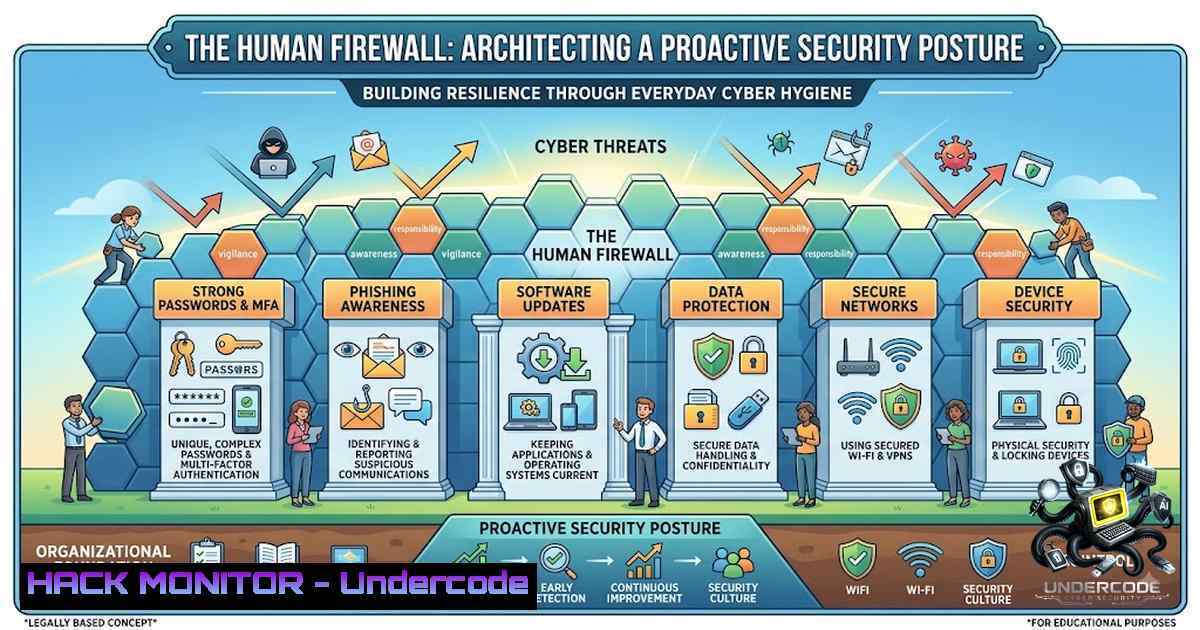
Introduction:
The contemporary cybersecurity landscape is often portrayed through the lens of sophisticated zero-day exploits and advanced persistent threats (APTs). However, a robust security architecture is fundamentally underpinned by a culture of rigorous cyber hygiene. While technological controls are essential, the human element remains the primary attack surface, making proactive habits such as multi-factor authentication (MFA), patch management, and secure configuration the first line of defense against pervasive social engineering and credential-based attacks.
Learning Objectives:
- Understand the critical role of user behavior in mitigating common attack vectors.
- Implement practical command-line and system configuration techniques to enforce security policies.
- Develop a repeatable framework for verifying digital assets and applying operational security (OPSEC).
You Should Know:
- Hardening Identity and Access Management (IAM) Locally and Remotely
The foundation of digital security is the authentication process. Weak passwords are a vulnerability, but poorly configured authentication mechanisms exacerbate the risk. In Linux environments, administrators should enforce password complexity using Pluggable Authentication Modules (PAM). For instance, to enforce a minimum length and complexity, you can modify the `/etc/security/pwquality.conf` file or use the `pam_pwquality.so` module. To check the password expiration policies for a user, use the `chage -l [bash]` command. This reveals the last password change date and the expiration schedule, ensuring compliance with organizational policies.
On Windows endpoints, local security policies are managed via secpol.msc. Navigate to Account Policies -> Password Policy to enforce settings like “Enforce password history” and “Minimum password length.” For Multi-Factor Authentication (MFA), Microsoft recommends leveraging conditional access policies within Azure AD or using third-party solutions like Duo Security. To check the status of Windows Hello for Business, which provides biometric and PIN-based MFA, administrators can use the PowerShell command Get-WindowsHelloForBusinessStatus. These measures ensure that even if credentials are compromised, the risk of unauthorized access is significantly mitigated.
2. Operationalizing Patch Management: A Command-Line Perspective
Vulnerability exploitation often targets unpatched software. Automating the update process is critical. For Linux distributions like Ubuntu or Debian, the Advanced Package Tool (APT) provides a straightforward method. The command sequence `sudo apt update && sudo apt upgrade -y` synchronizes the package index and installs all available upgrades. For Red Hat-based systems, the equivalent is `sudo yum update` or sudo dnf upgrade. To automate this, administrators can create a cron job (e.g., sudo crontab -e) to execute these commands weekly, though careful testing is recommended for production environments.
Windows administrators must manage the Windows Update cycle. Command-line options include `wuauclt /detectnow /updatenow` to force an immediate detection and installation of updates, or the newer `USOClient StartScan` and `USOClient DownloadInstall` commands available in later builds. For enterprise management, PowerShell cmdlets like `Get-WUList` from the PSWindowsUpdate module allow for more granular control over installed patches. This proactive approach closes security gaps before attackers can exploit them.
- Network Hygiene: Securing Wi-Fi and Verifying Digital Assets
“Secure networks” implies configuring wireless encryption and verifying network integrity. The `iwlist` command in Linux, specifically sudo iwlist wlan0 scan, can be used to discover available networks and inspect their encryption protocols. It is imperative to ensure that your access point uses WPA2 or WPA3, not the deprecated WEP.
Furthermore, verifying the authenticity of downloads is a non-1egotiable practice. In Linux, this is achieved through checksums. For example, after downloading a file, you can verify its SHA-256 hash using `sha256sum [bash]` and compare it against the official hash provided by the developer. On Windows, the `Get-FileHash` cmdlet in PowerShell serves the same purpose (Get-FileHash -Path C:\downloads\file.iso -Algorithm SHA256). This guards against supply chain attacks and ensures the file has not been tampered with during transit.
- Backups and Data Resilience: The Last Line of Defense
Ransomware attacks often hinge on the victim’s inability to recover data. A 3-2-1 backup strategy is the industry standard. From a technical perspective, Linux users can leverage `rsync` for incremental backups. The command `rsync -avz –progress /home/user/ /mnt/backup/user/` copies files over a network or locally while preserving permissions. To automate this with compression, one could use `tar -czvf backup.tar.gz /home/user` combined with a cron job.
For Windows, native tools like `wbadmin` facilitate command-line backups. For example, `wbadmin start backup -backupTarget:E: -include:C: -allCritical -quiet` will create a system state backup. Alternatively, PowerShell provides `Backup-Sqldatabase` and specific modules for various applications. The key metric is not just creating the backup, but testing the restore. Regularly simulating a data loss scenario using `rsync -1` (dry run) or reviewing backup logs ensures availability.
5. Tooling and Analysis: Wireshark and Process Monitoring
Proactive security often requires analyzing network traffic for anomalies. Wireshark, accessible via terminal (sudo wireshark), is an indispensable tool. Users should apply display filters to narrow down suspicious traffic. For instance, filtering for `http.request` can reveal unencrypted web traffic, while `dns` queries can highlight potential data exfiltration attempts. A specific filter for known malicious IP addresses can be added using ip.addr == [bash].
On the endpoint level, monitoring running processes is critical. In Linux, `ps auxf` provides a tree view of processes, which can help identify suspicious child processes. The `netstat -tulpn` command reveals listening ports and the associated executables, allowing an administrator to quickly identify unauthorized services. For Windows, `Tasklist /SVC` shows services and their Process Identifiers (PIDs), while `netstat -abno` is the equivalent for looking at network connections. Integrating these tools into routine analysis builds a resilient security posture.
What Undercode Say:
- Think Before You Click: In a simulated phishing environment, we often observe that technical safeguards are useless if users fail to validate the “Sender’s” address and the URL’s legitimacy.
- Verify Before You Trust: The absence of certificate validation or a mismatched checksum is a critical red flag. Always prioritize verification over convenience.
- Protect Before Something Goes Wrong: Proactivity is cheaper than reactivity. The cost of implementing MFA or configuring a cron job for updates is negligible compared to the cost of a data breach, which averages millions of dollars in recovery and reputational damage.
Analysis: The central theme underscores that “security” is a state of operation rather than a static product. For students, mastering the command-line tools mentioned above is not merely an academic exercise; it builds the “muscle memory” required for rapid incident response. The integration of these “everyday habits” into a systematic workflow—encompassing system hygiene, verification, and backup integrity—effectively reduces the attack surface by 80-90% against common commodity threats.
Prediction:
- +1: The rise of AI-driven phishing, which crafts grammatically perfect and context-aware emails, will force a paradigm shift from “verify before you trust” to “trust by default, verify by policy,” significantly boosting the demand for identity verification tools.
- -1: Without continuous user education and simulation, the “human firewall” will remain the weakest link, with adversaries increasingly targeting non-technical employees through business email compromise (BEC) and sophisticated social engineering, rendering endpoint security controls ineffective.
▶️ Related Video (84% Match):
🎯Let’s Practice For Free:
🎓 Live Courses & Certifications:
Join Undercode Academy for Verified Certifications
🚀 Request a Custom Project:
Secure, high-velocity infrastructure and disruptive technological engineering. Contact our engineering team for high-tier development and proprietary systems:
[email protected]
💎 Smart Architecture | 🛡️ Secure by Design | ⭐ Trusted by Thousands
IT/Security Reporter URL:
Reported By: Neel Bariya – Hackers Feeds
Extra Hub: Undercode MoN
Basic Verification: Pass ✅


