Listen to this Post
Introduction:
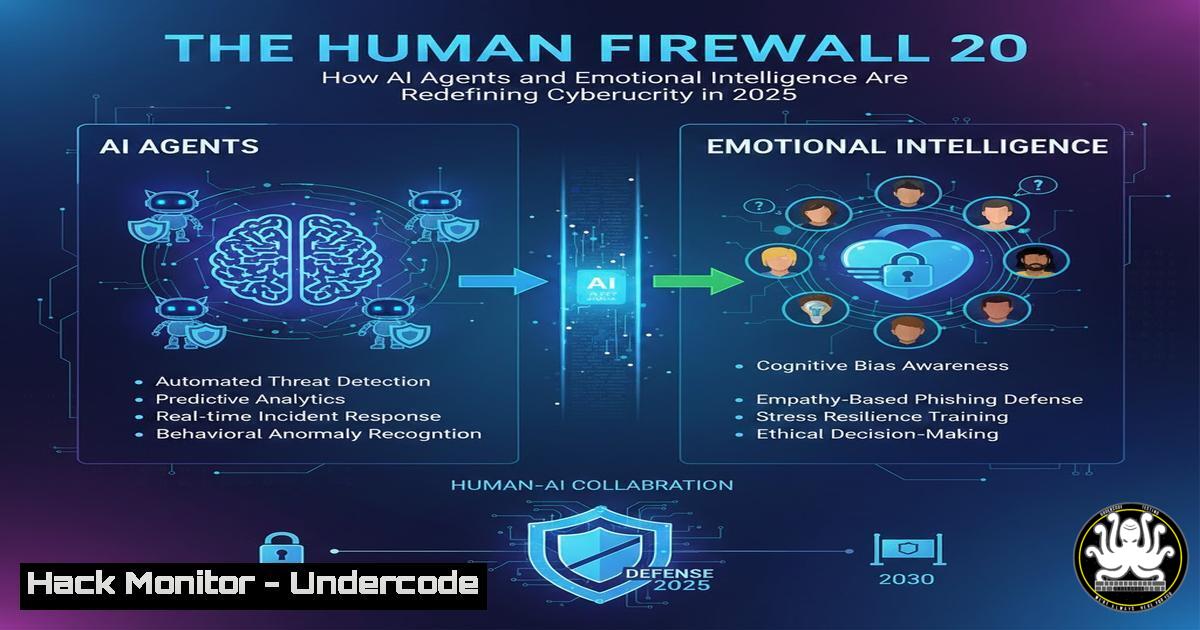
The convergence of Artificial Intelligence and human-centric security strategies dominated Cyber Week 2025, signaling a paradigm shift. As AI agents become integral to defense and offense, the industry consensus underscores that technological prowess alone is insufficient; the “soft skills” of communication, empathy, and process discipline are now critical technical controls. This article dissects the key technical and operational takeaways to future-proof your security posture.
Learning Objectives:
- Implement the four-pillar framework for securing AI integration across development, operations, and third-party partnerships.
- Develop the “Human OS” skills—EQ, storytelling, emotional regulation—required to lead technical teams and manage incidents effectively.
- Translate conceptual frameworks like “agentic control planes” and “capabilities-based risk assessment” into actionable hardening steps.
You Should Know:
- Securing the AI Agentic Control Plane: From Theory to Configuration
The “agentic control plane” refers to the orchestration layer that manages autonomous AI agents performing security tasks. Securing this plane is paramount, as it becomes a high-value attack target.
Step‑by‑step guide explaining what this does and how to use it.
Step 1: Enforce Human-in-the-Loop (HITL) Checkpoints. Configure your AI orchestration platform (e.g., LangChain, AutoGPT) to require human approval for critical actions. This can be implemented via conditional logic in your agent workflows.
Example Command (Conceptual API Call): `agent.execute(action=”quarantine_host”, host_id=”XYZ”, approval_required=True, approver_role=”soc_lead”)`
Step 2: Implement Robust Audit Logging for All Agent Actions. Every decision, data access attempt, and output generated by an AI agent must be logged in an immutable ledger. Use structured logging.
Example Linux Command (for logging): `journalctl _SYSTEMD_UNIT=my_ai_agent.service –output=json –since=”1 hour ago” | jq ‘. | {timestamp: .__REALTIME_TIMESTAMP, agent_id: ._SYSTEMD_INVOCATION_ID, action: .MESSAGE}’`
Step 3: Context and Intent Validation. As highlighted by speaker Dor Amit, AI must interpret human intent correctly. Build validation routines that check agent outputs against the original task’s context before execution to prevent prompt injection or mission drift.
2. Operationalizing the Four Pillars of AI Security
Moshe Aharon’s framework provides a blueprint for holistic AI governance. Let’s break it down technically.
Step‑by‑step guide explaining what this does and how to use it.
Pillar 1: Non-Confidential AI Services. Deploy Data Loss Prevention (DLP) rules specifically for AI tool traffic.
Action: In your enterprise proxy or CASB, create policies that block the uploading of specific data classifications (e.g., source code, PII) to unauthorized AI endpoints. Use predefined categories or custom regex patterns.
Pillar 2: AI in Software Development. Integrate security scanning into the AI-assisted dev pipeline.
Action: In your CI/CD pipeline (e.g., GitHub Actions, GitLab CI), add a step that scans AI-generated or -suggested code with SAST and SCA tools after the AI coding assistant step but before merge.
Example GitHub Actions Snippet:
- name: Scan AI-Generated Code for Secrets
uses: gitleaks/gitleaks-action@v2
with:
repo-token: ${{ secrets.GITHUB_TOKEN }}
path: ${{ github.workspace }}
Pillar 3 & 4: Monitor & Educate. Implement model output auditing and structured training. Use a SIEM to log all queries and responses from internal AI models, alerting on anomalous output patterns.
3. Building Your GitHub Threat Hunting Agent
Aner Izraeli demonstrated a shift from automation to prompt engineering for new security use cases. Here’s how to start building your own.
Step‑by‑step guide explaining what this does and how to use it.
Step 1: Define the Scope and Data Source. Your agent needs access and clear instructions. Create a dedicated service account with read-only access to your GitHub organization audit log and repository metadata.
Step 2: Craft the Core Prompt. The agent’s effectiveness lies in its prompt. It should include context, rules, and desired output format.
Example Prompt Structure: “You are a security threat hunting agent. Analyze the provided GitHub audit log entries from the last 24 hours. Identify any activity that matches these indicators: 1) API token creation from unrecognized IP ranges, 2) Bulk cloning of private repositories, 3) Permission escalation events. Format findings as a JSON report with severity level, event type, user, and timestamp.”
Step 3: Choose Your Orchestration. You can build this using OpenAI’s Assistants API, a custom script using the GitHub and LLM APIs, or within a security orchestration platform like Tines or Splunk SOAR. Schedule it to run daily and post findings to a dedicated security channel.
4. Capabilities-Based Risk Assessment: A Bidirectional Approach
John Yeoh discussed moving beyond checklist compliance to assessing what your organization is capable of doing to manage risk.
Step‑by‑step guide explaining what this does and how to use it.
Step 1: Map Controls to Capabilities. Don’t just list NIST controls. For each (e.g., “Incident Response”), define the concrete organizational capability: “Can the SOC isolate a compromised cloud workload within 5 minutes of alert?”
Step 2: Test the Capability Bidirectionally. This is the key.
Defensive Test (CCA-like): Run a tabletop exercise: “An EC2 instance is beaconing to a C2 server. Execute your isolation playbook.”
Offensive Test (OWASP-like): Task your red team or use automated tools to actually attempt to compromise and persist in a test workload, challenging the same capability from the attacker’s side.
Step 3: Measure and Iterate. The metric is not “control implemented,” but “capability verified.” Gaps identified become precise, justifiable budget requests for training or tooling.
- The CISO’s Technical Guide to EQ and Storytelling
Shahar Geiger Maor and the panel argued that EQ is a technical skill for CISOs. Here’s how to operationalize it.
Step‑by‑step guide explaining what this does and how to use it.
Step 1: Emotional Regulation During Incidents. Practice “tactical breathing” (4-7-8 technique) to maintain cognitive function under stress. This directly impacts incident command clarity.
Step 2: “Mirroring” for Better Briefings. When explaining a complex technical risk to the board, use analogies that mirror their world. Instead of “Lateral movement via pass-the-hash,” try “The attacker has cloned master keys from a janitor’s desk and is now accessing every office in the building.”
Step 3: The “Stakeholder Challenge” Map. As Nir Rothenberg advised, before a budget request, map each stakeholder’s primary challenge (e.g., CFO = cost overruns, CIO = system stability). Tailor your “story” for each, explaining how your proposal solves their specific problem.
What Undercode Say:
- AI Amplifies the Human Foundation. AI agents will not replace security leadership; they will exponentially amplify its quality. A solid process built on clarity and empathy, when augmented by AI, creates formidable defense. A dysfunctional team with poor communication, augmented by AI, will simply fail faster and at greater scale.
- The New Hierarchy of Needs: The presentations revealed an emerging hierarchy: Well-defined processes and emotional intelligence form the base. Upon this, automation can be built. Only upon a stable layer of automation can AI agents be safely and effectively deployed. Skipping layers leads to fragile and dangerous systems.
Prediction:
By 2027, the role of the CISO will bifurcate into two specialized, collaborative tracks: the Agent Architect, who possesses deep technical expertise in configuring, securing, and tuning AI agentic systems and their control planes, and the Human Systems Engineer, a master of process design, risk communication, and organizational psychology. The most resilient organizations will be those that recognize these as equally technical and critical disciplines, funding and empowering both. Major incidents will increasingly be root-caused to failures in the “human-AI interface”—misunderstood intent, lack of HITL, or poor emotional regulation during crisis—rather than to pure software vulnerabilities.
🎯Let’s Practice For Free:
IT/Security Reporter URL:
Reported By: Jordansnapper Cyber – Hackers Feeds
Extra Hub: Undercode MoN
Basic Verification: Pass ✅


