Listen to this Post
Introduction:
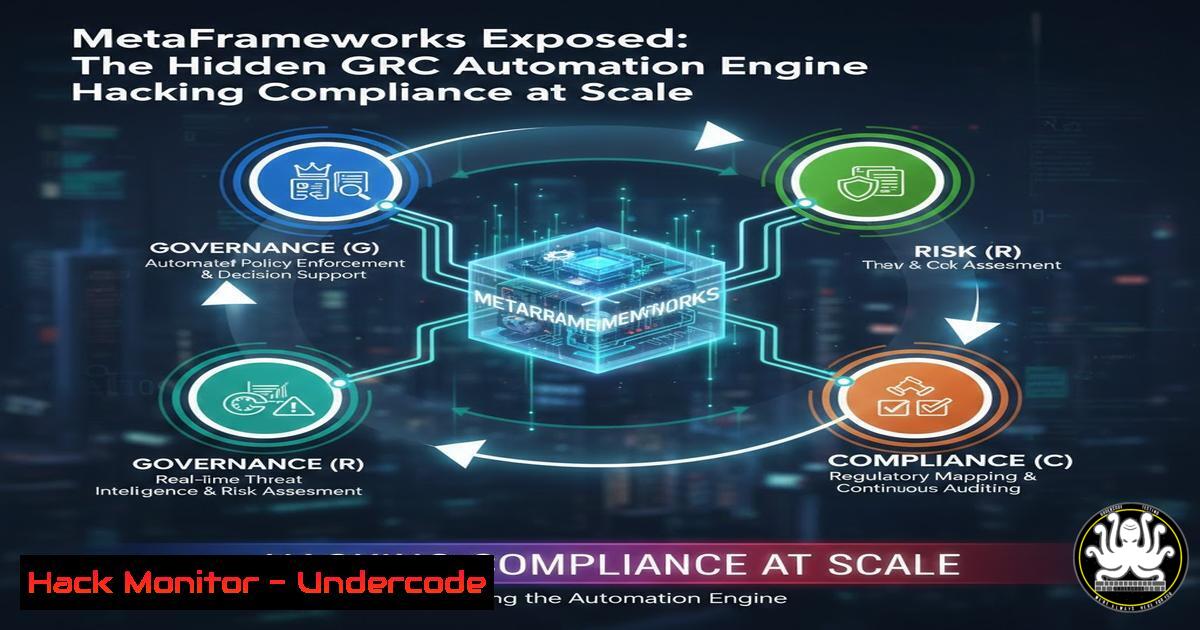
In an era of explosive regulatory growth, organizations are drowning in a sea of overlapping frameworks like NIST, ISO 27001, GDPR, and CIS Controls. The strategic response is the emergence of Governance, Risk, and Compliance (GRC) MetaFrameworks—a “framework of frameworks” designed to unify control sets and enable automated, scalable compliance operations. This evolution transforms GRC from a manual, audit-centric burden into a programmable, integrated component of the IT security fabric, leveraging automation and AI to maintain continuous assurance.
Learning Objectives:
- Decode the architecture and strategic value of a GRC MetaFramework.
- Implement technical mappings between major cybersecurity frameworks using automation tools.
- Operationalize MetaFramework controls through scripted hardening, continuous monitoring, and API-driven evidence collection.
You Should Know:
- Deconstructing the MetaFramework: From Theory to Technical Architecture
A GRC MetaFramework is not a new standard but an abstraction layer and a unified control set. Technically, it’s a centralized data model—often in JSON, YAML, or within a dedicated GRC platform—that maps equivalent security requirements across NIST CSF, ISO 27001:2022, PCI DSS, and others. The power lies in creating a single source of truth for controls, enabling automated evidence gathering and status reporting across all linked frameworks simultaneously.
Step‑by‑step guide:
- Define Your Core Control Taxonomy: Start by selecting a primary framework (e.g., CIS Critical Security Controls v8) as your baseline.
- Create Mapping Tables: Use a tool like the CIS Crosswalk or build a simple database table. For example, map `CIS Control 8: Audit Log Management` to `NIST CSF PR.PT-1` and
ISO 27001 A.12.4.1. - Implement in Code: Structure this as a machine-readable file.
meta_framework_controls.yaml
control_id: "LOG-001"
description: "Centralized Audit Log Management"
implementations:
cis_v8: "8.1, 8.2"
nist_csf: "PR.PT-1"
iso_27001: "A.12.4.1, A.12.4.3"
evidence_scripts:</li>
</ol>

- "scripts/collect_log_settings.sh"
- "powershell/Get-AuditPolicy.ps1"
2. Automating Framework Mapping with Open Source Tools
Manual mapping is unsustainable. Utilize open-source tools and scripts to parse framework specifications and suggest or confirm mappings.
Step‑by‑step guide:
- Leverage the Open Control Framework (OCF): OCF provides a standardized, machine-readable format for control information. Use its tools to convert framework documents.
- Script Your Crosswalk: Use Python to parse and relate controls. For instance, use keyword matching from control descriptions.
import yaml, json
Load your meta-framework YAML
with open('meta_framework_controls.yaml') as f:
base_controls = yaml.safe_load(f)
Load a NIST CSF JSON export (available from NIST's website)
with open('nist_csf.json') as f:
nist_controls = json.load(f)
Simple keyword matcher to suggest mappings
for base_ctrl in base_controls:
for nist_ctrl in nist_controls['controls']:
if all(word in nist_ctrl['description'] for word in base_ctrl['keywords']):
print(f"Potential Match: {base_ctrl['id']} -> {nist_ctrl['id']}")
3. Operationalizing Controls: From Policy to Enforced Configuration
A MetaFramework’s true test is the automatic enforcement and verification of its unified controls. This requires translating abstract controls into specific system configurations.
Step‑by‑step guide for a sample control (Ensure antivirus is installed and running):
– Linux (Ubuntu with ClamAV):Install and verify sudo apt update && sudo apt install clamav clamav-daemon -y sudo systemctl status clamav-daemon --no-pager -l Automated check script if systemctl is-active --quiet clamav-daemon; then echo "COMPLIANT: ClamAV daemon is active." else echo "NON-COMPLIANT: ClamAV daemon is not active." exit 1 fi
– Windows (via PowerShell & Defender):
 Check Defender status
$defenderStatus = Get-MpComputerStatus
if ($defenderStatus.AntivirusEnabled -and $defenderStatus.AntispywareEnabled) {
Write-Host "COMPLIANT: Windows Defender is active and enabled." -ForegroundColor Green
} else {
Write-Host "NON-COMPLIANT: Windows Defender is not fully enabled." -ForegroundColor Red
}
4. API-Driven Evidence Collection for Continuous Compliance
Modern GRC platforms use APIs to pull evidence directly from systems (cloud, SIEM, endpoint management). You can simulate this for a homegrown solution.
Step‑by‑step guide (Collect SSH configuration evidence from multiple Linux servers):
1. Create an Ansible Playbook to gather `sshd_config` and service status.gather_ssh_evidence.yml - hosts: linux_servers tasks: - name: Gather SSHd configuration ansible.builtin.fetch: src: /etc/ssh/sshd_config dest: "/tmp/evidence/{{ inventory_hostname }}/" flat: yes - name: Get SSH service status ansible.builtin.command: systemctl is-active sshd register: ssh_status - name: Save status to file ansible.builtin.copy: content: "{{ ssh_status.stdout }}" dest: "/tmp/evidence/{{ inventory_hostname }}/ssh_status.txt"2. Execute and Archive: Run the playbook and package evidence for your audit trail.
ansible-playbook -i inventory.ini gather_ssh_evidence.yml
tar -czf ssh_evidence_$(date +%Y%m%d).tar.gz /tmp/evidence/
- Cloud Hardening via Infrastructure as Code (IaC) aligned to MetaFrameworks
Embed MetaFramework controls directly into your cloud provisioning templates. For example, enforce encryption and logging for all AWS S3 buckets.
Step‑by‑step guide using AWS CloudFormation:
 compliant_s3_bucket.yml
AWSTemplateFormatVersion: '2010-09-09'
Resources:
CompliantS3Bucket:
Type: 'AWS::S3::Bucket'
Properties:
BucketName: !Sub 'my-compliant-bucket-${AWS::AccountId}'
VersioningConfiguration:
Status: Enabled  Aligns with CIS AWS 2.1.3
LoggingConfiguration:
DestinationBucketName: !Ref AccessLogsBucket
LogFilePrefix: 's3-access-logs/'
BucketEncryption:
ServerSideEncryptionConfiguration:
- ServerSideEncryptionByDefault:
SSEAlgorithm: 'AES256'  Aligns with CIS AWS 2.1.1
AccessLogsBucket:
Type: 'AWS::S3::Bucket'
Properties:
BucketEncryption:
ServerSideEncryptionConfiguration:
- ServerSideEncryptionByDefault:
SSEAlgorithm: 'AES256'
What Undercode Say:
- Key Takeaway 1: A GRC MetaFramework is fundamentally a data engineering challenge. Its success hinges on a clean, extensible data model for controls and their relationships, enabling automation at scale.
- Key Takeaway 2: The transition from static, document-based compliance to dynamic, evidence-based assurance is mandatory for modern IT ecosystems. This is achieved by linking MetaFramework control IDs directly to operational scripts, IaC templates, and API calls that prove state.
The strategic shift here is profound. By treating compliance requirements as codeable objects within a MetaFramework, security teams can integrate assurance directly into CI/CD pipelines and DevOps workflows. The “live” evidence collection via scripts and APIs moves organizations from point-in-time audit panic to continuous, demonstrable compliance. The next evolution will see AI not just mapping frameworks, but predicting control failures and auto-remediating configurations based on the unified MetaFramework policy set, making GRC a real-time, self-healing component of the security posture.
Prediction:
Within the next 3-5 years, GRC MetaFrameworks will become the central policy engine for autonomous security operations. AI agents will use these unified control sets to continuously interpret new regulations, dynamically adjust technical policies across hybrid environments, and generate audit-ready evidence with minimal human intervention. This will collapse the traditional compliance cycle time from months to hours, fundamentally altering the role of auditors and GRC professionals toward overseeing and tuning these autonomous systems. The organizations that master this integration will not only reduce compliance overhead but will achieve a significantly more resilient and verifiable security posture.
🎯Let’s Practice For Free:
IT/Security Reporter URL:
Reported By: Intuitem La – Hackers Feeds
Extra Hub: Undercode MoN
Basic Verification: Pass ✅🔐JOIN OUR CYBER WORLD [ CVE News • HackMonitor • UndercodeNews ]
📢 Follow UndercodeTesting & Stay Tuned:


