Listen to this Post
Introduction:
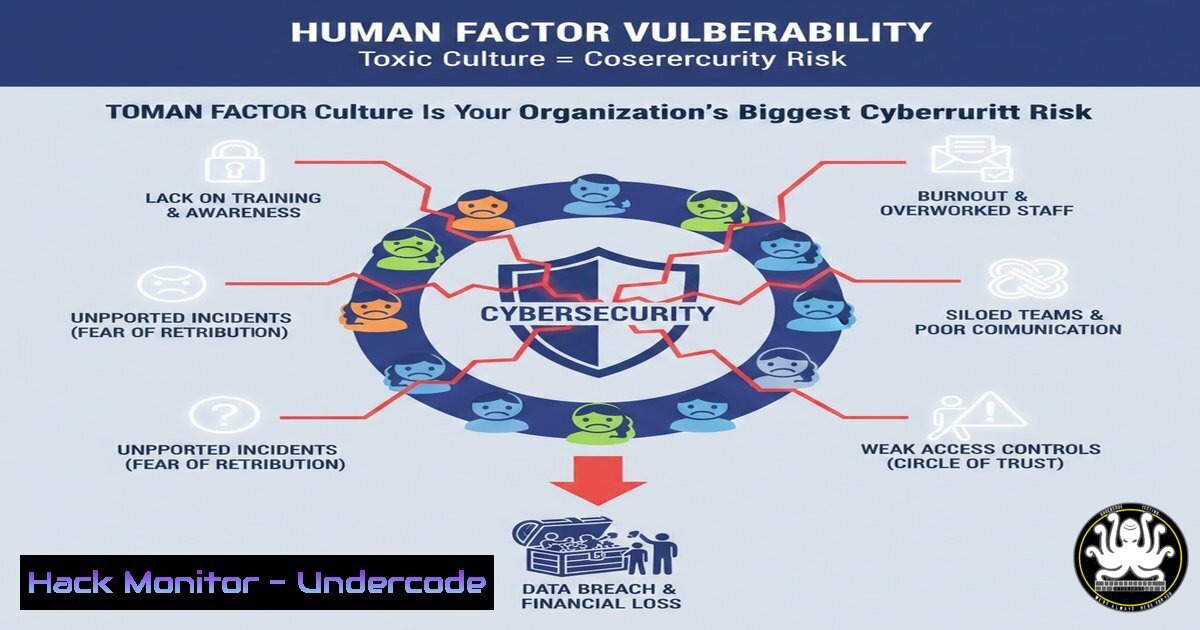
While organizations invest heavily in firewalls and encryption, the most significant vulnerability often remains unpatched: toxic workplace culture. Disengaged employees in hostile environments become walking security liabilities, whether through intentional malice or negligent oversight. This human factor represents a critical attack vector that technical controls alone cannot mitigate.
Learning Objectives:
- Understand how toxic culture directly correlates with increased cybersecurity incidents
- Implement technical monitoring for insider threat indicators without creating surveillance culture
- Develop security policies that address human behavioral risks alongside technical vulnerabilities
- Create detection mechanisms for culture-induced security negligence
- Build security awareness programs that account for organizational psychology
You Should Know:
1. The Disgruntled Employee: Your Biggest Insider Threat
Toxic environments create the perfect breeding ground for insider threats. Research shows that employees who feel undervalued are significantly more likely to engage in data theft, sabotage, or security negligence.
Step-by-step guide:
- Implement privileged access management (PAM) to limit potential damage
- Configure audit logging for sensitive data access:
Linux: Enhance auditd configuration
auditctl -a always,exit -F arch=b64 -S open -S openat -S creat -S truncate -F path=/etc/passwd -k critical-files
auditctl -a always,exit -F arch=b64 -S open -S openat -S creat -S truncate -F dir=/home/confidential -p rwxa -k confidential-access

Windows: Enable detailed file audit
auditpol /set /subcategory:"File System" /success:enable /failure:enable
- Deploy User Behavior Analytics (UBA) tools to detect anomalies in access patterns
- Establish clear separation of duties and least privilege principles
2. Culture-Driven Security Negligence: The Password Problem
Employees in toxic environments often demonstrate careless security behaviors, including password reuse, writing down credentials, or sharing access unnecessarily.
Step-by-step guide:
- Enforce multi-factor authentication across all systems:
Linux PAM configuration for 2FA
auth required pam_google_authenticator.so
auth required pam_unix.so use_first_pass
- Implement and enforce password complexity requirements:
Linux pam_pwquality configuration
password requisite pam_pwquality.so retry=3 minlen=12 dcredit=-1 ucredit=-1 ocredit=-1 lcredit=-1
- Deploy password managers enterprise-wide with enforced usage policies
- Conduct regular password audits and require mandatory changes
3. Phishing Susceptibility in Stressed Environments
Research indicates that employees under psychological stress or dissatisfaction are significantly more likely to fall for phishing attacks due to reduced vigilance.
Step-by-step guide:
- Implement advanced email security controls:
SPF, DKIM, DMARC configuration for domain
v=spf1 mx ip4:192.0.2.0/24 include:_spf.google.com ~all
- Deploy automated phishing simulation tools with targeted training
- Configure SIEM alerts for suspicious email activity:
Splunk query for potential credential phishing
index=email (url="login" OR url="credentials") | stats count by src_user, url
- Establish immediate reporting procedures for suspected phishing attempts
4. The Innovation Security Paradox
Toxic cultures that punish failure create environments where employees circumvent security protocols to meet deadlines or avoid confrontation, creating shadow IT and unauthorized system access.
Step-by-step guide:
- Implement cloud access security broker (CASB) to monitor shadow IT
- Deploy network access control (NAC) to detect unauthorized devices:
Cisco ISE configuration example
device-sensor filter-list ssh-filter
protocol ssh
no shutdown
- Create secure development environments with approved tools
- Establish security amnesty programs for reporting policy violations
5. Data Exfiltration Through Cultural Erosion
When loyalty deteriorates, the risk of intellectual property theft increases dramatically. Disgruntled employees may extract sensitive data before departure.
Step-by-step guide:
- Implement data loss prevention (DLP) systems:
Windows FSRM for data classification and screening New-FsrmFileGroup -Name "ConfidentialFiles" -IncludePattern @(".confidential", ".secret") New-FsrmFileScreenTemplate -Name "BlockConfidential" -Active:$true -IncludeGroup "ConfidentialFiles" - Configure network monitoring for large data transfers:
Suricata rule for large outbound transfers
alert ip any any -> $EXTERNAL_NET any (msg:"Large Outbound Transfer"; flow:established,to_server; content:"|00 00 00 00|"; depth:4; threshold:type threshold, track by_src, count 5, seconds 60; sid:1000001; rev:1;)
- Establish offboarding procedures that immediately revoke access
- Monitor for unusual download patterns and access to unrelated data
6. The BYOD Security Nightmare
In environments with inadequate resources or restrictive policies, employees often resort to unauthorized devices and applications to perform their work.
Step-by-step guide:
- Implement mobile device management (MDM) with containerization
- Configure conditional access policies:
Azure AD Conditional Access policy example New-AzureADMSConditionalAccessPolicy -DisplayName "Require compliant device" -State "enabled" -Conditions @{...} - Deploy network segmentation for guest and personal devices
- Establish clear BYOD policies with security requirements
7. Building a Security-Positive Culture
Transforming organizational culture to support security requires deliberate effort beyond technical controls, focusing on psychological safety and shared responsibility.
Step-by-step guide:
- Implement security champion programs with recognition
- Conduct regular security culture assessments and surveys
- Create transparent incident reporting without blame:
Anonymous reporting system integration
Encrypted whistleblower portal implementation
- Integrate security metrics into performance evaluations
- Establish cross-functional security committees with executive sponsorship
What Undercode Say:
- Toxic culture creates technical debt in human form that cannot be patched with software updates
- The most sophisticated security stack will fail if the humans operating it are actively or passively working against it
- Security awareness training has significantly reduced ROI in environments with poor psychological safety
- Insider threat programs must balance monitoring with trust to avoid creating the very problems they aim to solve
- Organizational culture should be treated as a critical security control with regular assessments and continuous improvement
The connection between workplace culture and cybersecurity effectiveness represents one of the most underappreciated relationships in information security. While organizations spend millions on advanced threat detection and prevention technologies, they often ignore the human infrastructure that ultimately determines whether these investments succeed or fail. A positive security culture doesn’t just happen—it requires the same deliberate design, implementation, and monitoring as any other critical security control. Technical teams must collaborate with HR and leadership to create environments where security-conscious behavior is not just expected but naturally emerges from a foundation of trust, transparency, and mutual respect.
Prediction:
Within the next 2-3 years, we will see regulatory frameworks begin to mandate organizational culture assessments as part of cybersecurity compliance requirements, similar to how financial controls are audited. Insurance providers will increasingly demand culture metrics as part of cyber insurance underwriting. As AI-driven social engineering becomes more sophisticated, the human vulnerability created by toxic cultures will be exploited at scale, leading to catastrophic breaches that finally force organizations to treat cultural health as a primary defense mechanism rather than a “soft” HR issue. The convergence of workplace analytics and security monitoring will create new categories of culture-security integration tools that proactively identify organizational vulnerabilities before they manifest as security incidents.
🎯Let’s Practice For Free:
IT/Security Reporter URL:
Reported By: Irina Ayukegba – Hackers Feeds
Extra Hub: Undercode MoN
Basic Verification: Pass ✅


