Listen to this Post
Introduction:
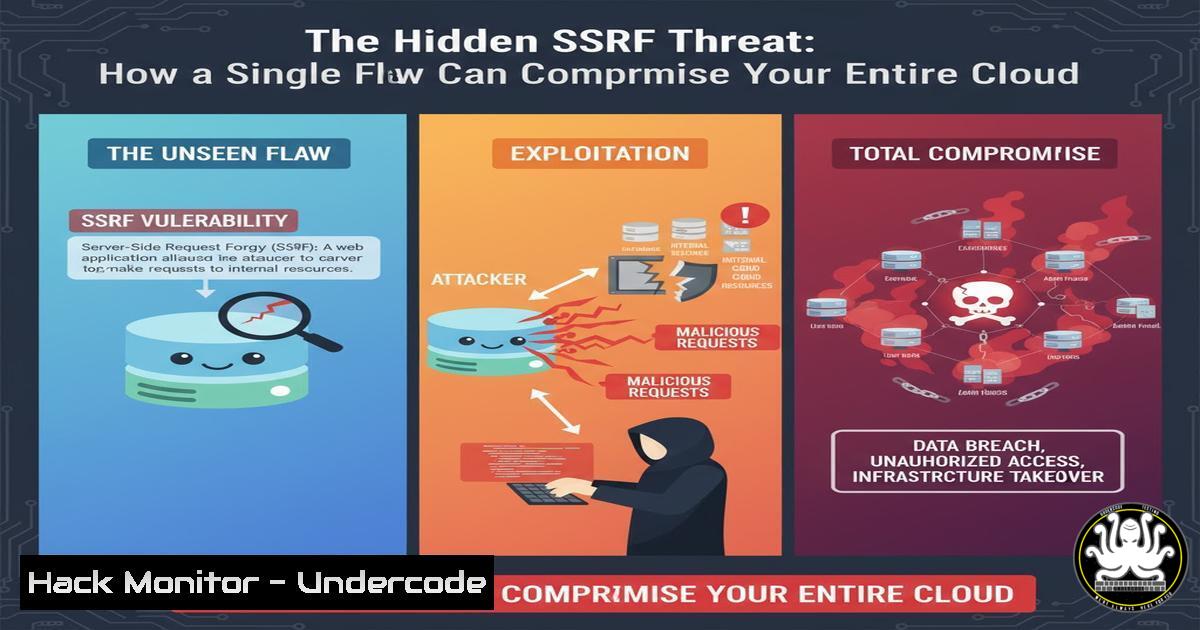
Server-Side Request Forgery (SSRF) vulnerabilities represent one of the most critical threats to modern cloud infrastructure, allowing attackers to bypass firewalls and make unauthorized requests from vulnerable applications. The recent discovery of a potential SSRF vulnerability in Apache CloudStack underscores how even well-maintained open-source projects can harbor these dangerous flaws that expose internal cloud assets to external attackers.
Learning Objectives:
- Understand SSRF attack vectors and their impact on cloud environments
- Master detection and mitigation techniques for SSRF vulnerabilities
- Implement security hardening for cloud management platforms
You Should Know:
1. SSRF Detection with curl and Test Servers
curl -v "http://vulnerable-app.com/proxy?url=http://169.254.169.254/latest/meta-data/"
curl -v "http://vulnerable-app.com/export?url=file:///etc/passwd"
curl -v "http://vulnerable-app.com/fetch?url=http://localhost:8080/admin"
This methodology tests for SSRF by attempting to access internal endpoints, cloud metadata services, and local files. Start by setting up a test server using `python3 -m http.server 8080` to monitor outgoing requests. Use curl with verbose flags to trace request paths and identify if the application is proxying requests to restricted networks.
2. CloudStack Security Hardening Commands
 Verify CloudStack management server configuration
cloudstack-management status
csmanage -v --check-config

Secure CloudStack database access
mysql -u cloudstack -p -e "SHOW GRANTS FOR 'cloudstack'@'localhost';"
mysql -u cloudstack -p -e "REVOKE ALL PRIVILEGES ON . FROM 'cloudstack'@'%';"

Harden API endpoint security
cs-config -u admin -p [bash] set security.allow.internal.ips false
cs-config -u admin -p [bash] set api.allowed.source.cidr "192.168.1.0/24"
These commands verify CloudStack management server status, secure database privileges to prevent unauthorized access, and configure API security settings to restrict internal IP access and limit API calls to specific network ranges.
3. Network Segmentation and Firewall Rules
 iptables rules to block internal network access from CloudStack
iptables -A OUTPUT -d 10.0.0.0/8 -j DROP
iptables -A OUTPUT -d 172.16.0.0/12 -j DROP
iptables -A OUTPUT -d 192.168.0.0/16 -j DROP
iptables -A OUTPUT -d 169.254.0.0/16 -j DROP

Windows Firewall equivalent
New-NetFirewallRule -DisplayName "Block Internal Networks" `
-Direction Outbound -RemoteAddress 10.0.0.0/8,172.16.0.0/12,192.168.0.0/16 -Action Block
Implement network segmentation by blocking outbound traffic to RFC 1918 addresses and cloud metadata services from application servers. This prevents successful SSRF attacks from reaching critical internal infrastructure even if the vulnerability exists.
4. SSRF Mitigation with Input Validation
 Python SSRF protection example
import re
from urllib.parse import urlparse

def is_safe_url(url):
parsed = urlparse(url)
blocked_ips = ['127.0.0.1', 'localhost', '0.0.0.0', '169.254.169.254']
blocked_nets = ['10.', '172.16.', '192.168.', 'fc00:']

if parsed.hostname in blocked_ips:
return False

for net in blocked_nets:
if parsed.hostname.startswith(net):
return False

return parsed.scheme in ['http', 'https'] and parsed.port not in [22, 3389, 5432]

Node.js SSRF protection
const { URL } = require('url');
const isSafeURL = (inputURL) => {
const url = new URL(inputURL);
const unsafeHosts = /^(127.|10.|172.(1[6-9]|2[0-9]|3[0-1]).|192.168.|169.254.)/;
return !unsafeHosts.test(url.hostname) && ['http:', 'https:'].includes(url.protocol);
};
Implement strict input validation that whitelists allowed protocols and blocks access to internal IP ranges, localhost, and cloud metadata endpoints. This server-side validation acts as the first line of defense against SSRF attacks.
5. Web Application Firewall (WAF) Configuration
 ModSecurity rules for SSRF protection
SecRule ARGS "@validateUrlScheme" \
"id:1001,phase:2,deny,status:403,msg:'SSRF Attempt - Invalid URL Scheme'"

SecRule ARGS "@rx ^(file|gopher|dict|ftp|sftp)://" \
"id:1002,phase:2,deny,status:403,msg:'SSRF Attempt - Dangerous Protocol'"

SecRule ARGS "@contains 169.254.169.254" \
"id:1003,phase:2,deny,status:403,msg:'SSRF Attempt - AWS Metadata Access'"

CloudFlare WAF custom rules
(http.request.uri contains "url=http://10.") or
(http.request.uri contains "url=http://192.168.") or
(http.request.uri contains "url=file://")
Configure WAF rules to detect and block SSRF patterns including dangerous protocols, internal IP addresses, and cloud metadata endpoints. These rules provide an additional security layer even if application-level protections fail.
6. Cloud Metadata Service Protection
 AWS IMDSv2 enforcement (requires token)
aws ec2 modify-instance-metadata-options \
--instance-id i-1234567890abcdef0 \
--http-tokens required \
--http-put-response-hop-limit 1

Azure Instance Metadata Service protection
az vm update --name MyVm --resource-group MyResourceGroup --set osProfile.allowExtensionOperations=false

GCP metadata server protection
gcloud compute project-info add-metadata \
--metadata=enable-oslogin=TRUE
Enforce secure metadata service configurations across cloud providers. AWS IMDSv2 requires session tokens, preventing simple SSRF attacks from accessing instance metadata. Disable unnecessary extension operations and enable OS login for additional security.
7. Automated SSRF Scanning and Monitoring
 Nuclei template for SSRF detection
id: ssrf-test

info:
name: SSRF Vulnerability Check
author: security-researcher
severity: high

http:
- method: GET
path:
- "{{BaseURL}}/proxy?url=http://burpcollaborator.net"
- "{{BaseURL}}/fetch?url=http://169.254.169.254"

matchers:
- type: word
part: interactsh_protocol
words:
- "http"
- "dns"

Custom SSRF detection script
!/bin/bash
TARGET="$1"
INTERNAL_IPS="127.0.0.1,169.254.169.254,10.0.0.1"
for ip in $(echo $INTERNAL_IPS | sed "s/,/ /g"); do
curl -s "$TARGET?url=http://$ip" | grep -q "metadata" && echo "VULNERABLE: $ip"
done
Implement automated scanning using tools like Nuclei with custom templates to detect SSRF vulnerabilities. Regular security testing should include attempts to access internal resources and monitoring for outbound requests to controlled servers.
What Undercode Say:
- Cloud management platforms represent high-value targets for SSRF attacks due to their privileged network position
- Defense-in-depth strategies combining network segmentation, input validation, and metadata protection are essential
- The shift toward zero-trust architectures makes SSRF prevention a cornerstone of cloud security
The discovery of potential SSRF vulnerabilities in foundational projects like Apache CloudStack highlights systemic challenges in secure development practices. As organizations accelerate cloud adoption, the attack surface for SSRF expands dramatically. Modern applications increasingly rely on external service integration and URL fetching functionality, creating numerous potential entry points for attackers. The security community must prioritize SSRF protection through standardized validation libraries, improved developer education, and robust security defaults in cloud platforms. The economic impact of SSRF vulnerabilities continues to grow as attackers exploit them for cloud resource hijacking, data exfiltration, and lateral movement within compromised environments.
Prediction:
SSRF vulnerabilities will increasingly target cloud-native infrastructure and serverless environments, with attackers developing sophisticated techniques to bypass traditional security controls. As organizations adopt more complex microservices architectures and multi-cloud strategies, SSRF will become the primary initial access vector for cloud environment compromises. The emergence of AI-assisted code generation may initially increase SSRF incidence rates due to insufficient security context in generated code, but will eventually help automate detection and remediation through advanced pattern recognition. Regulatory frameworks will likely mandate specific SSRF protections within the next 2-3 years, making comprehensive SSRF mitigation a compliance requirement rather than just a security best practice.
🎯Let’s Practice For Free:
IT/Security Reporter URL:
Reported By: Jonathan Leitschuh – Hackers Feeds
Extra Hub: Undercode MoN
Basic Verification: Pass ✅


