Listen to this Post
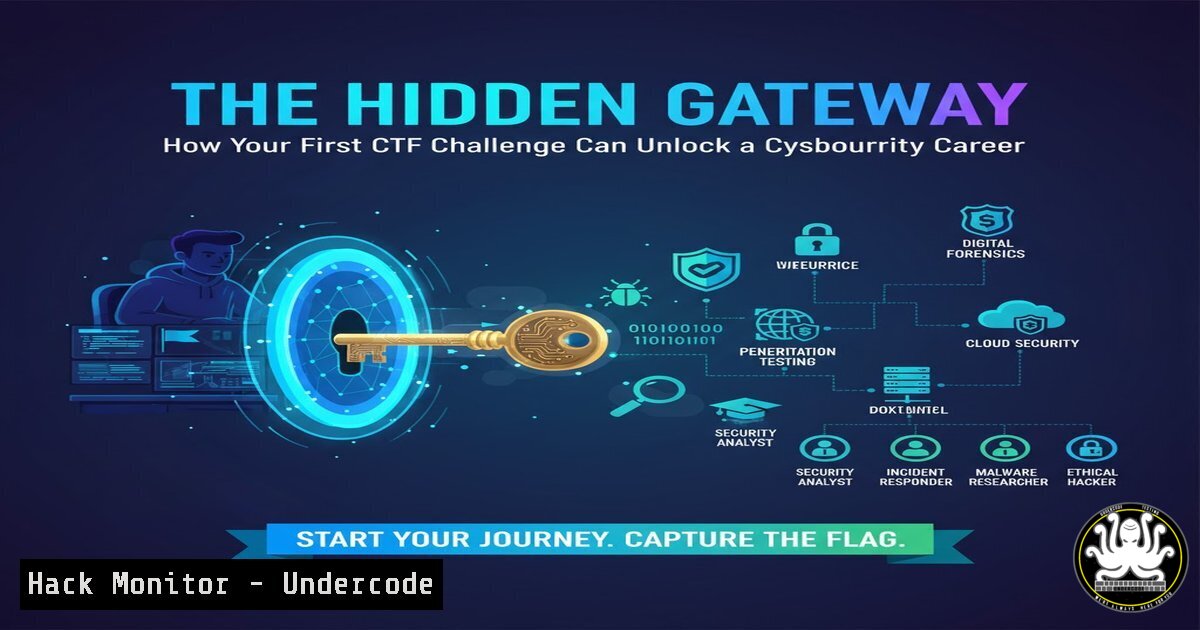
Introduction:
Capture The Flag (CTF) competitions represent the practical proving grounds for cybersecurity enthusiasts, bridging theoretical knowledge with real-world application. As demonstrated at GDG Toronto DevFest 2025, these challenges provide invaluable hands-on experience that directly translates to cybersecurity careers, offering participants exposure to vulnerability identification, exploitation techniques, and defensive strategies in controlled environments.
Learning Objectives:
- Understand core CTF categories and their relevance to professional cybersecurity roles
- Master fundamental tools and methodologies for approaching security challenges
- Develop systematic problem-solving frameworks applicable to real-world security scenarios
You Should Know:
1. CTF Categories and Their Real-World Applications
CTF challenges typically fall into several core categories, each mirroring actual cybersecurity domains. Web exploitation challenges reflect common web application vulnerabilities like SQL injection and XSS, while reverse engineering exercises simulate malware analysis. Cryptography challenges teach encryption/decryption techniques, forensics exercises train investigators in data recovery and analysis, and binary exploitation focuses on memory corruption vulnerabilities.
Step-by-step guide:
- Web Challenges: Start with automated scanners then move to manual testing
- Command: `sqlmap -u “http://target.com/page?id=1” –dbs` for SQL injection testing
- Manual testing: Modify URL parameters, form inputs, and HTTP headers
- Forensics Challenges: Begin with file identification and metadata examination
- Command: `file suspicious.jpg && exiftool suspicious.jpg`
– Use `strings` command to extract readable text: `strings file.bin | grep -i flag`
– Reverse Engineering: Start with basic analysis before advanced techniques - Command: `objdump -d binary_file` for disassembly
- Use `ltrace` and `strace` to monitor system calls: `strace ./challenge_binary`
2. Essential Tool Setup for CTF Beginners
Building a proper penetration testing environment is crucial for CTF success and professional development. Kali Linux remains the standard distribution, but understanding tool installation and configuration on various platforms demonstrates professional readiness.
Step-by-step guide:
- Kali Linux Setup: Either install bare metal or use virtualization
- VirtualBox command: `VBoxManage createvm –name “CTF” –ostype “Debian_64” –register`
– Essential tool installation: `sudo apt update && sudo apt install wireshark binwalk steghide`
– Windows Alternative Setup: Using WSL2 for Linux tools on Windows - Enable WSL: `wsl –install -d Ubuntu`
– Install Python tools: `pip install pwntools requests BeautifulSoup4`
– Docker Containers: For isolated challenge environments - Command: `docker run -it –name ctf-practice ubuntu:latest /bin/bash`
3. Systematic Approach to CTF Problem Solving
Developing a methodological approach separates successful CTF participants from frustrated beginners. This systematic methodology directly translates to professional incident response and penetration testing workflows.
Step-by-step guide:
- Step 1: Reconnaissance: Understand what you’re working with
- File type identification: `file challenge.bin`
– Network service scanning: `nmap -sV target_ip`
– Step 2: Documentation: Maintain detailed notes of findings - Create structured directories: `mkdir -p ctf/{web,forensics,crypto,reversing}`
– Use tools like CherryTree or Obsidian for note-taking - Step 3: Hypothesis Testing: Form and test theories systematically
- Example: “If this is base64 encoded, decoding might reveal the flag”
- Command: `echo “encoded_string” | base64 -d`
– Step 4: Validation: Verify findings before submission - Ensure flag matches expected format (typically CTF{…} or flag{…})
4. Common CTF Patterns and Recognition Techniques
Experienced CTF players recognize recurring patterns that frequently appear across challenges. Understanding these patterns accelerates problem-solving and develops the intuition needed for professional security work.
Step-by-step guide:
- Encoding Patterns: Identify and decode common encoding schemes
- Base64: `echo “dGVzdA==” | base64 -d`
– Hex encoding: `echo “74657374” | xxd -r -p`
– ROT13: `echo “grfg” | tr ‘A-Za-z’ ‘N-ZA-Mn-za-m’`
– Steganography Techniques: Hidden data in images and files - Check LSB steganography: `zsteg image.png`
– Extract files with binwalk: `binwalk -e suspicious.jpg`
– Steghide without passphrase: `steghide extract -sf image.jpg -p “”`
– Web Application Patterns: Common vulnerability locations - Check robots.txt: `curl http://target.com/robots.txt`
– Test for IDOR: Modify sequential IDs in URLs
– Examine source code: Right-click → View Source or `curl http://target.com`
5. Building from CTF to Professional Cybersecurity Skills
The skills developed through CTF participation directly correlate to professional cybersecurity roles. Understanding this transition path helps participants leverage their experience into career opportunities.
Step-by-step guide:
- Document Your Learning: Create a portfolio of solved challenges
- Maintain a GitHub repository with write-ups
- Include methodology, tools used, and lessons learned
- Practice Platforms: Continue skill development between events
- TryHackMe: Beginner-friendly learning paths
- HackTheBox: More advanced challenges
- OverTheWire: Fundamental skill development
- Professional Certification Alignment: Connect skills to certifications
- OSCP: Direct application of exploitation skills
- CEH: Vulnerability identification and methodology
- Security+: Foundational knowledge validation
6. Teamwork and Knowledge Sharing Strategies
CTF competitions often involve collaboration, mirroring real-world security teams where information sharing and specialized roles maximize effectiveness.
Step-by-step guide:
- Establish Communication Protocols: Use appropriate tools for collaboration
- Discord or Slack for real-time communication
- Shared note-taking with Google Docs or OneNote
- Role Specialization: Divide challenges based on skillsets
- Web specialist: Focuses on web applications and APIs
- Reverse engineering expert: Analyzes binaries and malware
- Cryptography lead: Handles encryption challenges
- Knowledge Transfer Sessions: Regular team briefings
- Schedule hourly standups during competitions
- Maintain shared documentation of solved challenges
- Create “cheat sheets” for recurring solution patterns
7. From CTF Challenges to Real-World Security Implementation
The ultimate value of CTF experience lies in its application to actual security scenarios. Understanding how these skills translate to professional contexts completes the learning journey.
Step-by-step guide:
- Vulnerability Assessment: Apply CTF methodology to real systems
- Conduct authorized security testing: `nmap -sS -sV -O target_network`
– Web application scanning: `nikto -h http://target_website`
– Incident Response: Use forensic skills for security incidents
– Memory analysis: `volatility -f memory.dump imageinfo` - Timeline creation: `log2timeline.py plaso.dump evidence.image`
– Security Hardening: Implement defenses against learned attacks - Web server hardening: Configure security headers and input validation
- System hardening: Apply principle of least privilege and patch management
What Undercode Say:
- CTF competitions serve as critical talent pipelines for the cybersecurity industry, identifying individuals with practical problem-solving abilities beyond theoretical knowledge
- The collaborative nature of these events fosters community building and knowledge sharing, essential components of effective security teams
- The persistence demonstrated by participants like Tejass Kaushik reflects the tenacity required for successful security careers
The observed patterns at GDG Toronto DevFest 2025—from first-time participants to seasoned solvers—demonstrate CTF’s unique position as both learning platform and talent identification mechanism. The emotional investment participants displayed, combined with their technical growth throughout the event, underscores how hands-on challenges create more durable learning compared to passive education. As organizations increasingly prioritize practical skills over credentials, CTF experience provides tangible proof of capability that resonates with employers.
Prediction:
The integration of CTF-style assessments into corporate hiring processes will accelerate, with companies developing internal capture-the-flag challenges as part of technical interviews. Educational institutions will increasingly adopt CTF frameworks for cybersecurity curriculum delivery, recognizing their effectiveness in developing practical skills. We’ll see growth in industry-specific CTF events focusing on healthcare, finance, and critical infrastructure security, creating specialized talent pipelines for these sectors. The line between competitive events and professional certification will continue to blur, with CTF performance becoming a recognized credential alongside traditional certifications.
🎯Let’s Practice For Free:
IT/Security Reporter URL:
Reported By: Kishore Suresh – Hackers Feeds
Extra Hub: Undercode MoN
Basic Verification: Pass ✅


