Listen to this Post
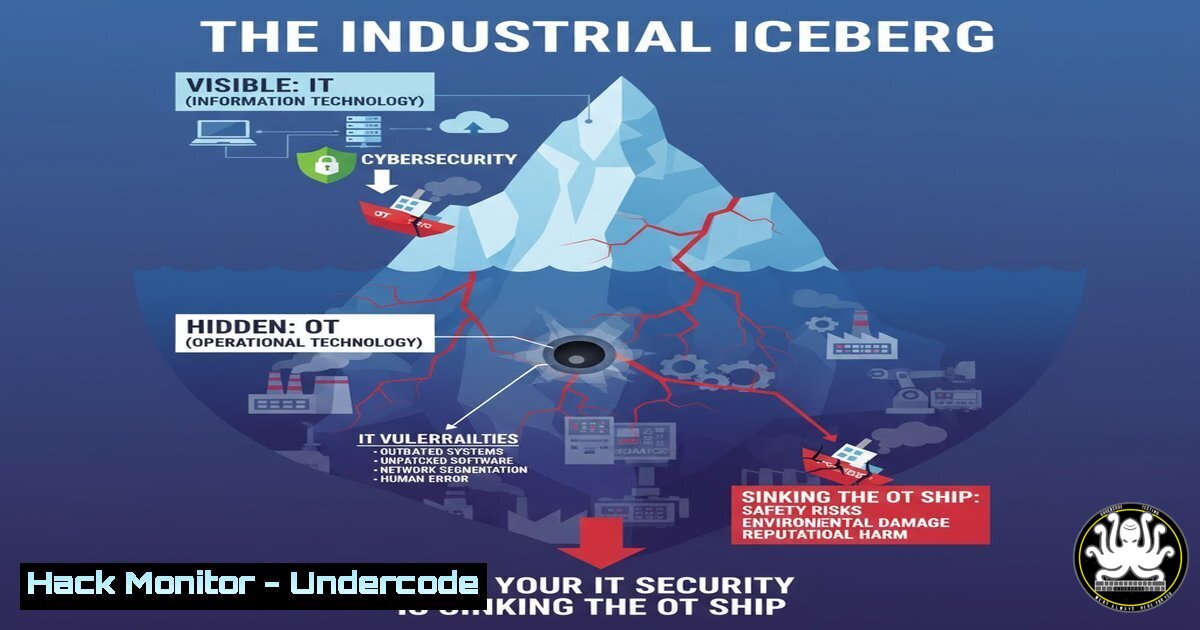
Introduction:
The decades-old divide between Information Technology (IT) and Operational Technology (OT) is creating the most significant unaddressed attack surface in modern industry. While IT security focuses on data confidentiality, OT security is concerned with the physical safety and availability of industrial processes. The convergence of these two worlds, without a corresponding convergence of security practices, leaves critical infrastructure like power grids and water systems vulnerable to catastrophic disruption.
Learning Objectives:
- Understand the fundamental philosophical and technical differences between IT and OT security.
- Learn practical strategies for asset discovery and network segmentation in an OT environment.
- Implement security monitoring that prioritizes process stability over data integrity.
- Develop an incident response plan that does not involve rebooting critical systems.
You Should Know:
1. The Philosophy Clash: Availability vs. Confidentiality
The core of the IT/OT divide is not technological but philosophical. IT security’s “CIA Triad” prioritizes Confidentiality, Integrity, and Availability. In the OT world, this model is inverted to the “AIC Triad,” where Availability is paramount. An unexpected reboot to apply a patch, a standard IT procedure, can halt production, damage equipment, or even endanger human life in an OT environment.
Step‑by‑step guide explaining what this does and how to use it.
Step 1: Establish a Cross-Functional Team. Create a joint IT-OT security council with representatives from both teams. The goal is mutual education.
Step 2: Define Critical Process Lists. OT must provide a list of processes where availability is non-negotiable. IT must understand that these systems cannot be managed with the same tools and policies as a corporate laptop.
Step 3: Policy Exceptions. Formally document and approve security policy exceptions for critical OT assets. This is not about lowering security, but about applying context-aware controls.
2. Unseen and Unmanaged: The Asset Discovery Imperative
You cannot secure what you cannot see. Traditional IT asset discovery tools that rely on aggressive scanning can crash fragile OT devices like Programmable Logic Controllers (PLCs) or legacy HMIs. Passive monitoring is the only safe starting point.
Step‑by‑step guide explaining what this does and how to use it.
Step 1: Deploy a Passive Monitoring Tool. Use tools like Wireshark or specialized OT network monitors (e.g., Nozomi Networks, Claroty) on a SPAN port to listen to network traffic without transmitting any packets.
Linux Command (using tcpdump): `sudo tcpdump -i eth0 -w ot_capture.pcap` This captures all traffic on interface `eth0` and writes it to a file for later analysis.
Step 2: Analyze Protocols. Identify industrial protocols like Modbus/TCP, DNP3, PROFINET, and OPC UA. Understanding “normal” traffic for these protocols is the foundation of anomaly detection.
Step 3: Build an Asset Inventory. From the passive data, build a dynamic inventory of all controllers, network components, and workstations, including their make, model, and firmware version.
3. Building the Moat: Strategic Network Segmentation
The primary control for protecting OT environments is a strong demilitarized zone (DMZ) between the corporate IT network and the industrial OT network. This prevents direct access from the enterprise to the control floor.
Step‑by‑step guide explaining what this does and how to use it.
Step 1: Design a Unidirectional Gateway. Implement data diodes or firewalls configured to allow only necessary communication from OT to IT (e.g., for historical data reporting) and block all unsolicited traffic from IT to OT.
Step 2: Harden Firewall Rules. Instead of using generic “allow” rules, be specific.
Example Rule: `Permit TCP source: OT_Data_Server port 443 destination: IT_Historian port 443` This allows a specific server in OT to send encrypted data to a specific server in IT, and nothing else.
Step 3: Segment Within OT. Further segment the OT network into zones (e.g., Level 3 – MES, Level 2 – SCADA, Level 1 – PLCs) to contain potential breaches.
4. Monitoring for Mayhem: Detecting Operational Anomalies
In OT, an attacker’s activity may not look like malware; it may look like a legitimate command sent at the wrong time. Security monitoring must focus on process behavior.
Step‑by‑step guide explaining what this does and how to use it.
Step 1: Baseline Normal Process Behavior. Document what “normal” looks like for each critical process. What are the normal setpoints for a valve? What is the standard sequence for a batch process?
Step 2: Create Alerts for Operational Deviations. Configure your OT monitoring system to alert on:
A command that changes a PLC’s state outside of normal operating parameters.
Communication from an engineering workstation that is not authorized.
A firmware download attempt on a critical controller.
Step 3: Correlate IT and OT Events. An alert from an IT SIEM about a phishing email targeting an engineer, combined with an OT alert of a remote login from that engineer’s account, could indicate a live attack in progress.
5. The No-Reboot Response: ICS Incident Handling
Telling an operator to “turn it off and on again” during a chemical process is not an option. OT incident response plans must be built around continuity of operations.
Step‑by‑step guide explaining what this does and how to use it.
Step 1: Preparation. Maintain and regularly test “manual override” procedures for critical processes. Keep hot-spare replacements for key components like PLCs, pre-loaded with the correct program.
Step 2: Detection & Analysis. Use network forensics to identify the compromised asset and the attacker’s entry point without taking systems offline.
Step 3: Containment & Eradication. Isolate the compromised asset at the network switch level while keeping it online for process continuity. Use out-of-band management to deploy targeted mitigations or patches during a planned maintenance window, not during active production.
What Undercode Say:
- The greatest vulnerability in critical infrastructure is not a software bug, but an organizational blind spot. The lack of communication and understanding between IT and OT teams is the real attack vector.
- Security for OT is not about preventing data theft; it’s about preventing kinetic consequences—explosions, environmental spills, and city-wide blackouts. The risk calculus is fundamentally different.
The traditional IT model of “patch fast and often” is not just ineffective in OT; it’s dangerous. The solution requires a paradigm shift from a purely technical defense to an organizational and cultural one. The most secure air-gapped system is vulnerable the moment an engineer plugs in a compromised laptop for maintenance. Bridging this gap requires OT teams to adopt basic cyber hygiene and IT teams to relinquish the one-size-fits-all security model. The stakes are no longer just data; they are public safety and economic stability.
Prediction:
The convergence of IT and OT will accelerate with the adoption of Industrial IoT (IIoT) and AI-driven predictive maintenance, massively expanding the attack surface. We will see a rise in AI-powered malware designed specifically to manipulate physical processes by learning normal operations and executing subtle, destructive changes that evade traditional signature-based detection. This will force the industry to move beyond perimeter-based defense and adopt “zero-trust” architectures within the OT environment itself, where every device, command, and user is continuously verified, regardless of its location on the network.
🎯Let’s Practice For Free:
IT/Security Reporter URL:
Reported By: Dale Peterson – Hackers Feeds
Extra Hub: Undercode MoN
Basic Verification: Pass ✅


