Listen to this Post
Introduction:
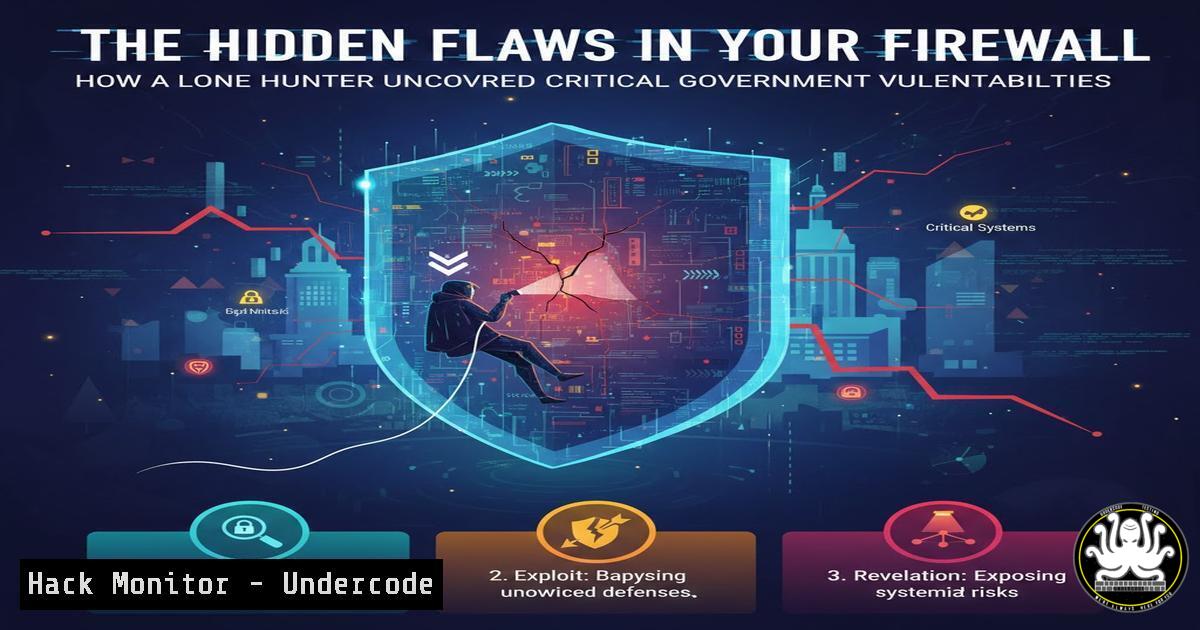
In a recent disclosure, a cybersecurity researcher demonstrated the persistent security gaps in even government digital infrastructure by uncovering both a critical (P1) and a high-severity (P2) vulnerability. This incident underscores a universal truth: no organization is immune to web application flaws, and proactive, ethical hacking remains a critical line of defense. The find highlights common attack vectors like injection flaws and broken access control that plague modern web applications.
Learning Objectives:
- Understand the methodology for discovering critical web application vulnerabilities (P1/P2) in a black-box setting.
- Learn to replicate and test for common high-severity flaws such as SQL Injection and Insecure Direct Object References (IDOR).
- Implement immediate hardening techniques for web servers and cloud storage to mitigate these risks.
You Should Know:
1. Reconnaissance and Enumeration: The Hunter’s First Step
The process begins not with exploitation, but with meticulous information gathering. Ethical hackers map the target’s digital footprint to identify all entry points, subdomains, and exposed services.
Step‑by‑step guide explaining what this does and how to use it.
Subdomain Enumeration: Use tools like `subfinder` and `amass` to discover potential targets.
 Linux/macOS
subfinder -d target.gov -o subdomains.txt
amass enum -passive -d target.gov -o amass_subs.txt
Combine and sort results: `cat subdomains.txt amass_subs.txt | sort -u > all_subs.txt`
Service Discovery: Probe identified hosts with `nmap` to find open ports and running services.
nmap -sV -sC -O -iL all_subs.txt -oA initial_scan
This command performs version detection (-sV), default scripts (-sC), OS detection (-O), and outputs all formats for review.
2. Automated Vulnerability Scanning with Nuclei
Once targets are enumerated, automated scanners can quickly identify low-hanging fruit and known misconfigurations across hundreds of endpoints.
Step‑by‑step guide explaining what this does and how to use it.
Installation & Basic Scan: Nuclei uses community-powered templates to detect vulnerabilities.
 Install/Update Nuclei
go install -v github.com/projectdiscovery/nuclei/v2/cmd/nuclei@latest
 Run a quick test with fast templates
nuclei -l all_subs.txt -t ~/nuclei-templates/http/exposures/ -es info
Targeted Critical Scan: Focus on high and critical severity checks for a more focused assessment.
nuclei -l all_subs.txt -severity high,critical -o critical_findings.txt
- Manual Testing for Critical P1 Flaws: SQL Injection
Automated tools are guides; critical findings often require manual verification and exploitation. SQL Injection (SQLi) remains a classic P1 vulnerability.
Step‑by‑step guide explaining what this does and how to use it.
Detection with Burp Suite: Intercept a request containing a parameter (e.g., ?id=1) and send it to Burp Repeater. Test with a single quote (') to trigger syntax errors.
Exploitation with sqlmap: For confirmed injection points, `sqlmap` can automate data extraction.
sqlmap -u "https://target.gov/profile?id=1" --batch --risk=3 --level=5 --dbs
`–dbs`: Enumerate databases.
`-D database_name –tables`: List tables.
-D database_name -T users --dump: Extract data from the `users` table.
- Exploiting P2 Flaws: Insecure Direct Object References (IDOR)
IDOR occurs when an application provides direct access to objects based on user-supplied input without proper authorization checks.
Step‑by‑step guide explaining what this does and how to use it.
Discovery: Look for parameters like ?user_id=456, ?doc_id=1023, or `?uuid=…` in API requests and URLs.
Testing: If your `user_id` is 100, try changing it to 101 in a request to view another user’s profile or document. Use Burp Suite’s “Send to Intruder” feature to brute-force a range of IDs.
In Intruder, set the payload position on the parameter value.
Use a “Numbers” payload type to iterate from, e.g., 1 to 1000.
Analyze responses for differences in status code (200 vs 403) and length to find accessible records.
5. Cloud Misconfiguration: A Modern Attack Vector
Government sites often leverage cloud storage (e.g., AWS S3, Azure Blobs). Misconfigured permissions are a common source of data leaks.
Step‑by‑step guide explaining what this does and how to use it.
Discovery: Look for URLs pointing to `.s3.amazonaws.com` or `.blob.core.windows.net` in page sources.
Testing & Mitigation: A bucket with “List” permissions allowed can be queried.
Check: `aws s3 ls s3://bucket-name/ –no-sign-request`
Secure (AWS CLI for remediation):
 Block ALL public access
aws s3api put-public-access-block --bucket bucket-name \
--public-access-block-configuration "BlockPublicAcls=true, IgnorePublicAcls=true, BlockPublicPolicy=true, RestrictPublicBuckets=true"
 Apply a restrictive bucket policy
aws s3api put-bucket-policy --bucket bucket-name --policy file://secure-policy.json
- The Art of the Write-Up and Responsible Disclosure
Finding the bug is half the battle. A clear, professional report is essential for remediation and earning rewards in bug bounty programs.
Step‑by‑step guide explaining what this does and how to use it.
1. Clear and concise (e.g., “SQLi in `/profile` endpoint leading to PII disclosure”).
2. Summary: Brief overview of the vulnerability.
- Severity & CVSS: Justify the P1/P2 rating using CVSS vector (e.g., CVSS:3.1/AV:N/AC:L/PR:N/UI:N/S:C/C:H/I:H/A:N).
- Steps to Reproduce: Numbered, detailed steps with screenshots and exact HTTP requests/responses.
- Impact: Clearly state what an attacker could achieve (data breach, system compromise).
- Remediation: Suggest concrete fixes (e.g., use parameterized queries, implement authorization checks).
- Report via Official Channel: Always use the organization’s designated security contact or bug bounty platform.
7. Building a Continuous Learning Lab
Mastery requires a safe environment. Set up a home lab to practice techniques legally and continuously.
Step‑by‑step guide explaining what this does and how to use it.
Platforms: Use TryHackMe, HackTheBox, or PortSwigger’s Web Security Academy for guided paths.
Local Lab with Docker: Run vulnerable applications like OWASP Juice Shop or DVWA.
 Pull and run OWASP Juice Shop
docker pull bkimminich/juice-shop
docker run -d -p 3000:3000 bkimminich/juice-shop
Access at http://localhost:3000` and practice all techniques legally.burpsuite
Tool Mastery: Regularly practice with,sqlmap`, and `nuclei` in your lab to build muscle memory.
What Undercode Say:
- The Perimeter is Illusory. A government website’s perceived robustness is no guarantee of security. The most critical vulnerabilities often stem from fundamental flaws in application logic and configuration, not advanced attacks.
- Methodology Over Tools. The hunter’s success stems from a disciplined process: reconnaissance, enumeration, automated scanning, and deep manual testing. Tools are enablers, but critical thinking and persistence uncover P1 findings.
The discovery of critical vulnerabilities in state-level systems is a potent reminder that digital government services are in a constant state of cyber siege. While this hunter acted ethically, the same flaws are actively sought by malicious actors. The future impact points towards an increased reliance on Bug Bounty Programs as a scalable, results-oriented supplement to traditional security audits. Furthermore, the integration of AI-assisted code review and dynamic application security testing (DAST) in the SDLC will become mandatory, not optional. However, the human element—the curious, methodological hunter—will remain indispensable for uncovering the complex, business-logic flaws that machines still miss. Organizations that fail to incentivize and welcome this ethical scrutiny will continue to be the soft targets in an increasingly hostile digital landscape.
▶️ Related Video (80% Match):
🎯Let’s Practice For Free:
IT/Security Reporter URL:
Reported By: Agentx512 %D9%88%D9%85%D8%A7 – Hackers Feeds
Extra Hub: Undercode MoN
Basic Verification: Pass ✅


