Listen to this Post
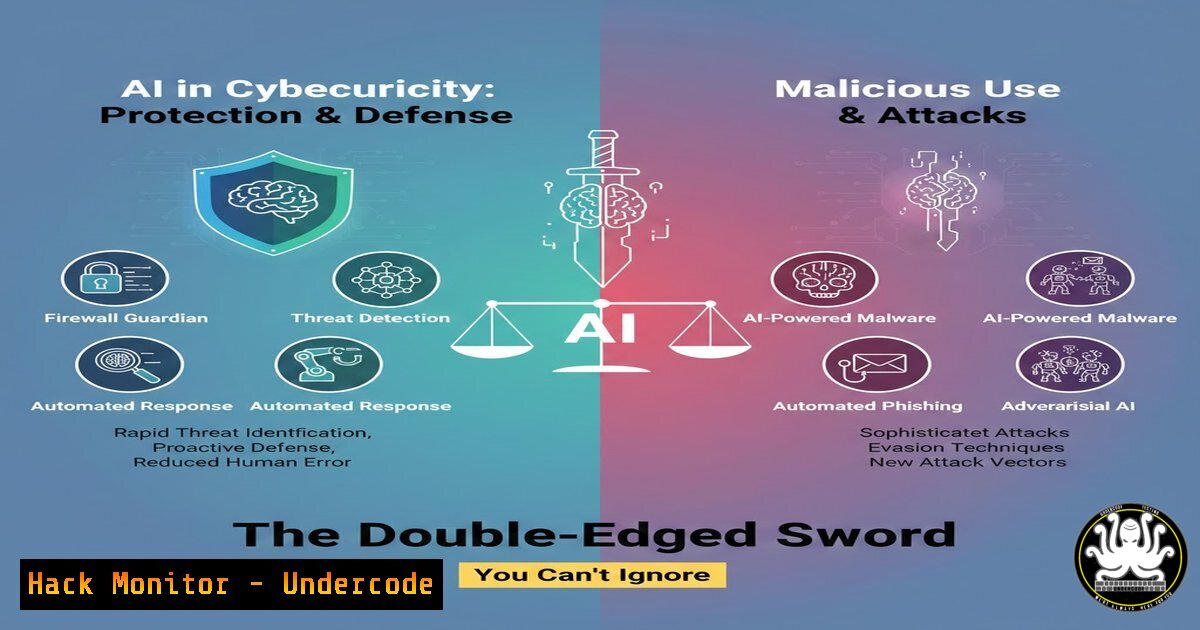 Introduction: Artificial Intelligence is revolutionizing cybersecurity, both as a tool for defenders and a weapon for attackers. This article delves into how AI-driven threats are evolving and the practical steps you can take to harden your defenses across IT infrastructure, cloud environments, and AI models themselves.
Learning Objectives:
- Understand the key AI techniques used in modern cyber attacks, including phishing, malware, and automated exploitation.
- Learn how to implement AI-powered security measures, tools, and configurations in Linux and Windows systems.
- Master essential commands, code snippets, and procedures for detecting and mitigating AI-augmented threats.
You Should Know:
1. AI-Powered Phishing Attacks: Detection and Mitigation
AI models like GPT-3 can generate highly personalized phishing emails that bypass traditional filters. Defending requires advanced NLP analysis and secure email gateways.
Step‑by‑step guide:
- To detect AI-generated phishing text, use Python with the Transformers library. Install and run a sentiment/classification model:
pip install transformers from transformers import pipeline classifier = pipeline("text-classification", model="distilbert-base-uncased-finetuned-sst-2-english") result = classifier("Urgent: Your bank account requires verification. Click here to secure it.") print(result) Look for low confidence or specific flags - Harden email security via Microsoft 365 Advanced Threat Protection (ATP) with PowerShell:
Connect-ExchangeOnline
New-AntiPhishPolicy -Name "AI-Phish-Policy" -EnableAntispoofEnforcement $true -PhishThresholdLevel 3
- On Linux mail servers (e.g., Postfix), integrate SpamAssassin with custom rules in
/etc/spamassassin/local.cf:echo "score URI_PHISHING 3.0" | sudo tee -a /etc/spamassassin/local.cf sudo systemctl restart spamassassin
2. Automated Vulnerability Exploitation with AI: Defense Commands
Attackers use reinforcement learning to scan networks and exploit vulnerabilities autonomously. Protect systems with patching, IDS, and AI scanners.
Step‑by‑step guide:
- Prioritize patching on Linux (Ubuntu) and Windows:
Linux: Update and audit packages
sudo apt update && sudo apt upgrade -y
sudo apt list --upgradable | grep -E "(ssh|apache|nginx)"
Windows: Check for updates via PowerShell
Get-WindowsUpdate -Install -AcceptAll -AutoReboot
- Deploy Snort IDS with community rules to detect scanning:
sudo snort -c /etc/snort/snort.conf -i eth0 -A fast -l /var/log/snort/
- Use AI-enhanced scanners like Burp Suite with the “Autorize” extension for automated testing; configure via JSON API:
{"scan_type": "ai_assisted", "target": "https://example.com", "depth": 5}
3. AI-Evading Malware: Endpoint Hardening
Generative Adversarial Networks (GANs) create malware that avoids signature detection. Implement EDR and application control.
Step‑by‑step guide:
- On Windows, enable Microsoft Defender ATP and restrict script execution:
Set-MpPreference -AttackSurfaceReductionRules_Ids 26190899-1602-49e8-8b27-eb1d0a1ce869 -AttackSurfaceReductionRules_Actions Enabled
Set-ExecutionPolicy -ExecutionPolicy Restricted -Force
- On Linux, enforce mandatory access control with AppArmor for critical apps:
sudo aa-enforce /etc/apparmor.d/bin.apache2
sudo systemctl restart apparmor
- Train a custom YARA rule with AI-generated signatures using tools like YarGen:
python3 yarGen.py --ai-model --exe example_malware.exe -o rules.yar
4. Securing AI Models from Adversarial Attacks
AI models in production are vulnerable to data poisoning and adversarial inputs. Harden them with robust training and API security.
Step‑by‑step guide:
- Use TensorFlow for adversarial training to improve model resilience:
import tensorflow as tf from cleverhans.tf2.attacks import fast_gradient_method model = tf.keras.models.load_model('your_model.h5') Generate adversarial examples during training adv_x = fast_gradient_method(model, x_train, eps=0.1, norm=np.inf) model.fit(adv_x, y_train, epochs=5) - Secure AI model APIs (e.g., Flask) with authentication and input validation:
from flask import Flask, request import secrets API_KEY = secrets.token_hex(16) @app.route('/predict', methods=['POST']) def predict(): if request.headers.get('X-API-Key') != API_KEY: return 'Unauthorized', 401 data = request.json Validate input schema if not data.get('input'): return 'Bad Request', 400 return model.predict(data['input']) - Monitor model drift with Prometheus and Grafana for anomalies.
5. Cloud Hardening with AI-Driven CSPM Tools
Cloud misconfigurations are exploited by AI bots. Use AI-based Cloud Security Posture Management (CSPM) for compliance.
Step‑by‑step guide:
- In AWS, enable GuardDuty and Macie via CLI:
aws guardduty create-detector --enable
aws macie2 enable-macie --status ENABLED
- Deploy Terraform scripts with security groups limiting access:
resource "aws_security_group" "web" { name = "ai_secure_sg" description = "Allow HTTPS only" ingress { from_port = 443 to_port = 443 protocol = "tcp" cidr_blocks = ["10.0.0.0/16"] } egress { from_port = 0 to_port = 0 protocol = "-1" cidr_blocks = ["0.0.0.0/0"] } } - Integrate Prisma Cloud for AI-driven compliance scans; set alerts via API:
curl -X POST https://api.prismacloud.io/alert -H 'Content-Type: application/json' -d '{"rule": "cloud_misconfiguration", "threshold": "high"}'
6. AI-Augmented Incident Response: SOAR Automation
AI reduces response times by automating playbooks in Security Orchestration, Automation, and Response (SOAR) platforms.
Step‑by‑step guide:
- In TheHive or Splunk SOAR, create a playbook to isolate hosts using Python:
import requests Block IP on firewall (e.g., pfSense) headers = {'Authorization': 'Bearer YOUR_TOKEN'} data = {'rule': 'block', 'ip': '192.168.1.100', 'interface': 'wan'} response = requests.post('https://firewall/api/v1/firewall/rule', json=data, headers=headers) print(response.status_code) - Query Elasticsearch SIEM for AI-detected anomalies via Kibana Dev Tools:
GET /logs-/_search { "query": { "match": { "alert.type": "ai_anomaly" } } } - Train response models with historical incident data using scikit-learn:
from sklearn.ensemble import RandomForestClassifier
model = RandomForestClassifier()
model.fit(incident_features, response_labels)
7. Training Courses and Certifications for AI Cybersecurity
Upskill with courses focusing on AI, ethical hacking, and cloud security. Key URLs: Coursera’s “AI for Cybersecurity” (https://www.coursera.org/learn/ai-for-cybersecurity), SANS SEC595 (https://www.sans.org/cyber-security-courses/ai-cybersecurity/), and Udacity’s “Secure AI” (https://www.udacity.com/course/secure-ai–nd545).
Step‑by‑step guide:
- Enroll in Coursera’s course via CLI with curl for API access (if available):
curl -X POST https://api.coursera.org/enroll -d '{"courseId": "ai-cybersecurity", "userId": "YOUR_ID"}' - Practice on platforms like HackTheBox or TryHackMe for AI challenges; use VPN setup:
openvpn --config your_lab.ovpn
- Pursue certifications like CEH or CISSP with AI modules; study using Anki flashcards automated via Python scripts.
What Undercode Say:
- Key Takeaway 1: AI is not just a defensive tool; it’s increasingly weaponized for sophisticated, adaptive attacks requiring equally dynamic defenses.
- Key Takeaway 2: Integrating AI into cybersecurity demands a layered approach—combining tool configuration, code-level hardening, and continuous training.
Analysis: The intersection of AI and cybersecurity is creating a paradigm shift. Attackers leverage AI for speed and evasion, while defenders use it for prediction and automation. This arms race necessitates proactive measures: securing AI models themselves, automating cloud posture, and investing in AI-augmented training. Organizations must balance technological adoption with human expertise, as over-reliance on AI can introduce new vulnerabilities. Verified commands and scripts, as outlined, provide a practical foundation, but ongoing adaptation is critical.
Expected Output:
Introduction: AI is transforming the cybersecurity landscape, enabling both advanced attacks and innovative defenses. Understanding this duality is crucial for modern IT professionals.
What Undercode Say:
- AI-driven attacks are becoming more personalized and evasive, exploiting gaps in traditional security.
- Defense strategies must evolve to include AI-based detection, model hardening, and automated response.
Prediction: In the next 3-5 years, AI-powered cyber attacks will become mainstream, leading to fully autonomous breach attempts and AI-on-AI warfare in cyberspace. This will drive demand for AI-specific security frameworks and regulations, while skills gaps will widen. Organizations that fail to integrate AI into their security posture will suffer increased breach costs and operational downtime, making AI cybersecurity training and tools non-negotiable for resilience.
▶️ Related Video (90% Match):
🎯Let’s Practice For Free:
IT/Security Reporter URL:
Reported By: Adam Biddlecombe – Hackers Feeds
Extra Hub: Undercode MoN
Basic Verification: Pass ✅


