Listen to this Post
Introduction:
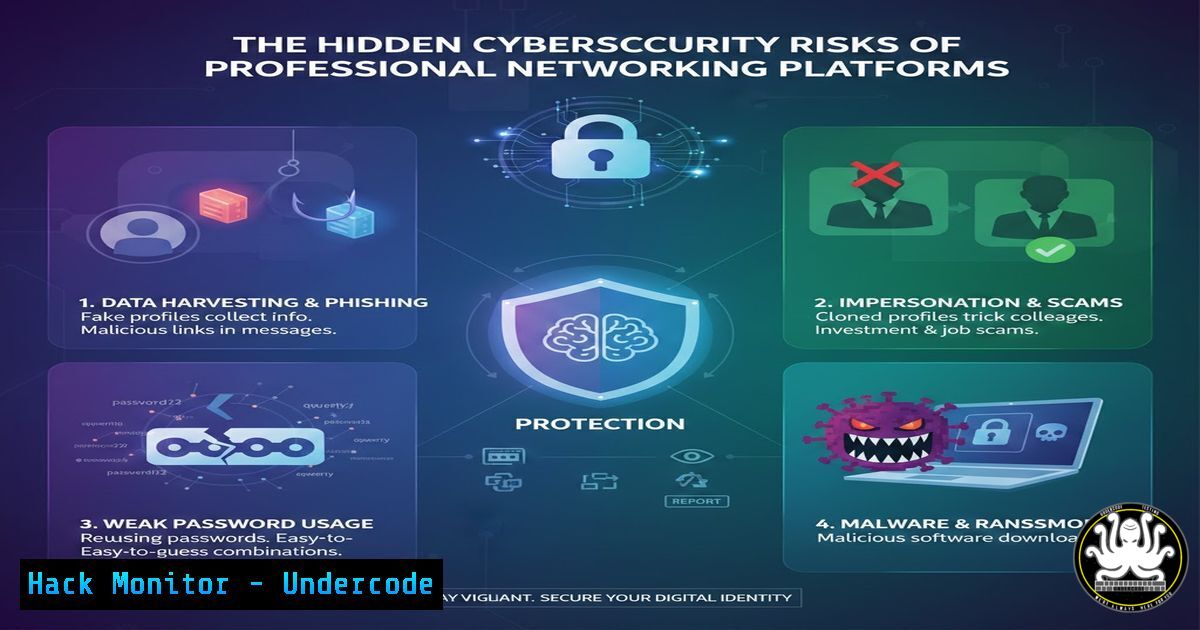
Professional networking platforms like LinkedIn have become essential tools for career growth and business development, but they also present significant cybersecurity challenges. As users celebrate membership in business organizations and share their achievements, they often unknowingly expose sensitive corporate information and create attack vectors for sophisticated social engineering campaigns. This article examines the intersection of professional networking, renewable energy sector collaboration, and the hidden cybersecurity risks that accompany digital business relationships.
Learning Objectives:
- Identify common information disclosure risks on professional networking platforms
- Understand how social engineers exploit business networking behaviors
- Implement technical controls to protect corporate identities on public platforms
- Master reconnaissance techniques used by adversaries targeting business professionals
- Develop incident response procedures for social media-based attacks
You Should Know:
1. Reconnaissance and Information Gathering from Professional Profiles
Professional networking platforms serve as goldmines for threat actors conducting reconnaissance. When professionals announce memberships, partnerships, or industry involvement, they inadvertently provide attackers with valuable intelligence. Using simple OSINT (Open Source Intelligence) techniques, adversaries can map organizational structures, identify key personnel, and craft convincing spear-phishing campaigns.
Step‑by‑step guide for defensive reconnaissance (what attackers see):
 Using theHarvester to collect emails associated with a domain
theHarvester -d kpenergy.com -b linkedin

Using Sherlock to find usernames across platforms
sherlock amit.khandelwal

Using LinkedInt for LinkedIn profile enumeration
git clone https://github.com/snovvcrash/LinkedInt.git
cd LinkedInt
python3 linkedint.py -c config.yaml -o results

Using CrossLinked for organization employee enumeration
git clone https://github.com/m8r0wn/CrossLinked.git
python3 crosslinked.py -f '"{first}.{last}@company.com"' -t 50 company_name
For Windows defenders, PowerShell can identify exposed data:
 Check for exposed LinkedIn data in browser cache
Get-ChildItem -Path "$env:APPDATA\Microsoft\Windows\Cookies\Low" -Recurse | Select-String "linkedin"

Monitor network connections to professional platforms
Get-NetTCPConnection | Where-Object {$_.RemotePort -eq 443} | Select-Object LocalAddress, RemoteAddress, State
2. Social Engineering Attack Vectors in Business Networking
The post mentions “business networking” and “collaboration” – precisely the trust mechanisms attackers exploit. When users accept connection requests from strangers, they validate fake profiles and enable further targeting.
Step‑by‑step guide to analyzing connection requests:
 Python script to analyze profile authenticity
import requests
from bs4 import BeautifulSoup

def analyze_linkedin_profile(profile_url):
headers = {'User-Agent': 'Mozilla/5.0'}
response = requests.get(profile_url, headers=headers)
soup = BeautifulSoup(response.text, 'html.parser')

Check for common fake profile indicators
connections = soup.find('span', {'class': 'connections'})
recommendations = soup.find_all('div', {'class': 'recommendations'})
profile_strength = soup.find('div', {'class': 'profile-strength'})

print(f"Profile Analysis: {profile_url}")
print(f"Connections: {connections.text if connections else 'Hidden'}")
print(f"Recommendations: {len(recommendations)}")
print(f"Profile Strength: {profile_strength.text if profile_strength else 'Unknown'}")

Usage
analyze_linkedin_profile("https://www.linkedin.com/in/amit-khandelwal/")
Linux command-line approach for bulk analysis:
 Use curl to fetch profile data and check for inconsistencies
curl -s "https://www.linkedin.com/in/amit-khandelwal/" | grep -E "connections|recommendations|endorsements"

Check domain reputation for email addresses
for email in $(cat potential_targets.txt); do
domain=$(echo $email | cut -d@ -f2)
dig $domain MX +short
whois $domain | grep -E "Registrar|Creation Date"
done
3. API Security in Professional Networking Integrations
When professionals integrate their LinkedIn profiles with other platforms, they create API security risks. The post mentions hashtags like RenewableEnergy and CleanEnergy – these become searchable metadata that APIs expose.
Step‑by‑step guide to testing API security:
 Testing LinkedIn API endpoints for information disclosure
curl -X GET "https://api.linkedin.com/v2/people/(id:{person-id})?projection=(id,firstName,lastName,positions)" \
-H "Authorization: Bearer {access_token}"

Testing rate limiting and enumeration vulnerabilities
for i in {1..100}; do
curl -s -o /dev/null -w "%{http_code}\n" "https://api.linkedin.com/v2/people/id=$i" \
-H "Authorization: Bearer {token}" &
done

Using Burp Suite to intercept and analyze API traffic
 Command to start Burp Suite in headless mode for automation
java -jar burpsuite_pro.jar --project-file=linkedin_audit.burp --config-file=config.json
Windows PowerShell for API monitoring:
 Monitor API calls from applications
$events = Get-WinEvent -LogName "Microsoft-Windows-Sysmon/Operational" | Where-Object {$_.Message -like "api.linkedin.com"}
$events | Format-Table TimeCreated, Message -AutoSize
4. Cloud Collaboration Security Risks
The post mentions “knowledge sharing” and “business collaboration” – activities increasingly conducted through cloud platforms. These integrations create shadow IT risks and data leakage points.
Step‑by‑step guide to auditing cloud collaboration security:
 Using CloudMapper to audit AWS environments for exposed collaboration tools
git clone https://github.com/duo-labs/cloudmapper.git
cd cloudmapper
python3 cloudmapper.py prepare --config config.json --account my_account
python3 cloudmapper.py report --config config.json --account my_account

Checking for exposed S3 buckets used for collaboration
aws s3 ls s3://company-collaboration-bucket --no-sign-request
aws s3api get-bucket-acl --bucket company-collaboration-bucket

Using Scout Suite for comprehensive cloud audit
pip install scoutsuite
scout aws --profile production
Windows-based cloud security assessment:
 Check for Azure AD collaboration settings
Connect-AzureAD
Get-AzureADPolicy | Select-Object DisplayName, Definition

Review SharePoint external sharing settings
Get-SPOSite | Select-Object Url, SharingCapability

Check Teams external access configuration
Get-CsTenantFederationConfiguration | Select-Object AllowFederatedUsers, AllowPublicUsers
5. Exploitation of Industry-Specific Hashtags
Attackers monitor industry hashtags like those in the post to identify potential targets. This creates targeted attack opportunities based on sector-specific interests.
Step‑by‑step guide to monitoring and defending hashtag-based attacks:
 Python script to monitor hashtag usage and detect anomalies
import tweepy
import re

def monitor_industry_hashtags(hashtags):
 Configure Twitter API for hashtag monitoring
auth = tweepy.OAuthHandler("consumer_key", "consumer_secret")
api = tweepy.API(auth)

for hashtag in hashtags:
tweets = api.search(q=hashtag, count=100)
for tweet in tweets:
 Analyze for malicious patterns
urls = re.findall(r'http[bash]?://(?:[a-zA-Z]|[0-9]|[$-_@.&+])+', tweet.text)
if urls:
print(f"Suspicious URL in {hashtag}: {urls}")

Usage
monitor_industry_hashtags(["RenewableEnergy", "CleanEnergy", "SGCCI"])
Linux command-line hashtag monitoring:
 Using t for Twitter command-line monitoring
t filter track "RenewableEnergy,CleanEnergy" | while read tweet; do
echo "$tweet" | grep -E "http|bit.ly|tinyurl" >> suspicious_tweets.log
done

Check domain reputation of shortened URLs
cat suspicious_tweets.log | grep -oP 'http[bash]?://\S+' | while read url; do
curl -s "https://www.virustotal.com/api/v3/urls/$url" \
-H "x-apikey: YOUR_API_KEY" | jq '.data.attributes.last_analysis_stats'
done
6. Mobile Application Security in Professional Networking
Mobile apps for professional networking often have excessive permissions and insecure data storage, creating vulnerabilities for business users.
Step‑by‑step guide for mobile app security assessment:
 Android app analysis using MobSF
docker pull opensecurity/mobile-security-framework-mobsf
docker run -it -p 8000:8000 opensecurity/mobile-security-framework-mobsf

iOS app analysis
unzip LinkedIn.ipa
cd Payload/LinkedIn.app
otool -L LinkedIn | grep -E "crypto|ssl|tls"

Check for insecure data storage
strings LinkedIn | grep -E "password|token|secret|key"
Windows Mobile emulator analysis:
 Using Frida for dynamic analysis
frida-ps -U
frida-trace -U com.linkedin.android -j '!check'

Monitor network traffic from mobile emulator
tcpdump -i emulator -w linkedin_traffic.pcap
7. Incident Response for Professional Platform Compromises
When professional networking accounts are compromised, rapid response is critical to prevent business email compromise and supply chain attacks.
Step‑by‑step incident response guide:
 Linux-based incident response toolkit
git clone https://github.com/ANSSI-FR/DFIR4Win.git
cd DFIR4Win/PowerSploit

Extract browser artifacts for investigation
python3 browser_history.py --chrome --output chrome_history.json

Check for unauthorized access to professional platforms
grep -r "linkedin.com" ~/.bash_history
grep -r "session" ~/.config/google-chrome/Local\ State

Monitor for credential dumping attempts
sudo inotifywait -m /etc/passwd /etc/shadow
Windows PowerShell incident response:
 Collect forensic evidence
Get-WinEvent -LogName Security -MaxEvents 1000 | Where-Object {$_.Id -eq 4624} | Export-Csv logins.csv

Check for suspicious processes
Get-Process | Where-Object {$_.ProcessName -match "chrome|firefox"} | Select-Object ProcessName, StartTime

Examine browser data for compromise indicators
Get-ChildItem "$env:LOCALAPPDATA\Google\Chrome\User Data\Default\Login Data" | Get-FileHash
What Undercode Say:
Key Takeaway 1: Professional networking platforms have evolved into sophisticated reconnaissance tools for threat actors who exploit the trust and transparency inherent in business relationships. The celebration of business achievements and memberships, while valuable for networking, creates a detailed attack surface that adversaries systematically map and exploit.
Key Takeaway 2: The renewable energy and clean technology sectors, as highlighted in the post, represent critical infrastructure targets where professional networking data can facilitate highly targeted attacks. Threat actors combine industry-specific hashtag monitoring with OSINT techniques to identify individuals with access to sensitive systems and intellectual property.
The convergence of professional networking, industry collaboration, and digital transformation has created an environment where traditional security perimeters no longer apply. Organizations must implement comprehensive social media security policies, conduct regular OSINT assessments of their digital footprint, and train employees on the risks of oversharing professional information. The hashtags and connections that drive business growth simultaneously create vectors for sophisticated social engineering campaigns targeting specific industries. As renewable energy and clean technology sectors continue their rapid expansion, the professional profiles of their leaders become increasingly valuable targets for nation-state actors and industrial espionage groups seeking to compromise critical infrastructure. The line between professional networking and security vulnerability continues to blur, requiring a fundamental shift in how organizations approach digital identity management and employee training.
Prediction:
Within the next 12-18 months, we will witness a significant increase in sophisticated spear-phishing campaigns targeting professionals in the renewable energy sector, leveraging AI-generated content that mimics authentic business networking communications. These attacks will exploit the trust established through professional platform connections, leading to major breaches in critical infrastructure organizations. The integration of generative AI with OSINT data from professional networks will enable attackers to create highly convincing personalized attacks that bypass traditional email security controls. Regulatory bodies will respond with mandatory social media security frameworks for critical infrastructure sectors, requiring organizations to monitor and control employee professional networking activities. The cybersecurity industry will develop specialized AI-powered defense platforms that analyze professional network connections and communications for anomalous patterns, creating a new category of social media threat intelligence. Business development and cybersecurity teams will need to collaborate more closely than ever before, as the tools of professional growth become indistinguishable from the vectors of cyber attack.
▶️ Related Video (92% Match):
🎯Let’s Practice For Free:
IT/Security Reporter URL:
Reported By: Amit Khandelwal – Hackers Feeds
Extra Hub: Undercode MoN
Basic Verification: Pass ✅


