Listen to this Post
Introduction:
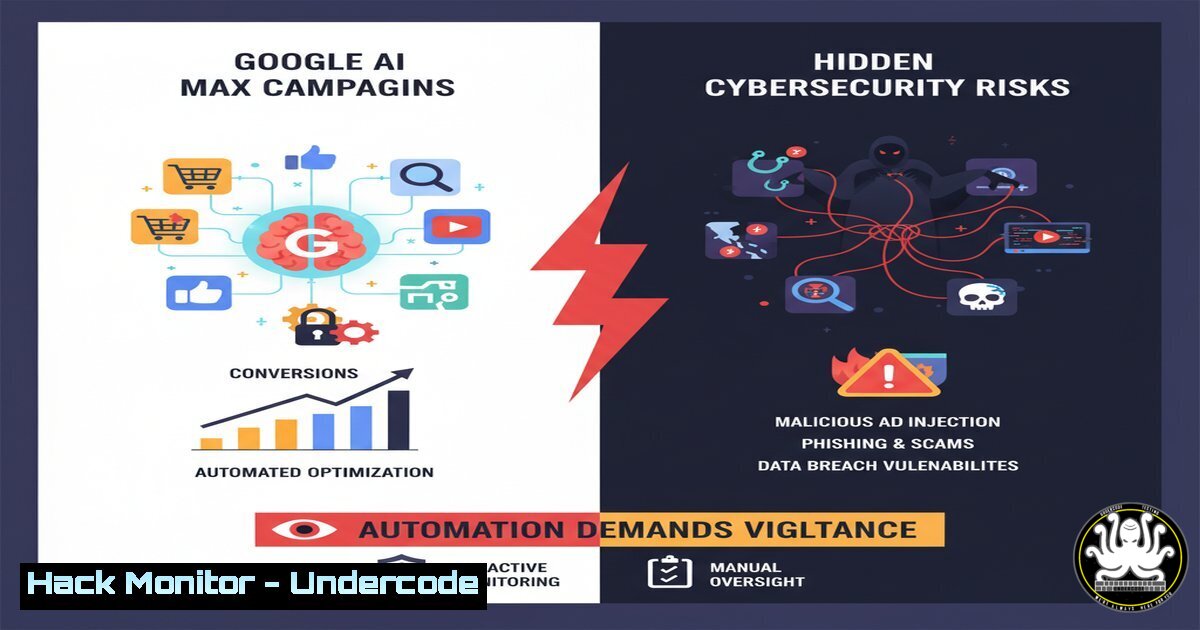
The aggressive push by Google for advertisers to adopt its new AI Max campaigns mirrors the launch of Performance Max, but this shift towards hyper-automation introduces significant, often overlooked, cybersecurity and operational risks. From budget hijacking to malicious ad injections, the opaque nature of AI-driven advertising platforms creates a new attack surface for threat actors. This article deconstructs these vulnerabilities and provides a technical defense playbook for security and advertising professionals.
Learning Objectives:
- Identify the critical cybersecurity threats inherent in AI-driven advertising automation.
- Implement robust monitoring and containment strategies to protect digital advertising assets.
- Apply forensic techniques to detect and respond to fraudulent activity within automated campaign platforms.
You Should Know:
1. Securing API Access and Service Accounts
The primary entry point for compromising any Google Ads account is often through its API. Securing the service accounts used for automation is paramount.
Command / Code Snippet:
 Use GAM (Google Admin Tool) to audit service account keys
gam print clientsecrets keys > service_account_keys_audit.csv

Scan for old keys (older than 90 days) and disable them
gam print clientsecrets keys | awk -F, '$6 < (systime() - 7776000){print $1}' | xargs -I {} gam disable clientsecret {}
Step-by-step guide:
This process uses the GAM command-line tool to manage Google Workspace and associated APIs. The first command exports all service account keys to a CSV for audit. The second command uses `awk` to filter keys created more than 90 days ago (7,776,000 seconds) and pipes them to `xargs` to disable them sequentially. Regularly rotating and auditing these keys prevents persistent unauthorized access from compromised, long-lived credentials.
2. Network Monitoring for Malicious Ad Traffic
AI Max campaigns can place ads on a vast network of sites, including malicious ones. Monitoring your web server logs for traffic originating from these ads is crucial to detect brand damage or malware distribution.
Command / Code Snippet:
 Analyze web logs for traffic from Google Ads, looking for anomalous patterns.
 First, extract relevant GCLIDs (Google Click IDs) to trace campaigns.
awk '{if($0 ~ /gclid=/ && $0 !~ /(bot|crawler|spider)/) print $0}' /var/log/nginx/access.log > google_ads_clicks.log

Then, cross-reference with a list of known-bad AI Max placement URLs (if available) and check for spikes in error rates or suspicious user agents.
cat google_ads_clicks.log | awk -F'"' '{print $6}' | sort | uniq -c | sort -nr | head -20
Step-by-step guide:
The first command parses the Nginx access log, filtering for lines containing “gclid” (which identifies a Google Ads click) and excluding common bots. This isolates human traffic from your ads. The second command analyzes the user agents from this filtered traffic, counting occurrences to identify top agents. A sudden prevalence of an unknown or suspicious user agent could indicate non-human or malicious traffic, signaling that your ads are being displayed in compromised environments.
3. Detecting Budget Anomalies with Automated Scripts
A core complaint against AI Max is budget over-spending. An independent monitoring script can act as a circuit breaker.
Command / Code Snippet:
!/usr/bin/env python3
from google.ads.googleads.client import GoogleAdsClient
import smtplib
from email.mime.text import MIMEText

client = GoogleAdsClient.load_from_storage("path/to/your/google-ads.yaml")
customer_id = "YOUR_CUSTOMER_ID"
campaign_name = "YOUR_AI_MAX_CAMPAIGN"

query = f"""
SELECT campaign.name, metrics.cost_micros
FROM campaign
WHERE campaign.name = '{campaign_name}'
AND segments.date DURING TODAY
"""

response = client.get_service("GoogleAdsService").search(customer_id=customer_id, query=query)
for row in response:
cost_today = row.metrics.cost_micros / 1_000_000  Convert micros to standard currency
if cost_today > YOUR_DAILY_BUDGET_LIMIT:
 Send alert
msg = MIMEText(f"Budget overrun for {campaign_name}: Spent {cost_today} today.")
msg['Subject'] = 'ALERT: Google Ads Budget Exceeded'
msg['From'] = '[email protected]'
msg['To'] = '[email protected]'
s = smtplib.SMTP('localhost')
s.send_message(msg)
s.quit()
Step-by-step guide:
This Python script uses the Google Ads API to pull the cost incurred by a specific campaign for the current day. It compares this value against a predefined budget limit (YOUR_DAILY_BUDGET_LIMIT). If the cost exceeds the limit, it automatically triggers an email alert. This provides a real-time, independent check on Google’s own budget controls, which have proven unreliable with early AI Max campaigns.
4. Hardening the Google Ads Account Structure
Limit the “blast radius” of a compromised or poorly performing AI Max campaign by using a segregated account structure.
Command / Code Snippet:
 Script to create a new, isolated Google Ads account via API (conceptual)
 Uses the Google Ads API `create_customer` method. This is typically done via a client library.

!/bin/bash
 This script uses jq and curl to call the API. A placeholder for the concept.
NEW_ACCOUNT_NAME="AI-Max-Test-Only"
ACCESS_TOKEN="YOUR_ACCESS_TOKEN"

curl -X POST "https://googleads.googleapis.com/v14/customers:createCustomer" \
-H "Authorization: Bearer $ACCESS_TOKEN" \
-H "Content-Type: application/json" \
-d '{
"customer": {
"descriptiveName": "'"$NEW_ACCOUNT_NAME"'",
"currencyCode": "EUR",
"timeZone": "Europe/Madrid"
}
}'
Step-by-step guide:
Running AI Max campaigns in a dedicated account prevents them from consuming the budget of or negatively impacting the performance of your core, stable campaigns. The provided Bash script is a conceptual example of using the Google Ads API to create a new customer account programmatically. In practice, you would use the official client libraries for a language like Python or Java. This isolation is a classic security principle of segmentation applied to advertising operations.
5. Forensic Analysis of Ad Placements
AI Max may place ads on irrelevant or malicious sites. Regularly auditing placements is essential for brand safety.
Command / Code Snippet:
 Use the Google Ads API to fetch placement URLs for a specific AI Max campaign and check them against a blocklist.
 1. Get placements via API (simplified output for processing)
gam print ads placements campaign "AI Max Campaign Name" > placements_list.txt

<ol>
<li>Check against a local blocklist or a service like VirusTotal (using their API)
while IFS= read -r url; do
Basic check: see if domain is in our internal blocklist
if grep -q "$(echo $url | awk -F/ '{print $3}')" internal_blocklist.txt; then
echo "BLOCKLIST MATCH: $url"
fi
done < placements_list.txt
Step-by-step guide:
This script first exports all the URLs where your ads have been displayed for a given campaign. It then reads each URL, extracts the domain, and checks it against an `internal_blocklist.txt` file. This blocklist should contain domains known for spam, malware, or content that is irrelevant to your brand. Any matches should be immediately added to the placement exclusions list within the Google Ads interface to prevent future ad spending on those sites.
6. Implementing Multi-Factor Authentication (MFA) Enforcement
The first line of defense for any cloud service, including Google Ads, is enforcing MFA to prevent account takeover.
Command / Code Snippet:
 Use Google Admin Directory API to enforce MFA for all users in your organization.
 This ensures any user with Google Ads access has MFA enabled.

List all users without MFA enforced
gam print users fields suspended,2sv status | awk '$2 == "False" && $3 != "enforced" {print $1}'

Enforce MFA for a specific user
gam update user [email protected] enforce2sv on
Step-by-step guide:
These GAM commands help secure the user accounts that have access to your Google Ads account. The first command lists all active users (suspended=False) who do not have 2-Step Verification (2SV/MFA) enforced. The second command demonstrates how to turn on MFA enforcement for a specific user. Mandatory MFA drastically reduces the risk of credential-stuffing attacks leading to a compromised advertising account.
7. Auditing Third-Party App Permissions
Agencies and tools often require access to your Google Ads account. Regularly audit these permissions to minimize the attack surface.
Command / Code Snippet:
 Use GAM to list all third-party apps with access to your Google Workspace data, which can include Google Ads.
gam print applist | jq '.[] | select(.type == "THIRD_PARTY") | {name, scopes}'

Revoke access for a specific application by its ID
gam delete appproject CLIENT_ID
Step-by-step guide:
This audit process is critical. The first command lists all third-party applications connected to your Google ecosystem and the scopes of data they can access (e.g., read your ads data, manage campaigns). Use `jq` to parse the JSON output cleanly. If you find an application that is no longer in use or has overly broad permissions, the second command revokes its access entirely using its unique Client ID. This limits potential damage from a breach of a third-party vendor.
What Undercode Say:
- Automation Creates Opaque Attack Surfaces: The core risk of AI Max is not just its immaturity but the “black box” nature of its decision-making. This opacity is a security liability, making it difficult to distinguish between a platform bug and a malicious exploit until it is too late.
- Independent Verification is Non-Negotiable: Relying solely on Google’s built-in controls for budget, placement, and security is a strategic error. The documented over-spending proves the necessity of implementing external, scriptable monitoring and circuit breakers as part of a defense-in-depth strategy.
The industry’s rush to AI-powered automation is replicating classic cybersecurity failures. Just as organizations learned not to trust all internal network traffic (Zero Trust), they must now apply the same skepticism to automated advertising platforms. The financial and reputational stakes are immediate and direct. Treating your advertising infrastructure with the same rigor as your IT infrastructure—with logging, monitoring, access controls, and segmentation—is no longer optional but a core component of modern business defense.
Prediction:
The vulnerabilities exposed by early AI Max campaigns are a precursor to a new wave of digital advertising fraud. As AI becomes more integrated and autonomous, we predict the emergence of sophisticated “AI-on-AI” attacks, where threat actors use machine learning to manipulate advertising algorithms at scale. This will lead to more subtle and persistent forms of budget draining, brand impersonation, and data exfiltration, forcing a convergence of cybersecurity and advertising technology (AdTech) disciplines. Companies that fail to build these cross-functional defenses will face not only wasted ad spend but significant reputational and security breaches.
🎯Let’s Practice For Free:
IT/Security Reporter URL:
Reported By: Rafa Tintor%C3%A9 – Hackers Feeds
Extra Hub: Undercode MoN
Basic Verification: Pass ✅


