
Listen to this Post
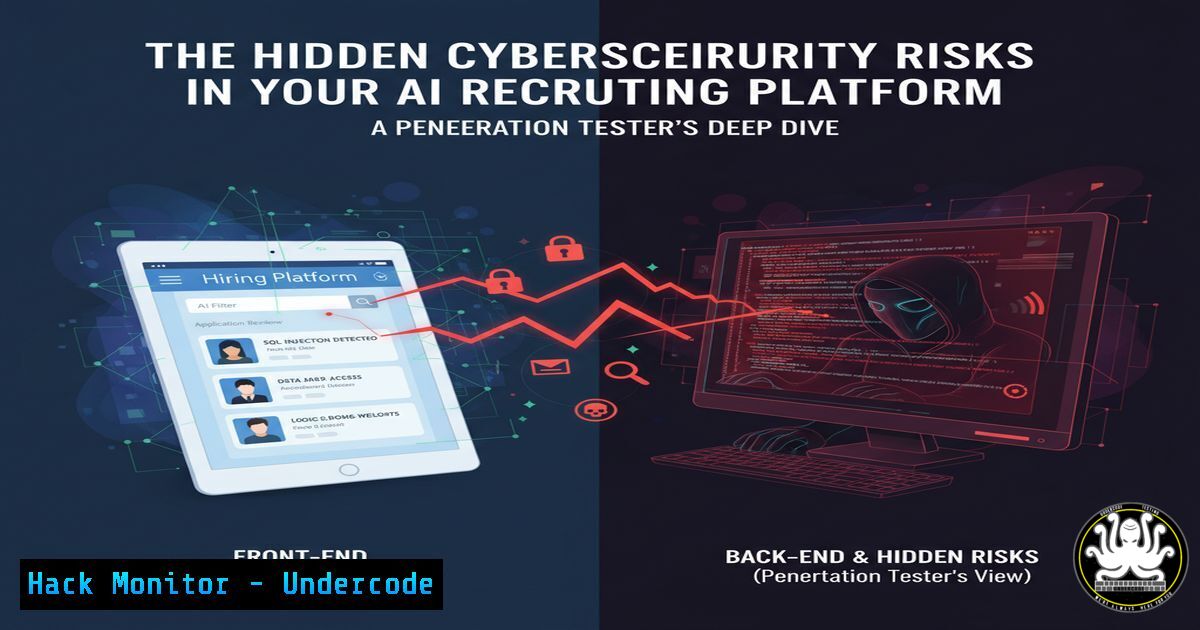
Introduction:
The rapid adoption of AI-powered recruiting platforms like OrcHire.ai represents a paradigm shift in talent acquisition, but it also introduces unprecedented cybersecurity challenges. These systems process massive amounts of sensitive personal data, corporate intellectual property, and hiring strategies, making them prime targets for sophisticated cyber attacks. Understanding the security implications of AI-driven HR technology is no longer optional—it’s essential for protecting organizational assets and candidate privacy.
Learning Objectives:
- Identify critical attack vectors in AI recruiting platforms and their underlying infrastructure
- Implement security hardening measures for cloud-based AI systems and data pipelines
- Develop monitoring and incident response strategies specific to AI-powered applications
You Should Know:
1. API Security Assessment for AI Recruitment Platforms
 Scan for API vulnerabilities using OWASP ZAP
docker run -v $(pwd):/zap/wrk/:rw -t owasp/zap2docker-stable zap-api-scan.py \
-t https://api.orchire.ai/graphql -f openapi -r api_report.html

Test for broken object level authorization
curl -H "Authorization: Bearer $TOKEN" \
"https://api.orchire.ai/api/v1/candidates/12345" \
&& curl -H "Authorization: Bearer $TOKEN" \
"https://api.orchire.ai/api/v1/candidates/67890"
Step-by-step guide: AI recruiting platforms rely heavily on APIs for data exchange between machine learning models, databases, and external systems. Begin by mapping all API endpoints using automated scanners. Test for broken object level authorization (BOLA) by accessing resources with incremental IDs using the same authentication token. Validate that role-based access control properly restricts sensitive candidate data and company hiring strategies.
2. Infrastructure Hardening for AI Training Environments
 Kubernetes security context hardening
apiVersion: v1
kind: Pod
metadata:
name: ai-training-pod
spec:
securityContext:
runAsNonRoot: true
runAsUser: 1000
runAsGroup: 3000
fsGroup: 2000
seccompProfile:
type: RuntimeDefault
containers:
- name: ml-training
securityContext:
allowPrivilegeEscalation: false
capabilities:
drop:
- ALL
Step-by-step guide: AI training environments processing sensitive hiring data require stringent container security measures. Implement non-root user execution, drop all Linux capabilities by default, and apply seccomp profiles to restrict system calls. Configure network policies to isolate training workloads and encrypt data both in transit and at rest using industry-standard protocols like TLS 1.3 and AES-256.
3. Data Pipeline Security Monitoring
 Anomaly detection for data exfiltration
import pandas as pd
from sklearn.ensemble import IsolationForest

def detect_data_anomalies(log_file):
df = pd.read_csv(log_file)
features = ['data_volume', 'transfer_time', 'destination_ip_frequency']
model = IsolationForest(contamination=0.01)
df['anomaly'] = model.fit_predict(df[bash])
return df[df['anomaly'] == -1]

Monitor for unusual data access patterns
alert on ML_Platform {
(data_access.source_ip != corporate_network) AND
(data_access.volume > 100MB) AND
(data_access.time in ["02:00-05:00"])
}
Step-by-step guide: AI systems continuously process candidate information, creating opportunities for data exfiltration. Implement machine learning-based anomaly detection to identify unusual data transfer patterns, including large volume downloads, access from unusual locations, or transfers during non-business hours. Correlate these with user behavior analytics to distinguish between legitimate use and potential breaches.
4. Model Integrity Verification and Poisoning Protection
 Checksum verification for AI model files
sha256sum candidate_matching_model.h5 > model_checksum.txt
gpg --verify model_signature.asc candidate_matching_model.h5

Continuous integrity monitoring
!/bin/bash
while true; do
current_hash=$(sha256sum /models/recruitment_ai.h5)
stored_hash=$(cat /secure/known_good_hash)
if [ "$current_hash" != "$stored_hash" ]; then
echo "ALERT: Model integrity compromised!" | systemd-cat -p alert
systemctl stop ai-recruitment-service
fi
sleep 300
done
Step-by-step guide: Adversarial attacks targeting AI recruiting platforms can manipulate model behavior to favor specific candidates or leak sensitive information. Implement cryptographic verification of model files before deployment, using digital signatures and secure hash verification. Establish continuous integrity monitoring to detect unauthorized modifications that could indicate model poisoning or backdoor insertion.
5. Privileged Access Management for AI Systems
 Windows: Audit service account privileges
Get-WmiObject -Class Win32_Service | Where-Object {
$_.StartName -like "orchire" } | Select-Object Name, StartName, State

Linux: Container service account hardening
apiVersion: v1
kind: ServiceAccount
metadata:
name: ai-service-account
namespace: production
automountServiceAccountToken: false
imagePullSecrets:
- name: registry-credentials
Step-by-step guide: AI recruiting platforms require extensive permissions to access candidate databases, communication systems, and HR platforms. Implement principle of least privilege for all service accounts, regularly audit assigned permissions, and use automated tools to detect privilege escalation paths. For containerized deployments, disable automatic service account token mounting and use dedicated secrets management solutions.
6. Secure AI Training Data Lifecycle Management
 Data sanitization before processing
find /incoming_candidate_data -name ".pdf" -exec pdf-redact-tools {} \;
find /incoming_candidate_data -name ".docx" -exec antiword {} \; | \
sed 's/[0-9]{3}-[0-9]{2}-[0-9]{4}/REDACTED/g' > processed.txt

Secure data disposal
!/bin/bash
for device in $(lsblk -lp | grep disk | awk '{print $1}'); do
echo "Wiping $device"
shred -v -n 3 -z $device
cryptsetup erase $device
done
Step-by-step guide: Candidate data used for AI training must be properly sanitized to remove sensitive personal information before processing. Implement automated redaction of social security numbers, contact information, and other identifiers. Establish secure data disposal procedures including cryptographic erasure for decommissioned storage devices and validate disposal through independent verification.
7. Incident Response for AI System Compromises
 Isolate compromised AI instances
aws ec2 modify-instance-attribute --instance-id i-1234567890abcdef0 --no-disable-api-termination
aws ec2 create-network-acl-entry --network-acl-id acl-12345678 --ingress --rule-number 100 \
--protocol -1 --rule-action deny --cidr-block 0.0.0.0/0

Forensic data collection
!/bin/bash
timestamp=$(date +%Y%m%d_%H%M%S)
mkdir /forensics/ai_breach_$timestamp
docker export ai_recruitment_container > /forensics/ai_breach_$timestamp/container_fs.tar
docker logs ai_recruitment_container > /forensics/ai_breach_$timestamp/container_logs.log
ps aux > /forensics/ai_breach_$timestamp/process_list.txt
Step-by-step guide: When AI recruiting platforms are compromised, immediate isolation and forensic preservation are critical. Begin by blocking network access to affected systems while preserving evidence for analysis. Collect container filesystems, system logs, process listings, and network connections before terminating instances. Coordinate with legal teams for breach notification requirements involving candidate data exposure.
What Undercode Say:
- AI recruiting platforms represent a massive expansion of attack surface, combining sensitive HR data with complex machine learning pipelines that most organizations are unprepared to secure
- The proprietary nature of these systems creates security through obscurity risks, where vulnerabilities may remain undetected until exploited at scale
- Organizations must implement specialized security controls that address both traditional application security concerns and emerging AI-specific threats
The convergence of artificial intelligence and human resources creates a perfect storm of security challenges. These systems process incredibly sensitive data while operating with unprecedented autonomy, making traditional security models inadequate. The proprietary algorithms that power platforms like OrcHire.ai represent both competitive advantage and significant risk—security teams cannot properly defend systems they don’t fully understand. As AI recruiting becomes mainstream, we’re likely to see sophisticated attacks targeting both the data and decision-making processes, potentially manipulating hiring outcomes or exfiltrating corporate strategy through the very systems designed to protect them.
Prediction:
Within the next 18-24 months, we will witness the first major data breach specifically targeting AI recruiting platforms, compromising millions of candidate records and exposing corporate hiring strategies. This will trigger increased regulatory scrutiny around AI data handling practices and force organizations to implement specialized AI security frameworks. The incident will accelerate development of AI-specific security tools and establish new compliance requirements for automated hiring systems, fundamentally changing how organizations approach AI governance in HR technology.
🎯Let’s Practice For Free:
IT/Security Reporter URL:
Reported By: Deepakahluwalia190894 Ats – Hackers Feeds
Extra Hub: Undercode MoN
Basic Verification: Pass ✅


