Listen to this Post
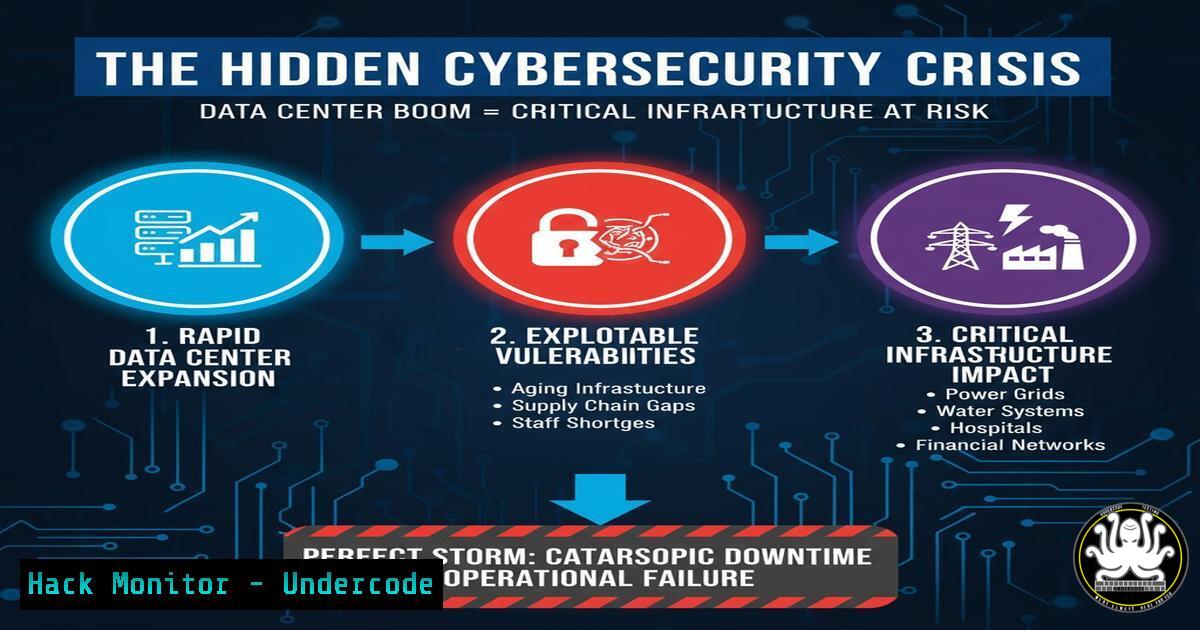
Introduction:
The exponential growth of data centers, driven by cloud computing and AI, is placing unprecedented strain on power grids. This creates a critical, and often overlooked, cybersecurity threat: an expanded attack surface targeting our already vulnerable electrical transmission infrastructure. As utilities scramble to meet demand, security can become an afterthought, leaving critical systems exposed.
Learning Objectives:
- Understand the convergence of IT, operational technology (OT), and energy infrastructure and its associated cyber risks.
- Learn hardening techniques for both Linux and Windows systems commonly used in utility and data center environments.
- Develop skills to detect and mitigate threats against industrial control systems (ICS) and energy management systems.
You Should Know:
1. Securing Linux-Based SCADA and Historian Servers
Verified Linux/Windows/Cybersecurity command list or code snippet or tutorials related to article
` Harden SSH configuration (edit /etc/ssh/sshd_config)`
`sudo sed -i ‘s/PasswordAuthentication yes/PasswordAuthentication no/’ /etc/ssh/sshd_config`
`sudo sed -i ‘s/PermitRootLogin prohibit-password/PermitRootLogin no/’ /etc/ssh/sshd_config`
`sudo systemctl restart sshd`
Step‑by‑step guide explaining what this does and how to use it.
This command sequence disables password-based authentication and direct root login via SSH, forcing the use of key-based authentication. This is a fundamental step in securing Linux servers that manage Supervisory Control and Data Acquisition (SCADA) systems and data historians, which are high-value targets. After running these commands, ensure all users have their SSH keys configured correctly before disconnecting.
- Auditing Windows Server Access Controls in Utility Domains
` PowerShell: Audit for weak service permissions`
`Get-WmiObject -Class Win32_Service | ForEach-Object { if (($_.StartName -eq “LocalSystem”) -or ($_.PathName -like ” -p “)) { Write-Output $_.Name } }`
Step‑by‑step guide explaining what this does and how to use it.
This PowerShell script identifies Windows services running with the powerful “SYSTEM” privileges or that have passwords potentially exposed in the command line. In a utility environment, a compromised service account can lead to lateral movement into critical operational networks. Run this in an elevated PowerShell session to generate a list of services that require immediate security review.
3. Network Segmentation for OT/IT Convergence
` Using iptables to segment OT network (Example)`
`sudo iptables -A FORWARD -i eth0 -o eth1 -p tcp –dport 44818 -j ACCEPT Allow CIP from IT to OT`
`sudo iptables -A FORWARD -i eth1 -o eth0 -m state –state ESTABLISHED,RELATED -j ACCEPT`
`sudo iptables -P FORWARD DROP Default deny all other cross-traffic`
Step‑by‑step guide explaining what this does and how to use it.
This iptables configuration creates a basic firewall rule set to control traffic between the IT network (eth0) and the Operational Technology (OT) network (eth1). It only allows the Common Industrial Protocol (CIP) on port 44818 from IT to OT and established return traffic, blocking all other unsolicited communication. This is a critical control to prevent IT-born threats from reaching sensitive control systems.
- Detecting Anomalous Network Traffic with Wireshark Display Filters
` Wireshark Filters for ICS Protocol Anomalies`
`cip.class != 0x04 and cip.class != 0x06 and cip.class != 0x08 Unknown CIP Class IDs`
`modbus.length > 300 Abnormally long Modbus frames (potential exploit)`
`dnp3.al.function_code != 1 and dnp3.al.function_code != 2 Uncommon DNP3 functions`
Step‑by‑step guide explaining what this does and how to use it.
These Wireshark display filters help security analysts sift through network captures to find potentially malicious activity within industrial protocols. They flag unknown CIP classes, oversized Modbus packets (which could indicate buffer overflow attempts), and unusual DNP3 function codes. Apply these filters in Wireshark to quickly identify traffic that deviates from baseline OT communications.
5. Cloud Hardening for Data Center Management Interfaces
` Azure CLI: Enable JIT VM access and enforce MFA for admins`
`az security jit-policy create –resource-group “DataCenter-Mgmt” –name “default” –vm “jumpbox-vm” –ports “22” –max-request-access-duration “PT3H”`
`az role assignment create –assignee [admin-UPN] –role “User Access Administrator” –scope /subscriptions/[subscription-id]`
Step‑by‑step guide explaining what this does and how to use it.
These Azure CLI commands implement Just-In-Time (JIT) access to a management jump box, reducing its attack surface, and assign a user the role needed to manage access policies. JIT access requires administrators to request access for a limited time, which is logged and audited. This is crucial for protecting the cloud consoles that manage data center operations.
6. Vulnerability Scanning for ICS/SCADA Components
` Using Nmap NSE scripts to scan for PLC vulnerabilities`
`nmap -sV –script modbus-discover,enip-info,s7-info -p 502,44818,102 [bash]`
Step‑by‑step guide explaining what this does and how to use it.
This Nmap command uses specialized scripts to identify and gather information from common Industrial Control System (ICS) devices like PLCs. It probes for Modbus, EtherNet/IP, and Siemens S7 communications. Run this from a dedicated security workstation within the OT DMZ to inventory active devices and identify systems running unsecured services.
7. Implementing API Security for Data Center Telemetry
` Python snippet to validate and sanitize API input (Flask example)`
`from flask import request, abort`
`import re`
`@app.route(‘/sensor/data’, methods=[‘POST’])`
`def receive_sensor_data():`
` client_ip = request.remote_addr`
` allowed_net = ‘10.10.100.0/24’ Sensor Network`
` if not ipaddress.IPv4Address(client_ip) in ipaddress.IPv4Network(allowed_net):`
` abort(403)`
` data = request.get_json()`
` if not re.match(r’^[a-zA-Z0-9_\.\-]{1,50}$’, data[‘sensor_id’]):`
` abort(400)`
Step‑by‑step guide explaining what this does and how to use it.
This Python code for a Flask API endpoint demonstrates input validation and network-based access control for data center telemetry ingestion. It checks that the request originates from the authorized sensor network and uses a regular expression to sanitize the `sensor_id` field, preventing injection attacks. This protects the APIs that aggregate performance and power usage data.
What Undercode Say:
- The physical strain on the grid is a direct catalyst for digital vulnerability. Rushed upgrades and increased interconnectivity create fragile, complex systems ripe for exploitation.
- The cybersecurity community must pivot to address the “physics of the problem.” Defending the energy sector requires a fusion of IT security, OT protocols, and an understanding of electrical transmission.
The data center boom isn’t just an energy policy problem; it’s a national security amplifier. The conversation started by industry insiders highlights a critical gap: our digital expansion is physically outpacing our ability to secure its foundational infrastructure. As utilities are forced to integrate new technologies and data streams under duress, classic security failures are inevitable. Adversaries, from nation-states to cybercriminals, recognize that the most efficient way to disrupt the digital economy is to target the overburdened, under-secured physical grid that powers it. The focus on AI ethics and cloud economics is a distraction from the more immediate threat—that our digital future is being built on a fragile and increasingly targeted physical base.
Prediction:
Within the next 18-36 months, we will see a major cyber-attack successfully cause a multi-state power outage, directly attributed to the compounded vulnerabilities introduced by the rapid, poorly secured integration of data center load management systems with legacy grid control infrastructure. This will force a regulatory reckoning, mandating new classes of cybersecurity controls for any entity connected to the bulk electric system, ultimately slowing the pace of data center expansion due to security compliance costs.
🎯Let’s Practice For Free:
IT/Security Reporter URL:
Reported By: Roman Y – Hackers Feeds
Extra Hub: Undercode MoN
Basic Verification: Pass ✅


