Listen to this Post
Introduction:
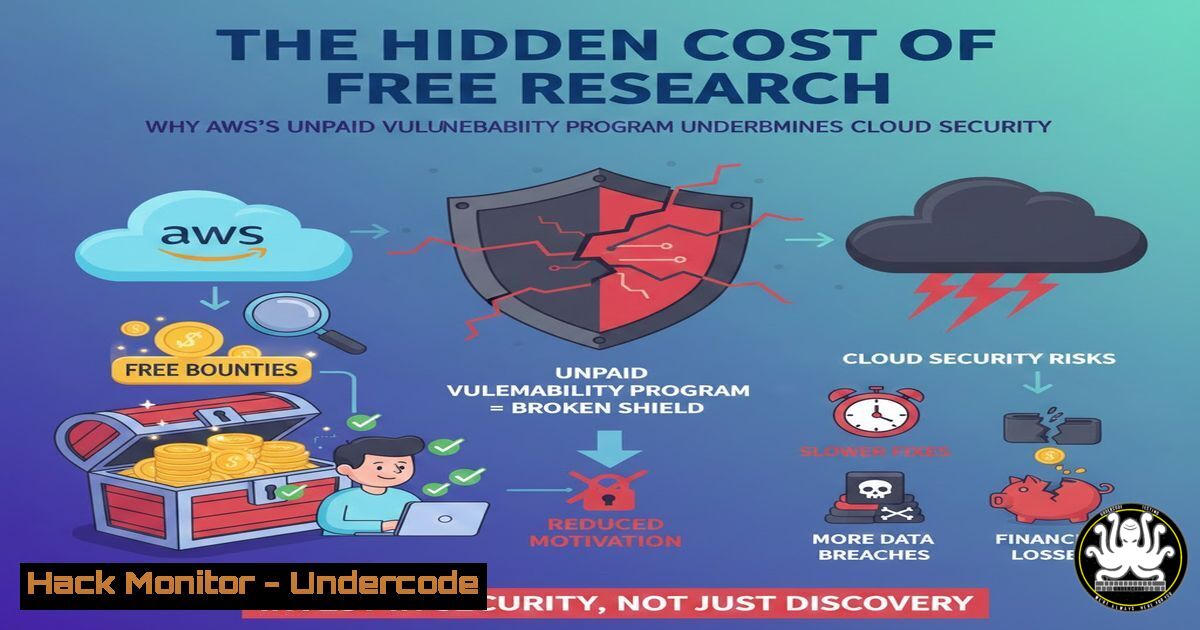
The disparity between cloud providers’ bug bounty programs has become a critical issue in cybersecurity research. While Google Cloud Platform offers bounties up to $101,010 and Azure provides $60,000, AWS operates a Vulnerability Disclosure Program (VDP) that pays researchers exactly $0 for their discoveries, despite receiving 164 vulnerability reports in just 90 days. This approach creates fundamental inequities in how security research is valued and compensated across major cloud platforms.
Learning Objectives:
- Understand the critical differences between paid bug bounty programs and voluntary disclosure programs
- Analyze the economic and professional incentives driving cloud security research
- Learn practical cloud security assessment techniques relevant to modern infrastructure
You Should Know:
1. The Economics of Vulnerability Research
Security research represents a significant investment of time, expertise, and resources. Professional researchers typically spend 20-40 hours investigating complex cloud vulnerabilities, including reconnaissance, testing, documentation, and coordination with vendor security teams. Unlike AWS’s voluntary program, paid bug bounties create sustainable economic models that recognize this investment.
The financial equation is straightforward: GCP’s top bounty of $101,010 translates to approximately $2,500-$5,000 per hour of research time for high-value findings. AWS’s $0 bounty means researchers essentially donate this same expertise while AWS benefits from free security auditing worth millions annually.
2. Cloud Security Assessment Fundamentals
Before diving into vulnerability research, understanding basic cloud assessment techniques is crucial. Here’s a structured approach:
Step 1: Environment Reconnaissance
 AWS CLI commands for service discovery
aws ec2 describe-instances
aws s3api list-buckets
aws iam list-users

Azure equivalent
az vm list
az storage account list
az ad user list

GCP equivalent
gcloud compute instances list
gcloud storage buckets list
gcloud iam service-accounts list
Step 2: Permission Enumeration
 AWS IAM privilege assessment
aws iam get-account-authorization-details
aws iam simulate-principal-policy --policy-source-arn arn:aws:iam::123456789012:user/JohnDoe --action-names "s3:" "ec2:"

Check for privilege escalation vectors
aws iam list-user-policies --user-name target-user
aws iam list-attached-user-policies --user-name target-user
Step 3: Network Exposure Analysis
 Security group assessment
aws ec2 describe-security-groups
aws ec2 describe-network-acls

Identify publicly accessible resources
aws ec2 describe-instances --query 'Reservations[].Instances[?PublicIpAddress!=<code>null</code>]'
3. The Conference Presentation Dilemma
Public bug bounty programs typically allow researchers to present their findings at major security conferences like Black Hat, DEF CON, or cloud-specific events. This “internet fame” and professional recognition often outweighs monetary compensation for many researchers.
However, AWS’s VDP includes non-disclosure requirements that can prevent researchers from discussing their findings publicly. This creates a fundamental conflict: researchers want recognition for their work, while AWS maintains control over vulnerability disclosure timelines and public discussion.
The process typically involves:
1. Initial vulnerability discovery and validation
- Submission through VDP portal (https://aws.amazon.com/security/vulnerability-reporting/)
- Two or more coordination meetings with AWS security teams
4. Retesting after patches are deployed
5. Blog post review and approval process
6. Potential conference presentation approval
4. Business Impact of Security Research
For security companies like OffensAI, vulnerability research serves multiple business purposes beyond direct bounty payments:
- Client attraction and retention through demonstrated expertise
- Marketing and brand establishment in competitive cloud security markets
- Employee recruitment and retention by offering interesting research opportunities
- Product development insights that inform commercial security tools
The calculus changes when bounties are introduced: GCP’s $101,000 bounty might cover 25-50% of a researcher’s annual compensation, making dedicated research positions economically viable. AWS’s approach forces security firms to absorb these costs while AWS benefits from the findings.
5. The Ethical Dimension of Unpaid Research
The cybersecurity community faces an ethical dilemma regarding unpaid vulnerability research. While responsible disclosure is crucial, the current model creates several concerns:
- Only well-funded organizations can afford extensive AWS security research
- Individual researchers may be forced to choose between financial sustainability and contributing to ecosystem security
- Critical vulnerabilities might remain unreported if researchers cannot justify the time investment
- The playing field becomes uneven compared to other cloud platforms that compensate researchers
The fundamental question remains: Should the world’s largest cloud provider, with annual revenues exceeding $80 billion, rely on unpaid security research to protect its infrastructure and customers?
6. Alternative Research Funding Models
While AWS maintains its current VDP approach, researchers have developed alternative models to sustain their work:
- Consulting engagements focused on cloud security assessments
- Commercial tool development that incorporates research findings
- Training courses and certification programs
- Sponsored research from AWS competitors or complementary technology providers
- Venture funding for security startups based on research capabilities
Each model presents trade-offs between research independence, financial sustainability, and public benefit. However, none provide the straightforward compensation of formal bug bounty programs.
7. The Future of Cloud Security Research
As cloud adoption accelerates, the stakes for vulnerability research continue to rise. Several trends suggest AWS’s current approach may become unsustainable:
- Increasing complexity of cloud environments creates more attack surfaces
- Growing sophistication of nation-state and criminal attackers
- Rising costs of security expertise and research infrastructure
- Expanding regulatory requirements for vulnerability management
- Growing researcher awareness of compensation disparities between platforms
The cloud security community increasingly expects equitable compensation models that recognize the value researchers provide to ecosystem security.
What Undercode Say:
- The current model creates an unsustainable imbalance where AWS receives free security research worth millions annually while researchers bear the costs
- Without financial incentives, the quantity and quality of AWS security research may decline over time, potentially leaving critical vulnerabilities undiscovered
- The disparity between cloud providers creates market distortions that could ultimately impact overall cloud security posture
The fundamental issue extends beyond individual bounty payments to the broader economics of cybersecurity research. As cloud infrastructure becomes increasingly critical to global business operations, ensuring sustainable security research models becomes essential. AWS’s current approach risks creating a tragedy of the commons situation where individual researchers cannot justify investments that benefit the entire ecosystem. The solution likely involves a hybrid approach combining reasonable bounty payments with flexible disclosure policies that recognize both the financial and professional needs of security researchers.
Prediction:
Within 2-3 years, market pressure and competitive dynamics will force AWS to implement a paid bug bounty program matching or exceeding GCP’s offerings. The growing volume of high-quality research being directed toward other platforms, combined with increasing customer awareness of these disparities, will create business imperatives that outweigh the current cost savings. Additionally, regulatory developments around vulnerability disclosure and software liability may formalize expectations for researcher compensation, making the current voluntary model untenable for market leaders.
🎯Let’s Practice For Free:
IT/Security Reporter URL:
Reported By: Activity 7398641251719319552 – Hackers Feeds
Extra Hub: Undercode MoN
Basic Verification: Pass ✅


