
Listen to this Post
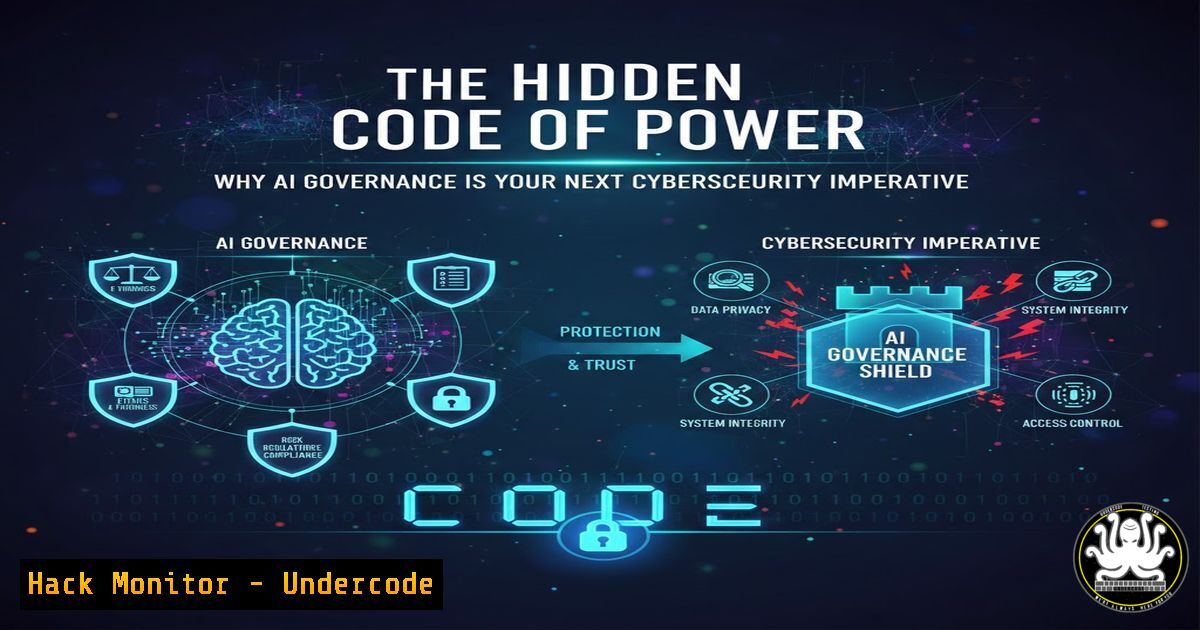
Introduction:
The debate surrounding artificial intelligence is often falsely framed as a binary choice between innovation and regulation. However, this perspective dangerously ignores the reality that in the absence of democratic governance, rule-making authority simply defaults to the most powerful technological and geopolitical actors. This shift represents a profound cybersecurity and IT governance crisis, where the core values, security postures, and operational integrity of our digital infrastructure are dictated by private corporate interests or foreign state agendas.
Learning Objectives:
- Understand why the “innovation vs. regulation” debate is a misdirection from the real issue of who governs AI.
- Analyze the cybersecurity and supply chain risks embedded in uncontrolled AI deployment and infrastructure dependency.
- Learn technical and governance steps to audit AI systems, mitigate bias, and harden AI-integrated applications within your organization.
You Should Know:
1. Debunking Innovation: Implementing Technical Value Assessments
The myth that all innovation equals progress is a critical vulnerability. Deploying a cutting-edge AI model without assessing its alignment with business goals and security standards introduces risk, not value. Technical progress requires deliberate direction enforced through policy and code.
Step‑by‑step guide explaining what this does and how to use it.
Step 1: Define “Value” with Technical KPIs. Before integration, move beyond vague promises. Define success with measurable Key Performance Indicators (KPIs) aligned to security and business goals. Examples: “Reduce false positives in SOC alerts by 20%,” not “Make security smarter.”
Step 2: Conduct a Pre-Deployment Threat Model. Use frameworks like STRIDE to model threats to the AI system. Diagram data flows, identify trust boundaries (e.g., where user input enters the model), and catalogue potential threats like Spoofing of input data, Tampering with the model, or Information disclosure via prompt injection.
Step 3: Establish a Baseline and Rollback Protocol. Before going live, establish performance and security baselines. Ensure you have a technical rollback plan (e.g., container versioning, API endpoint versioning) to quickly revert if the AI system behaves unpredictably or is compromised.
- The Geopolitical Reality: Auditing for Embedded Values and Bias
The post highlights that AI built in the US or China embeds those regions’ values and biases. From a cybersecurity perspective, this is a form of supply chain attack on cognitive integrity. Your organization may inadvertently import systemic bias or compliance violations.
Step‑by‑step guide explaining what this does and how to use it.
Step 1: Bias and Fairness Auditing. Use open-source libraries to test models for bias. For a hiring algorithm, you could use `AI Fairness 360` (a Python toolkit from IBM).
from aif360.datasets import BinaryLabelDataset
from aif360.metrics import ClassificationMetric
from aif360.algorithms.preprocessing import Reweighing
 Load your dataset and protected attribute (e.g., 'gender')
dataset = BinaryLabelDataset(...)
 Calculate disparate impact ratio
metric = ClassificationMetric(dataset, dataset_pred,
unprivileged_groups=[{'gender': 0}],
privileged_groups=[{'gender': 1}])
print(f"Disparate Impact: {metric.disparate_impact()}")
 A value far from 1.0 indicates potential bias.
Step 2: Data Provenance and Pedigree Checks. Demand transparency on training data from vendors. Where possible, use tools like `Great Expectations` or custom scripts to profile your own input data for representational gaps before it’s fed to an AI.
Step 3: Implement “Values Alignment” Testing. Create a test suite of prompts that probe for alignment with your organization’s ethical principles and regulatory requirements (e.g., GDPR, AI Act). Run these periodically against the AI’s API.
- The EU AI Act as a Technical Blueprint for Risk Classification
The AI Act’s risk-based approach is a governance framework that can be translated into technical controls. Treating all AI equally is a security failure.
Step‑by‑step guide explaining what this does and how to use it.
Step 1: Classify Your AI Use-Cases. Categorize each AI application as prohibited, high-risk (e.g., CV screening, critical infrastructure), limited risk (e.g., chatbots), or minimal risk.
Step 2: Map Controls to Risk Levels. For a high-risk system, technical requirements include:
Logging & Traceability: Implement immutable, detailed logs of all AI decisions (input, output, model version, timestamp). Use `Linux auditd` or a SIEM.
 Example audit rule to monitor access to a critical AI model file
sudo auditctl -w /opt/models/critical_model.pkl -p war -k ai_audit
Human Oversight: Build technical interfaces that allow for human review and veto of certain AI outputs. This is a feature flag in your application logic.
Robustness & Accuracy: Implement continuous testing with adversarial example generation (e.g., using `TextAttack` for LLMs) to stress-test the model.
- The Infrastructure Control Threat: Securing Against Platform Power
The example of ICC judges being cut off from services underscores a critical risk: dependency on AI infrastructure controlled by few private actors. This is an availability and sovereignty threat.
Step‑by‑step guide explaining what this does and how to use it.
Step 1: Architect for Portability. Avoid complete vendor lock-in. Use containerization (Docker) and orchestration (Kubernetes) to package AI applications. Store model artifacts in a vendor-neutral format (ONNX, PMML).
Step 2: Plan for Abstraction. Use API gateways or abstraction layers to interface with AI services (e.g., OpenAI, Azure AI). This allows you to swap providers with minimal code changes if a vendor acts arbitrarily.
Step 3: Implement Aggressive Caching and Fallbacks. For critical functions, cache AI responses where possible. Design system fallbacks (e.g., rule-based systems, human-in-the-loop queues) to maintain operations if the AI service becomes unavailable or unusable.
- The Illusion of AI Value: From Dependency to Empowered Governance
Digitalization without governance creates costly dependency, shifting value to platform providers. The goal is strategic empowerment.
Step‑by‑step guide explaining what this does and how to use it.
Step 1: Calculate the Total Cost of AI Ownership (TCAO). Factor in not just API/compute costs, but also the engineering hours for integration, security hardening, compliance overhead, and risk mitigation. Compare this to the quantified value (see Objective 1).
Step 2: Develop In-House AI Governance Expertise. Train your cybersecurity and IT teams on AI fundamentals, model security (OWASP Top 10 for LLMs), and relevant regulations. This reduces reliance on external consultants for basic governance.
Step 3: Establish an AI Review Board. Create a cross-functional team (Legal, Security, IT, Ethics, Business) that must approve all new AI use-cases before procurement or development begins. This is a human governance control point.
What Undercode Say:
- Governance is the New Firewall. The most significant threat from AI may not be a direct exploit, but the silent adoption of systems whose rules, biases, and availability are controlled by external powers. Technical governance—auditing, logging, bias testing, and portable architecture—is as critical as any network security control.
- The Battle is for Control Points. The conflict is not about stopping AI, but about who controls the key points: the training data, the model weights, the infrastructure, and the API gates. Your security strategy must now include policies and technical measures to retain control at these layers.
Prediction:
In the next 3-5 years, we will see the first major “AI Governance Breach” incidents. These won’t be traditional hacks, but events where organizations face massive legal liability, reputational damage, or operational collapse due to ungoverned AI—whether through biased outputs leading to discriminatory lawsuits, dependency on a single AI provider causing business discontinuity, or embedded values in AI clashing with local laws. Organizations that have implemented structured AI governance frameworks, with the technical controls to match, will navigate this future as a manageable risk. Those that don’t will find themselves victims of a power dynamic they never understood was a battlefield.
▶️ Related Video (82% Match):
🎯Let’s Practice For Free:
IT/Security Reporter URL:
Reported By: Chiaragallesephd No – Hackers Feeds
Extra Hub: Undercode MoN
Basic Verification: Pass ✅


