Listen to this Post
Introduction:
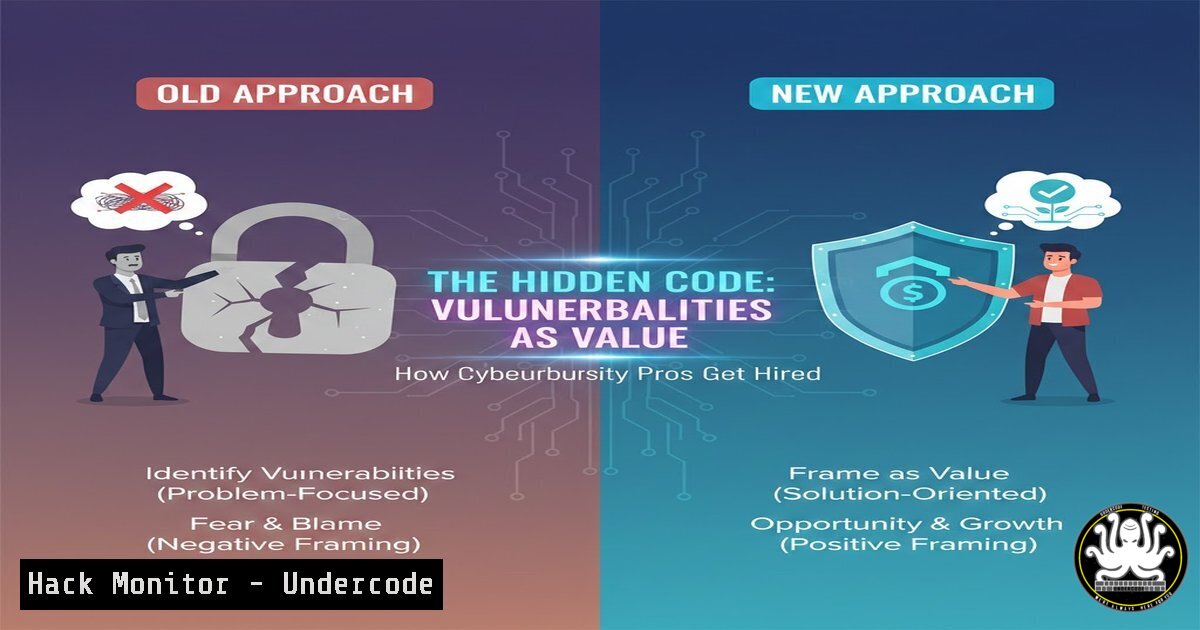
In the high-stakes world of cybersecurity and IT hiring, technical prowess is merely the entry ticket. The real differentiator is a candidate’s ability to articulate complex incidents, risks, and solutions with clarity, confidence, and strategic framing. This article decodes how the principle of “how you say it” transforms technical knowledge into career advancement, turning interview conversations from vulnerability assessments into value propositions.
Learning Objectives:
- Reframe technical weaknesses and knowledge gaps as learning trajectories and proactive security postures.
- Master the communication of technical incidents (breaches, exploits, outages) with structured, blame-free methodology.
- Translate hands-on technical skills (from log analysis to patch deployment) into compelling narratives that demonstrate business acumen.
You Should Know:
- Reframing the “Knowledge Gap”: From “I Don’t Know” to “Here’s My Investigation Path”
A direct “I don’t know” about a specific technology (e.g., BloodHound for AD enumeration) can signal a hard stop. The reframed answer demonstrates analytical process and initiative, which are critical in security operations.
Step-by-step guide:
The Weak Response: “I haven’t used BloodHound.”
The Strong, Framed Response: “I haven’t deployed BloodHound in production yet, but I understand its role in attacking Active Directory privilege escalation paths. My approach to learning a new tool like this is systematic: First, I would set up a segmented lab environment. Second, I would run it against a test domain to map the attack paths it identifies. Third, I would correlate its findings with MITRE ATT&CK techniques like TA0008 (Lateral Movement) and T1482 (Domain Trust Discovery) to understand the defensive mappings.”
Technical Command/Process Reinforcement:
 Example of a structured learning process in a lab:
 1. Set up a test domain controller (Windows Server) and client.
 2. Install BloodHound on a Kali Linux attacker VM.
 3. Use Sharphound ingestor to collect data.
 Command to collect data (example):
 SharpHound.exe --CollectionMethods All --Domain testlab.local --OutputDirectory C:\temp
 4. Import data into BloodHound and analyze pre-built queries.
This shows you don’t just know tool names, but you know the methodology for offensive security research and defensive gap analysis.
- Discussing Past Incidents: From “We Got Hacked” to “Here’s Our IR Playbook in Action”
When asked about a past security incident, avoid simplistic failure statements. Frame it as a validation of your Incident Response (IR) process.
Step-by-step guide:
The Weak Response: “A webserver was breached due to an unpatched vulnerability.”
The Strong, Framed Response: “Our monitoring systems triggered an alert on unusual outbound traffic from a web server. This initiated our IR playbook. We immediately isolated the system (Step 1: Containment). Forensic analysis, reviewing Apache logs and using rkhunter, revealed exploitation of CVE-2021-41773 (Step 2: Identification). We had a pre-tested patch ready and deployed it across the fleet using Ansible (Step 3: Eradication). We then performed a root cause analysis which led to us hardening our patch management SLA and implementing a WAF rule block (Step 4: Recovery & Lessons Learned).”
Technical Command/Process Reinforcement:
 Example Linux commands for initial triage during such an incident:
 1. Isolate network: `iptables -A INPUT -s <compromised_ip> -j DROP`
 2. Check for suspicious processes: `ps aux | grep -E '(apache|httpd)'`
 3. Examine recent log entries for path traversal patterns:
 `tail -500 /var/log/apache2/access.log | grep "\.\./"`
 4. Tool for rootkit check: `sudo rkhunter --check`
This transforms a story of failure into a demonstration of procedural competence and continuous improvement.
- Explaining Technical Concepts: From Jargon to Business Impact
Interviewers test your ability to communicate risk to non-technical stakeholders. Avoid deep jargon dives.
Step-by-step guide:
The Weak Response: “We need to implement DLP to prevent data exfiltration.”
The Strong, Framed Response: “To protect our customer PII and intellectual property, we propose a Data Loss Prevention (DLP) solution. Think of it as a smart filter for all data leaving the company. It scans emails, uploads, and USB transfers for sensitive patterns (like credit card numbers). If it detects a policy violation, it can block the transfer and alert the security team. This directly mitigates the risk of regulatory fines (like GDPR) and reputational damage from a data breach.”
Technical Concept Reinforcement: Relate it to a specific control, e.g., “This addresses the NIST CSF subcategory PR.DS-2: ‘Data-at-rest is protected’ and PR.DS-5: ‘Data-in-transit is protected.'”
- The “Why This Company?” Question: From Generic Praise to Targeted Security Analysis
Show you’ve done your homework on their technical landscape and threat model.
Step-by-step guide:
The Weak Response: “I admire your company’s products.”
The Strong, Framed Response: “I see your company is migrating its e-commerce platform to AWS. I’m experienced in cloud security hardening, specifically with AWS Security Hub and SCPs (Service Control Policies). Given the rise in attacks against cloud assets, I’m keen to apply my experience in configuring GuardDuty for threat detection and implementing IAM policies based on the principle of least privilege to your environment, helping secure that transition.”
Technical Command/Process Reinforcement:
 Example of a tangible skill: Writing an SCP to restrict actions.
 This policy denies leaving AWS's EU region.
{
"Version": "2012-10-17",
"Statement": [
{
"Effect": "Deny",
"Action": "",
"Resource": "",
"Condition": {
"StringNotEquals": {
"aws:RequestedRegion": "eu-west-1"
}
}
}
]
}
- The “Strength & Weakness” Paradox: Frame Weakness as a Security Mindfulness
Turn a common weakness into a security professional’s cautious strength.
Step-by-step guide:
The Weak Response: “I’m a perfectionist.”
The Strong, Framed Response: “One trait I continuously manage is a tendency toward deep, thorough analysis before major changes. In security, this translates to rigorous testing before deploying a new firewall rule or security patch in production. While I’ve learned to balance this with operational urgency through staged rollouts and canary deployments, this mindfulness has prevented outages and unintended security holes that could arise from rushed implementations.”
What Undercode Say:
- Technical Interviews are Verbal Security Audits: You are being audited not just on what you know, but on how you think, communicate risk, and structure your response—the exact skills needed for writing incident reports or advising the board.
- Framing is Incident Response for Your Career: A poorly framed answer is a reputational vulnerability. A well-framed answer is the patch and compensating control that turns a potential weakness into a demonstrated strength.
The core analysis is that in technical fields, communication is the API through which your skills are accessed by the organization. A messy, insecure, or poorly documented API renders even the most powerful backend code useless. Your interview responses are that API. The LinkedIn post’s insight about “how you say it” is amplified tenfold in cybersecurity, where the consequences of miscommunication can be catastrophic. By preparing technical, procedural narratives just as you prepare for a certification exam, you demonstrate the number one unteachable skill: judgment.
Prediction:
The future of technical hiring, especially in AI and cybersecurity, will increasingly leverage structured behavioral analytics and scenario-based simulations. AI tools will initially screen candidates by evaluating the precision, clarity, and structure of their written and verbal responses to technical problems. The ability to frame answers effectively will become a quantifiable metric. Furthermore, as AI handles more routine tasks, the human professional’s value will hinge almost entirely on high-level interpretation, risk communication, and strategic decision-making—all exercised in the interview. Candidates who cannot master this narrative framing will be filtered out by algorithms before they even meet a human, making this soft skill the ultimate hard requirement.
▶️ Related Video (76% Match):
🎯Let’s Practice For Free:
IT/Security Reporter URL:
Reported By: Kotha Nandakumari – Hackers Feeds
Extra Hub: Undercode MoN
Basic Verification: Pass ✅


