Listen to this Post
Introduction:
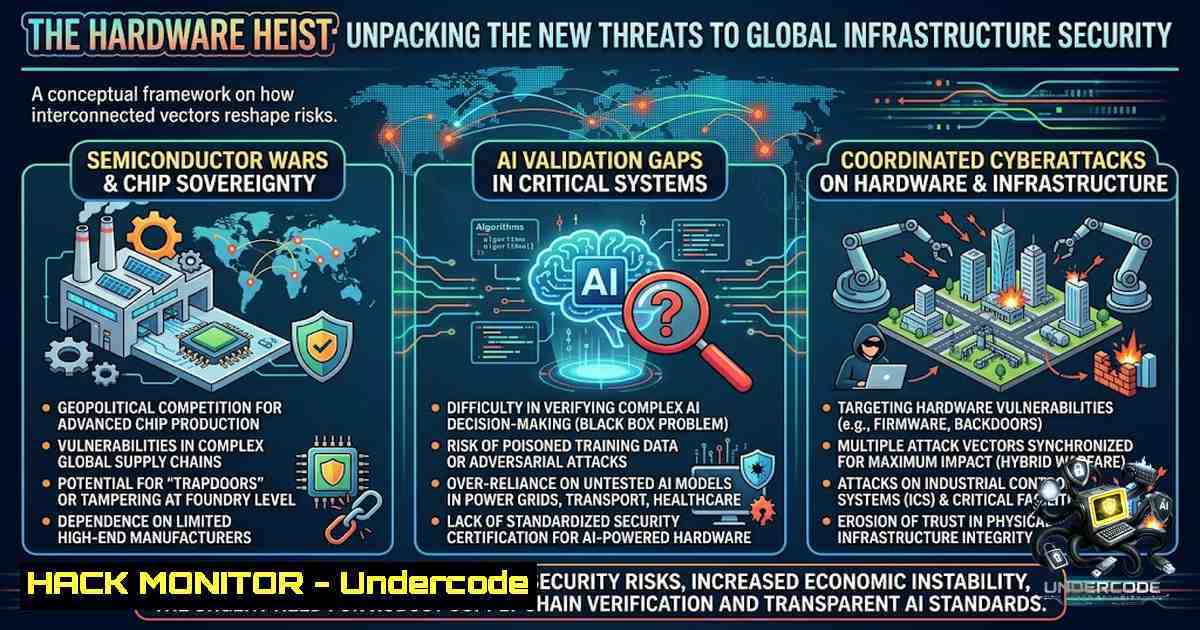
The global technology ecosystem is undergoing a forced migration from software experimentation to hardware-critical infrastructure and workforce restructuring. As synthetic biology models like Evo1 and Evo2 design functioning synthetic viruses and NIST releases the TEVV-Athlon framework for structured AI validation, the attack surface has expanded beyond traditional IT perimeters. Simultaneously, coordinated cyberattacks on municipal water systems, the exposure of over 100,000 UK police officers’ personal data, and a 94.1% year-on-year semiconductor revenue surge driven by AI memory demand signal a new era where hardware supply chains, AI governance, and critical infrastructure security are inextricably linked.
Learning Objectives:
- Understand the implications of the NIST TEVV-Athlon framework for AI system validation and how to implement TEVV cycles in enterprise environments.
- Master defensive techniques against social engineering attacks, including endpoint hardening and employee training protocols.
- Learn how to secure critical infrastructure (SCADA/ICS) against coordinated cyberattacks using network segmentation, monitoring, and incident response.
- Analyze the semiconductor supply chain risks and opportunities presented by AI-driven memory demand and advanced packaging technologies.
- Apply Linux and Windows commands for security auditing, log analysis, and system hardening in response to the threats discussed.
You Should Know:
1. The TEVV-Athlon Framework: Operationalizing AI Trustworthiness
On August 4, 2026, NIST officially released the TEVV-Athlon framework, establishing structured testing and validation metrics for real-world AI applications. Unlike traditional benchmark chasing, TEVV-Athlon introduces a multi-disciplinary approach that evaluates AI systems across test, evaluation, verification, and validation dimensions. This framework is critical because AI models like Evo1 and Evo2, which can design synthetic viruses, pose existential risks if deployed without rigorous safety guardrails.
Step‑by‑step guide to implementing a TEVV-Athlon cycle:
- Define Test Harness: Establish a controlled environment that mirrors production but with synthetic data. Use Python’s `unittest` or `pytest` to create automated test suites that evaluate model outputs against safety thresholds.
import pytest
from your_model import AIInference</li>
</ol>

def test_safety_constraints():
model = AIInference()
output = model.generate(prompt="Design a bacteriophage")
assert "virulent" not in output.lower(), "Safety violation detected"
- Evaluation Metrics: Implement the NIST AI RMF measurement categories: validity, reliability, safety, fairness, and security. Use tools like `mlflow` or `weights-and-biases` to track these metrics across training runs.
Linux: Run model evaluation with custom metrics
mlflow run . -e evaluate --env-manager=local --parameters metrics_file=tevv_metrics.json
-
Verification: Perform static and dynamic analysis of model weights and architecture. Use `onnxruntime` to verify model graph integrity and detect adversarial vulnerabilities.
Verify model with ONNX Runtime onnxruntime.check_model("model.onnx") -
Validation: Deploy the model in a sandboxed environment with real-time monitoring. Use `prometheus` and `grafana` to visualize validation metrics and set up alerts for drift or anomalous behavior.
prometheus.yml - Monitor model drift</p></li>
</ol>

<p>- job_name: 'model_validation'
static_configs:
- targets: ['localhost:9090']
2. Social Engineering Defense: Hardening the Human Firewall
The Levi Strauss & Co. data breach on August 7, 2026, exposed corporate data via a social engineering attack compromising three employee endpoints. This incident underscores that technical controls are insufficient without robust human-layer defenses.
Step‑by‑step guide to mitigating social engineering risks:
- Employee Training and Simulation: Conduct monthly phishing simulations using platforms like `GoPhish` or
KnowBe4. Train employees to recognize pretexting, baiting, and tailgating attempts.Linux: Deploy GoPhish for phishing simulation wget https://github.com/gophish/gophish/releases/latest/download/gophish-v0.12.1-linux-64bit.zip unzip gophish-v0.12.1-linux-64bit.zip ./gophish
-
Endpoint Hardening: Implement application whitelisting, disable macros, and enforce least-privilege access. On Windows, use `AppLocker` or
Windows Defender Application Control.Windows PowerShell: Enable AppLocker rules Set-AppLockerPolicy -PolicyType "Exe" -RuleType "Publisher" -User "Everyone" -Path "C:\Program Files\TrustedApps\"
-
Multi-Factor Authentication (MFA): Enforce MFA for all corporate accounts, especially those with administrative privileges. Use `Microsoft Entra ID` or `Okta` for conditional access policies.
Azure AD: Require MFA for all users New-AzureADConditionalAccessPolicy -1ame "Require MFA" -Conditions @{Users=@{IncludeUsers="All"}} -GrantControls @{BuiltInControls="Mfa"} -
Incident Response Playbook: Develop a playbook specifically for social engineering incidents. Include steps for isolating compromised endpoints, resetting credentials, and conducting forensic analysis.
Linux: Isolate compromised endpoint via iptables
iptables -A INPUT -s <compromised_ip> -j DROP
-
Critical Infrastructure Security: Protecting SCADA and ICS Systems
The coordinated cyberattack targeting over 30 municipal water systems in Minnesota on July 26–27, 2026, briefly disrupted a water treatment plant. This attack highlights the vulnerability of operational technology (OT) environments.
Step‑by‑step guide to securing SCADA/ICS networks:
- Network Segmentation: Isolate OT networks from IT networks using firewalls and one-way diodes. Implement VLANs and access control lists (ACLs) to restrict traffic.
Cisco IOS: Create VLAN for SCADA
vlan 100
name SCADA_Network
interface vlan 100
ip address 10.10.100.1 255.255.255.0
-
Monitoring and Anomaly Detection: Deploy passive network monitoring tools like `Wireshark` or `Security Onion` to detect unusual traffic patterns, such as unexpected Modbus or DNP3 commands.
Linux: Capture and analyze Modbus traffic
tcpdump -i eth0 -s 0 -w scada_traffic.pcap port 502
Analyze with wireshark or use modbus-cli
modbus-cli --host 10.10.100.50 --port 502 read-holding-registers 0 10
-
Patch Management: Prioritize patching known vulnerabilities in OT devices. Use `Shodan` or `Censys` to identify exposed OT assets and apply firmware updates from vendors.
Linux: Use nmap to scan for OT devices
nmap -sS -p 502,102,44818 10.10.100.0/24 --open
-
Incident Response for OT: Develop a playbook that includes manual overrides and isolation procedures. Regularly test failover mechanisms.
Simulate failover to backup PLC
plc-tool --switch-backup --plc-id 1
-
Semiconductor Supply Chain Security: AI Memory and Advanced Packaging
Omdia revised global semiconductor revenue forecasts on August 10, 2026, projecting a 94.1% year-on-year surge in 2026 driven by AI memory demand. MediaTek committed a $5 billion investment in Intel’s EMIB-T packaging on August 10, 2026, to bypass TSMC’s CoWoS packaging constraints. This shift introduces new supply chain risks, including counterfeit components and intellectual property theft.
Step‑by‑step guide to securing semiconductor supply chains:
- Hardware Asset Inventory: Maintain a comprehensive inventory of all hardware assets, including chip models, serial numbers, and firmware versions. Use `Sysinternals` on Windows or `lshw` on Linux.
Linux: List hardware details
sudo lshw -short
Windows: Use PowerShell to get hardware info
Get-WmiObject -Class Win32_ComputerSystem
-
Firmware Integrity Verification: Implement secure boot and firmware signing. Use `UEFI Secure Boot` and `TPM` to verify boot process integrity.
Linux: Check Secure Boot status
mokutil --sb-state
Windows: Check TPM status
Get-Tpm
-
Supply Chain Threat Intelligence: Subscribe to threat intelligence feeds that monitor semiconductor supply chain risks, such as `CISA’s ICS-CERT` or
MITRE ATT&CK for ICS. Use `TheHive` or `MISP` to aggregate and analyze threat data.Linux: Install MISP for threat intelligence sharing git clone https://github.com/MISP/MISP.git cd MISP make install
-
Counterfeit Detection: Use X-ray inspection and electrical testing to verify chip authenticity. Implement cryptographic authentication using `secure elements` like
ATECC608A.Python: Authenticate chip using CryptoAuthentication from cryptoauthlib import atca_init() atca_read_serial_number()
5. Cloud and Payment Infrastructure Hardening
India’s DPIIT signed strategic MoUs on August 8, 2026, with Cashfree Payments, Vultr India, and Cars24 to bolster startup cloud and payment ecosystems. As cloud adoption accelerates, securing payment APIs and cloud workloads becomes paramount.
Step‑by‑step guide to hardening cloud and payment infrastructure:
- API Security: Implement OAuth 2.0 and JWT for authentication. Use API gateways like `Kong` or `AWS API Gateway` to enforce rate limiting and input validation.
Kong: Create a service and route with rate limiting
curl -i -X POST http://localhost:8001/services/ -d name=payment-api -d url=http://payment-service:8080
curl -i -X POST http://localhost:8001/services/payment-api/routes -d paths[]=/pay
curl -i -X POST http://localhost:8001/plugins -d name=rate-limiting -d config.minute=100 -d config.policy=local
-
Cloud Workload Security: Use infrastructure as code (IaC) tools like `Terraform` or `AWS CloudFormation` to define security groups, IAM roles, and encryption policies.
Terraform: Define AWS security group for payment VPC resource "aws_security_group" "payment_sg" { name = "payment-sg" description = "Allow payment traffic" ingress { from_port = 443 to_port = 443 protocol = "tcp" cidr_blocks = ["10.0.0.0/16"] } } -
Logging and Monitoring: Enable comprehensive logging for cloud resources using
AWS CloudTrail,Azure Monitor, orGoogle Cloud Logging. Use `Splunk` or `ELK Stack` for centralized log analysis.Linux: Set up ELK Stack for log aggregation docker run -d --1ame elasticsearch -p 9200:9200 -e "discovery.type=single-1ode" elasticsearch:8.6.0 docker run -d --1ame kibana -p 5601:5601 --link elasticsearch kibana:8.6.0
-
Payment Data Encryption: Encrypt payment data at rest and in transit using AES-256 and TLS 1.3. Use hardware security modules (HSMs) like `AWS CloudHSM` or
Azure Key Vault.Windows PowerShell: Enable BitLocker for data at rest Enable-BitLocker -MountPoint "C:" -EncryptionMethod XtsAes256 -SkipHardwareTest
What Undercode Say:
-
Key Takeaway 1: The NIST TEVV-Athlon framework is not just a compliance checkbox—it is an operational necessity for any organization deploying AI in high-stakes environments. The framework’s emphasis on test, evaluation, verification, and validation provides a structured approach to mitigating AI risks, including adversarial attacks and model drift. Organizations must invest in automated testing pipelines and continuous monitoring to meet these standards.
-
Key Takeaway 2: The convergence of semiconductor supply chain disruptions, AI-driven hardware demand, and critical infrastructure cyberattacks demands a holistic security strategy. The Levi Strauss breach and Minnesota water system attacks are not isolated incidents; they are symptoms of a broader trend where threat actors exploit human vulnerabilities and OT weaknesses. Defenders must adopt zero-trust architectures, implement robust identity and access management, and conduct regular security drills that simulate both IT and OT compromise scenarios.
Analysis: The events of August 2026 underscore a fundamental shift in the threat landscape. The synthetic virus design using Evo1/Evo2 models represents a biosecurity concern that intersects with AI governance, while the NIST TEVV-Athlon framework provides a much-1eeded standard for evaluating AI safety. The semiconductor industry’s explosive growth, driven by AI memory demand, introduces new supply chain risks that could be exploited by nation-state actors. Meanwhile, the coordinated attacks on water systems and the UK police database reveal that critical infrastructure and law enforcement data are prime targets. Organizations must adopt a defense-in-depth approach that spans people, processes, and technology, with a particular focus on securing OT environments and hardening endpoints against social engineering.
Prediction:
- +1 The NIST TEVV-Athlon framework will become the de facto global standard for AI validation, driving the development of automated testing tools and fostering a new market for AI security consulting services. This will lead to more robust and trustworthy AI deployments across healthcare, finance, and critical infrastructure.
-
-1 The semiconductor industry’s rapid growth will attract increased cyber espionage and supply chain attacks, potentially leading to significant intellectual property theft and production disruptions. The competition between Intel’s EMIB-T and TSMC’s CoWoS packaging technologies may also create vulnerabilities that adversaries could exploit.
-
-1 The rise of coordinated cyberattacks on critical infrastructure, as seen in Minnesota, will prompt governments to mandate stricter security standards for OT environments. However, the complexity and cost of retrofitting legacy systems may leave many utilities vulnerable in the short term.
-
+1 India’s strategic MoUs with Cashfree Payments, Vultr, and Cars24 will accelerate the adoption of secure cloud and payment infrastructures in the startup ecosystem, fostering innovation while improving cybersecurity posture through shared best practices and centralized threat intelligence.
▶️ Related Video (74% Match):
https://www.youtube.com/watch?v=32hvGK2BMXo
🎯Let’s Practice For Free:
🎓 Live Courses & Certifications:
Join Undercode Academy for Verified Certifications
🚀 Request a Custom Project:
Secure, high-velocity infrastructure and disruptive technological engineering. Contact our engineering team for high-tier development and proprietary systems:
[email protected]
💎 Smart Architecture | 🛡️ Secure by Design | ⭐ Trusted by ThousandsIT/Security Reporter URL:
Reported By: Technews Ai – Hackers Feeds
Extra Hub: Undercode MoN
Basic Verification: Pass ✅🔐JOIN OUR CYBER WORLD [ CVE News • HackMonitor • UndercodeNews ]
📢 Follow UndercodeTesting & Stay Tuned:
- Employee Training and Simulation: Conduct monthly phishing simulations using platforms like `GoPhish` or
- Evaluation Metrics: Implement the NIST AI RMF measurement categories: validity, reliability, safety, fairness, and security. Use tools like `mlflow` or `weights-and-biases` to track these metrics across training runs.


