Listen to this Post
Introduction:
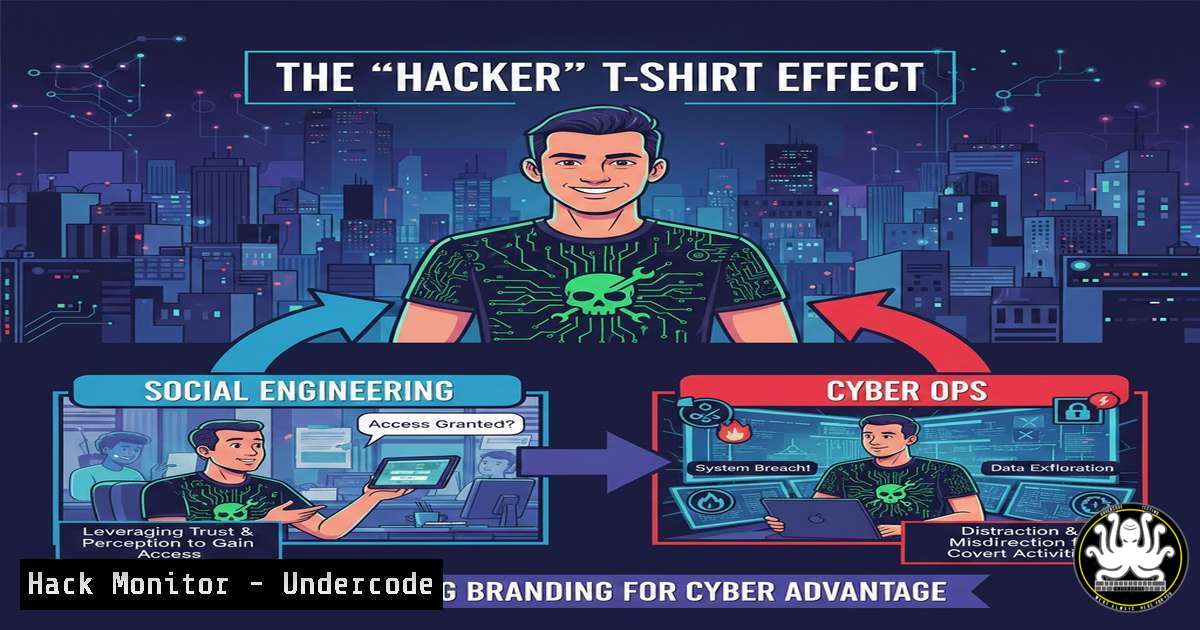
In the world of cybersecurity, perception is often the first line—or the first breach—of defense. A recent viral anecdote involving a cybersecurity professional and cricketing legend Ashish Nehra highlighted a crucial non-technical attack vector: the power of branded merchandise. What seems like casual apparel serves as an instant icebreaker and, in the context of cyber operations, a potent tool for social engineering, reconnaissance, and establishing false rapport. This article dissects how threat actors can weaponize physical branding, professional networks, and digital footprints to bypass technical controls by first exploiting human psychology, and provides the technical commands to audit your own exposure.
Learning Objectives:
- Understand how personal branding and attire can be leveraged for social engineering.
- Learn to perform open-source intelligence (OSINT) gathering on targets using professional networks.
- Identify technical vulnerabilities in conference-branded IoT devices and mobile apps.
- Implement defensive configurations to mitigate branding-based phishing and spoofing.
You Should Know:
1. The OSINT Icebreaker: Profiling via Professional Networks
The initial interaction described in the post (“The Hacker t-shirt turned into an icebreaker”) is a classic precursor to a “Watering Hole” or “Baiting” attack. An attacker observes a target wearing a security conference shirt (e.g., Payatu, NULLCON) and uses that shared interest to initiate conversation. Before even speaking, a sophisticated attacker has already conducted digital reconnaissance.
Step‑by‑step guide: Reconnaissance via LinkedIn & Conference Hashtags
- Identify the Target’s Affiliations: Using a tool like
theHarvester, you can pull emails and associated virtual identities based on company domains or conference names.theHarvester -d linkedin.com -l 500 -b google
(Note: For targeted recon, replace `linkedin.com` with the target’s company domain or search for specific conference hashtags like NULLCON).
-
Extract Conference Attendees: Use tools like `CrossLinked` to enumerate employees from an organization who list specific conferences on their profiles.
python3 crosslinked.py -f '{first}.{last}@company.com' -t google -j 50 company_name -
Analyze Digital Body Language: An attacker scrapes the target’s posts for technical details (e.g., “Loved the IoT hacking workshop at Payatu”). This tells the attacker the target’s technical stack (e.g., IoT, Embedded systems) and provides vectors for tailored phishing.
-
Weaponizing the “Brand”: QR Code and Wi-Fi Spoofing
Conference t-shirts often feature sponsor logos or QR codes linking to apps, whitepapers, or Wi-Fi networks. An attacker can clone this physical branding to create a rogue access point or malicious QR code, mirroring the trust associated with the event.
Step‑by‑step guide: Setting up a Rogue Evil Twin AP (Linux)
1. Identify the Target SSID: Using airodump-ng, find the legitimate conference Wi-Fi SSID.
sudo airodump-ng wlan0mon
2. Create a Rogue AP: Use `hostapd` to create an access point with the exact same SSID.
– Create hostapd.conf:
interface=wlan0
driver=nl80211
ssid=OFFICIAL_CONFERENCE_WIFI
hw_mode=g
channel=6
wpa=2
wpa_passphrase=FreeInternetForAll
wpa_key_mgmt=WPA-PSK
– Run the AP:
sudo hostapd hostapd.conf
3. Deploy a Captive Portal: Combine this with `dnsmasq` to spoof DNS and redirect users to a cloned conference page requesting credentials or pushing malware.
3. API Security: Exploiting Conference Mobile Apps
Event-specific mobile apps (like those from Payatu or EXPLIoT) are often rushed to market. They frequently contain hardcoded API keys or endpoints vulnerable to injection. By observing the brand on a t-shirt, an attacker can download the associated app for static analysis.
Step‑by‑step guide: Intercepting Mobile App Traffic
- Set up a Proxy: Configure Burp Suite to intercept traffic.
– Ensure your mobile device and attack machine are on the same network.
– Set the device proxy to the attacker’s IP and port (e.g., 192.168.1.100:8080).
2. Install Burp Certificate: On the Android/iOS device, navigate to `http://burp` to download and install the CA certificate to decrypt HTTPS traffic.
3. Analyze Endpoints: Use `drozer` (Android) to enumerate attack surfaces.
 On Android device/emulator with drozer agent
adb forward tcp:31415 tcp:31415
drozer console connect
 Within drozer console
run app.package.list -f ConferenceName
run app.package.manifest com.example.conference.app
4. IoT Device Hardening: The “Free Swag” Trap
Conferences often give away free IoT devices—badges, USB fans, or smart LEDs. The “Hacker t-shirt” wearer is a prime target for receiving malicious hardware. An attacker might physically hand a target a device containing a BadUSB.
Step‑by‑step guide: Defending Against Malicious USB (Linux/Windows)
- Linux: Disable USB storage modules.
Block USB storage
echo 'blacklist usb_storage' | sudo tee /etc/modprobe.d/block-usb.conf
Update initramfs
sudo update-initramfs -u
- Windows (Group Policy): Navigate to
Computer Configuration -> Administrative Templates -> System -> Removable Storage Access. Enable “All Removable Storage classes: Deny all access.”
5. Cloud Hardening: Spoofing Conference Branding in Phishing
The trust associated with a brand (like Bandit, EXPLIoT, or NULLCON) can be used to host phishing pages on legitimate cloud infrastructure. Attackers register domains that look similar (e.g., payatu-training[.]com) and host them on AWS S3 buckets or Azure Storage.
Step‑by‑step guide: Auditing Your Brand’s Cloud Exposure (Azure CLI)
Use the Azure CLI to check if “squatting” domains are pointing to your cloud resources:
 Check for abandoned subdomains
az storage account list --query "[?contains(name, 'payatu')]"
 Check for CNAME records pointing to Azure endpoints that are no longer in use
nslookup fake-conference.azurewebsites.net
 If the DNS points to an IP that no longer hosts the site, it can be claimed by an attacker.
6. Vulnerability Exploitation: The Human Firmware
The most significant vulnerability is the human willingness to trust a visual cue. An attacker can clone the exact design of a conference t-shirt (vector graphics are often publicly available) to create a fake staff badge or uniform.
Step‑by‑step guide: Recon for Physical Social Engineering
- Tool: `EyeWitness` can be used to take screenshots of the target organization’s “About Us” and “Team” pages to identify faces and names.
eyewitness --web -f urls.txt --threads 5
- Verification: Cross-reference LinkedIn profiles (Step 1) to build a persona. The attacker then dresses in conference merch, approaches the target, and says, “Great talk yesterday, right?” This lowers the target’s guard, making them more susceptible to USB drops or information leaks.
What Undercode Says:
- Brands are Attack Surfaces: Your company’s or conference’s logo is an asset, but on a t-shirt, it becomes a trust token. If an attacker can replicate that token, they can bypass years of technical security training in seconds.
- The Convergence of Physical and Digital OPSEC: Wearing a “Hacker” shirt is a statement of intent. In a professional setting, it implies you are a repository of sensitive technical knowledge. Security professionals must be aware that their physical appearance signals their digital value to adversaries.
The anecdote of the cricketer and the hacker shirt is a perfect allegory for modern cyberwarfare. We spend billions on firewalls and endpoint detection, yet a simple conversation starter—a brand worn on a chest—can dismantle an air-gapped mind. The hacker understands that the most sophisticated exploit is often the one that never has to touch the keyboard.
Prediction:
As offensive security matures, we will see a rise in “Brand-Based Attacks.” Threat actors will move beyond generic phishing to highly targeted physical and digital campaigns leveraging niche community affiliations (e.g., specific DEF CON groups, local cybersecurity meetups). The future of defense will require “Brand Security” (BrandSec) officers tasked with monitoring the misuse of logos, slogans, and community merchandise in physical spaces and on deep web marketplaces. The t-shirt will no longer just be a souvenir; it will be a liability.
▶️ Related Video (84% Match):
🎯Let’s Practice For Free:
IT/Security Reporter URL:
Reported By: Som Dubey – Hackers Feeds
Extra Hub: Undercode MoN
Basic Verification: Pass ✅


