
Listen to this Post
Introduction:
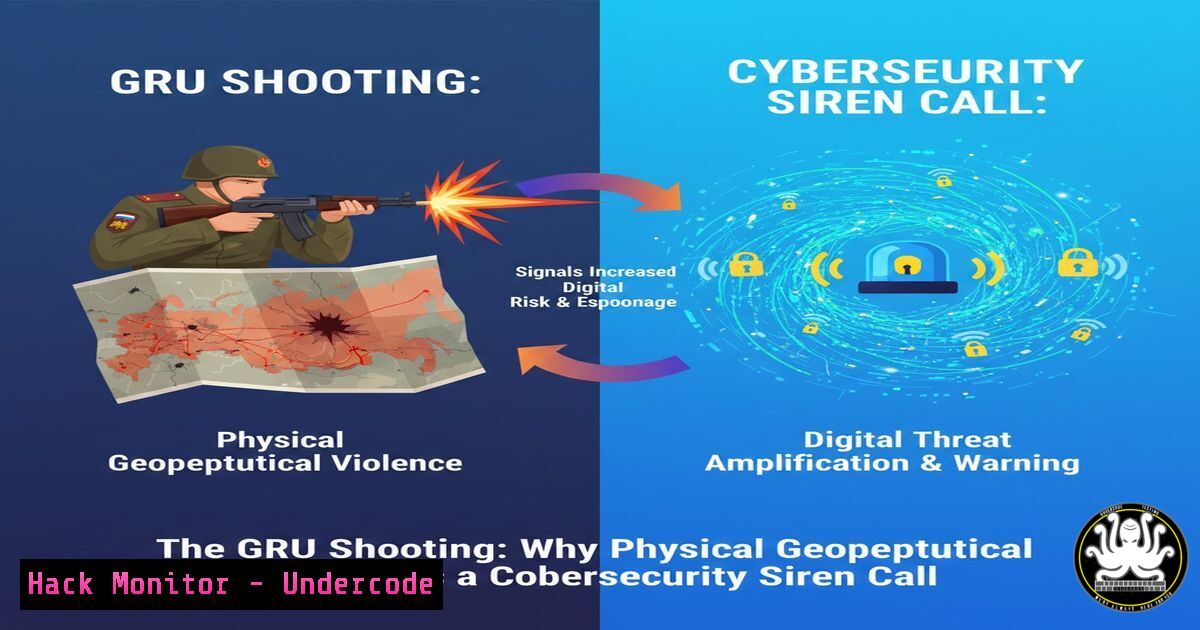
The attempted assassination of a high-ranking GRU general in Moscow is more than a geopolitical headline; it is a potent trigger event for global cyber operations. Such incidents historically catalyze retaliatory hacktivist campaigns, state-sponsored espionage, and targeted disinformation, forcing cybersecurity teams to brace for increased network probing, malware deployments, and phishing leveraging the event’s emotional charge. This convergence of physical and digital warfare means an attack in one domain now guarantees fallout in the other.
Learning Objectives:
- Understand how high-profile geopolitical events are exploited for social engineering and malicious infrastructure deployment.
- Learn to proactively hunt for Indicators of Compromise (IoCs) and recon activity following global incidents.
- Implement immediate hardening measures for public-facing assets and internal user awareness.
You Should Know:
1. The Aftermath: Scanning and Reconnaissance Surge
Following public crises, threat actors rapidly scan for vulnerable targets associated with the involved nations or their allies. Attackers use tools like Shodan, Censys, and mass scanners to find exposed services (RDP, VPNs, CMS platforms) in relevant IP ranges.
Step‑by‑step guide explaining what this does and how to use it.
Step 1: Identify Your External Footprint. Use command-line tools to audit what’s exposed from an attacker’s perspective.
 Linux: Use nmap for a basic service discovery on your own network perimeter
nmap -sV --script vuln -oA post_incident_scan <your_public_ip_range>
 Windows (PowerShell): Use Test-NetConnection to check specific critical ports
Test-NetConnection -ComputerName <your_domain> -Port 443, 22, 3389
Step 2: Mimic Adversary Recon with Shodan CLI. Proactively find your own exposed, potentially vulnerable assets.
 Install shodan-python: pip install shodan
shodan init <YOUR_API_KEY>
 Search for your org's exposed webcams, ICS, or databases
shodan search 'org:"Your Company Name" http.component:"wordpress"'
Step 3: Set Alerts. Configure alerts in your Shodan account for your IP space to get notified of new exposures.
2. Weaponized Communications: Phishing Campaigns and Fake News
Threat actors craft phishing emails posing as breaking news alerts, internal security updates, or charitable appeals related to the event. These contain malicious links or attachments designed to harvest credentials or deploy ransomware.
Step‑by‑step guide explaining what this does and how to use it.
Step 1: Simulate a Phishing Test. Use an open-source tool to educate users.
 Using GoPhish (Docker deployment)
docker run -p 3333:3333 -p 80:80 -it gophish/gophish
Create a campaign with a template like “URGENT: Security Briefing on Geopolitical Event – Click for Details.”
Step 2: Analyze Headers of Suspicious Emails. Train staff to examine email headers.
Received: from mail.fakeagency.ru ([185.100.85.100])...
Look for mismatched `From` vs. `Return-Path` domains and suspicious originating IPs.
Step 3: Implement DMARC, DKIM, and SPF. Harden your email infrastructure to prevent spoofing.
// Example DNS TXT record for SPF
v=spf1 ip4:192.0.2.0/24 include:_spf.google.com -all
3. Infrastructure Hardening: Securing Public-Facing Assets
Assume an increase in automated exploitation attempts. Immediate action is required on perimeter systems.
Step‑by‑step guide explaining what this does and how to use it.
Step 1: Patch and Restrict. Prioritize patching for VPN gateways, web application firewalls, and external RDP/SSH endpoints. If possible, restrict access geographically.
 Linux: Use UFW to block a country code (e.g., using ipset, simplified example)
sudo apt-get install ufw
sudo ufw deny from 92.63.197.0/24  Example CIDR
Step 2: Harden Web Servers. Review and tighten configurations.
 Nginx snippet: Hide server version, limit methods
server_tokens off;
if ($request_method !~ ^(GET|HEAD|POST)$) {
return 444;
}
Step 3: Review Cloud Security Groups/Access Control Lists (ACLs). Ensure no rules allow `0.0.0.0/0` to sensitive management ports.
4. Internal Threat Hunting: Looking for Footholds
Assume a breach attempt is already in progress. Hunt for anomalous logins, unusual process spawns, and network beaconing.
Step‑by‑step guide explaining what this does and how to use it.
Step 1: Query for Failed Logins and Success from Strange Locations.
 Windows (Security Event Log): Get failed logins
Get-WinEvent -FilterHashtable @{LogName='Security'; ID=4625} -MaxEvents 20 | Format-List
 Linux: Check auth.log for SSH failures
sudo grep "Failed password" /var/log/auth.log | tail -20
Step 2: Hunt for Anomalous Connections. Use netstat to find unexpected outbound calls.
 Linux/Windows (netstat available):
netstat -ano | findstr /i "established"  Windows
netstat -antp | grep ESTABLISHED  Linux
Step 3: Deploy Canary Tokens. Place fake files, API keys, or database entries in your network to alert you if touched by an attacker.
5. API and Cloud Service Lockdown
Attackers target APIs and cloud service credentials, especially during periods of distracted security focus.
Step‑by‑step guide explaining what this does and how to use it.
Step 1: Audit API Keys and Permissions. In AWS, Azure, or GCP, review IAM roles and users for excessive privileges.
 AWS CLI example: List users and attached policies
aws iam list-users
aws iam list-attached-user-policies --user-name <username>
Step 2: Enable MFA and Monitor Cloud Trail/Azure Activity Log. Ensure no console logins occur without MFA. Set alerts for `ConsoleLogin` without MFA or activity from new regions.
Step 3: Rate-Limit Your APIs. Protect against credential stuffing and DDoS.
 Nginx API gateway rate limiting
limit_req_zone $binary_remote_addr zone=api:10m rate=10r/s;
location /api/ {
limit_req zone=api burst=20 nodelay;
}
What Undercode Say:
- The Digital Battlefield is Reactive and Opportunistic. A physical attack does not just trigger a kinetic response; it opens a window of digital opportunism where all entities perceived as affiliated become targets. Your security posture must assume guilt by association in the attacker’s eyes.
- Speed of Response Defines Outcome. The first 48 hours after a major geopolitical incident are critical. Proactive hunting, communication with users, and temporary hardening measures can disrupt the attacker’s timeline, which relies on confusion and slow defense mobilization.
Prediction:
The future of hybrid warfare will see AI-driven disinformation campaigns launched in near real-time following events like the GRU shooting, featuring deepfake audio/video of key figures to sow panic. Simultaneously, autonomous botnets will execute DDoS and exploitation campaigns against predefined target lists. Defensively, we will see the rise of “Geopolitical Threat Intel Feeds” integrated into SIEM and SOAR platforms, automatically triggering playbooks for enhanced monitoring, blocking of adversary infrastructure, and user alerts based on real-world events, creating a dynamic, event-driven cybersecurity posture.
▶️ Related Video (84% Match):
🎯Let’s Practice For Free:
IT/Security Reporter URL:
Reported By: Mthomasson Given – Hackers Feeds
Extra Hub: Undercode MoN
Basic Verification: Pass ✅


