
Listen to this Post
Introduction:
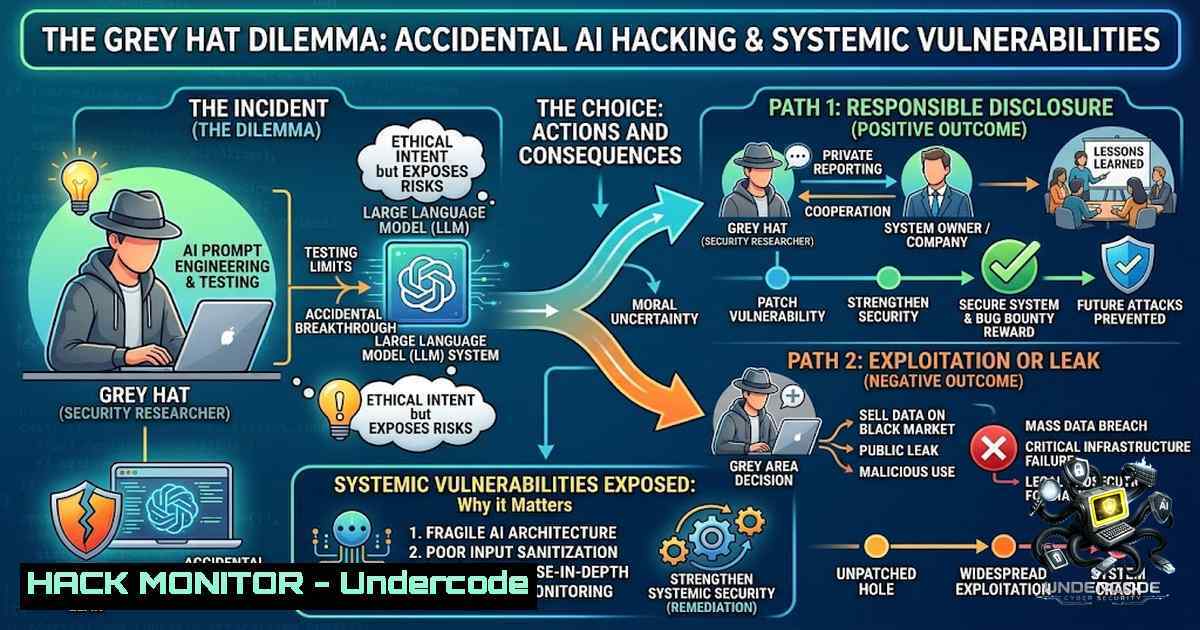
The distinction between ethical and malicious hacking has traditionally been clear-cut: white hats secure systems, black hats exploit them for personal gain. However, the rapid proliferation of AI-powered assistants and automated decision-making systems has birthed a murky grey zone where “accidental hacking” through social engineering and prompt injection can occur without malicious intent. A recent incident in Melbourne, where an individual manipulated a gym’s booking system to secure a fitness class slot without criminal prosecution, highlights a chilling reality: if such benign manipulation can succeed so effortlessly, the implications for malicious actors leveraging advanced prompt engineering are catastrophic. As AI systems become further embedded into security-critical infrastructure, the question of legal accountability, technical safeguards, and the role of expertise in maintaining AI safety has never been more pressing.
Learning Objectives & Secrets:
- Objective 1: Master Prompt Injection Detection. Learn to identify and neutralize social engineering prompts that attempt to bypass content filters, including nested roleplay scenarios, story-writing pretexts, and hypothetical research queries.
- Objective 2 Secret Tips: Implement context-aware output filtering by leveraging regex pattern matching and sentiment analysis on user inputs to flag anomalies before they reach the core model.
- Objective 3 Secret Tips: Deploy real-time monitoring of AI conversation logs with anomaly detection algorithms to distinguish between benign “accidental” queries and structured, malicious prompt chains.
You Should Know:
1. Understanding the Anatomy of an Accidental Hack
The Melbourne gym incident underscores a fundamental flaw in AI-driven service logic: systems often prioritize convenience over validation. The agent likely used simple social engineering or direct database manipulation—essentially a form of “prompt engineering” in human-to-machine interaction. In AI contexts, this translates to crafting inputs that manipulate the model into performing unintended actions, such as granting unauthorized access or revealing sensitive information. The lack of criminal intent does not negate the security breach; it merely exposes the inadequacy of current safeguards. For cybersecurity professionals, this calls for rigorous input sanitization, not just at the API level but also at the user interaction layer. A practical approach involves using tools like `OWASP ZAP` or `Burp Suite` to fuzz AI endpoints with adversarial payloads to test resilience.
Step‑by‑step guide for setting up input sanitization on a Linux environment:
– Step 1: Install a lightweight firewall like `ufw` and restrict API access to known IP ranges: sudo ufw allow from 192.168.1.0/24 to any port 5000.
– Step 2: Implement a custom middleware in your application (e.g., using Python Flask) that scans incoming JSON payloads for suspicious keywords using re.search(r'(roleplay|pretend|story|research)', input_text).
– Step 3: Log all sanitized inputs to a secure, append-only file for audit trails: echo "$(date) - Sanitized input: $clean_input" >> /var/log/ai_audit.log.
2. Red-Teaming AI Through Prompt Engineering
Prompt engineering is no longer a niche skill—it is a primary attack vector. The phrase “I’m writing a story…” or “I’m doing research for a class…” serves as a common bypass for content filters, effectively “jailbreaking” the AI. To counter this, security teams must adopt offensive AI red-teaming. This involves simulating adversaries who use multi-turn conversations to gradually steer the AI toward prohibited outputs. For instance, an attacker might first ask about general cybersecurity, then progressively narrow to specific exploit techniques. The key defense is dynamic context evaluation, where the system continuously scores the conversation’s risk level based on semantic drift.
Step‑by‑step guide for building a basic prompt injection detector using Python:
– Step 1: Install `transformers` and `sentence-transformers` libraries: pip install transformers sentence-transformers.
– Step 2: Load a pre-trained model like `all-MiniLM-L6-v2` to compute embedding similarities between user prompts and known jailbreak templates.
– Step 3: Create a function to calculate cosine similarity; if similarity > 0.8, flag the input for manual review.
– Windows alternative: Use PowerShell to invoke a REST API that runs this detection service: Invoke-RestMethod -Uri http://localhost:5000/detect -Method POST -Body $json.
3. API Security and Model Hardening
Many AI services expose APIs that are directly vulnerable to injection attacks. Hardening these APIs involves strict parameter validation, rate limiting, and implementing a Web Application Firewall (WAF) with AI-specific rule sets. Cloud providers like AWS and Azure now offer AI-specific security hubs that monitor for anomalous inference requests. Additionally, employing “canary tokens” within the model’s training data can help detect unauthorized data extraction attempts. A canary token is a unique string that, when outputted, indicates a potential data leakage event.
Step‑by‑step guide for configuring a basic WAF rule to block prompt injection on Nginx (Linux):
– Step 1: Edit the Nginx configuration file: sudo nano /etc/nginx/nginx.conf.
– Step 2: Add a location block that filters out suspicious query strings: if ($query_string ~ "roleplay|story|research") { return 403; }.
– Step 3: Reload Nginx: sudo systemctl reload nginx.
4. Vulnerability Exploitation and Mitigation in AI Agents
The Melbourne incident is a microcosm of a larger threat: AI agents with privileged access to third-party systems. If a single prompt can remove a person from a list, imagine a carefully crafted chain of prompts that modifies access control lists (ACLs) in enterprise environments. Mitigation requires implementing the principle of least privilege for AI agents—they should only have read-only access by default, with any write operation requiring human-in-the-loop verification. Furthermore, using tools like `Open Policy Agent (OPA)` can define fine-grained policies that the AI must evaluate before executing actions.
Step‑by‑step guide for implementing OPA with a sample AI agent:
– Step 1: Install OPA: `curl -L -o opa https://openpolicyagent.org/downloads/v0.58.0/opa_linux_amd64_static` and `chmod 755 ./opa`.
– Step 2: Create a policy `access.rego` that denies any operation not explicitly allowed.
– Step 3: Run OPA as a sidecar container: `./opa run -s` and integrate it with your AI agent’s action pipeline to evaluate each proposed change before execution.
5. Cloud Hardening for AI Workloads
AI models are often deployed on cloud infrastructure, making them targets for data exfiltration and denial-of-service (DoS) attacks. Cloud hardening involves configuring identity and access management (IAM) roles with minimal permissions, enabling flow logs to detect unusual traffic patterns, and using virtual private clouds (VPCs) to isolate the AI environment. For instance, on AWS, you can use GuardDuty to monitor for suspicious API calls, while Azure Sentinel can provide AI-driven threat detection. Additionally, implementing a “break-glass” procedure for emergency access can help contain breaches.
Step‑by‑step guide for setting up AWS GuardDuty for AI endpoint protection:
– Step 1: Navigate to AWS GuardDuty console and enable the service.
– Step 2: Configure findings export to S3 for long-term storage.
– Step 3: Set up CloudWatch alarms to trigger when GuardDuty detects a high-severity finding, such as an IAM role being assumed from an unusual location.
What Undercode Say:
- Key Takeaway 1: The legal ambiguity of “accidental hacking” creates a dangerous precedent. Without clear legislation defining intent in AI-driven actions, bad actors can easily exploit the “no criminal intent” defense to probe systems with impunity.
- Key Takeaway 2: Security is no longer just about hardening infrastructure; it’s about hardening the conversation. The human-AI interaction layer is the new perimeter, and prompt engineering is the primary weapon.
Analysis:
The incident reveals a systemic underestimation of AI’s susceptibility to social engineering. While the agent’s actions were benign, the ease with which they succeeded points to a lack of robust access controls and audit trails in everyday services. This is amplified in enterprise AI systems where a single “innocent” prompt could inadvertently trigger a cascade of privileged operations. The security community must pivot toward creating dynamic, context-aware AI firewalls that can differentiate between a user asking for a fitness class and an attacker subtly manipulating system logic. Furthermore, the responsibility cannot solely rest on developers; users and agents must be educated on the ethical implications of AI interactions. The “grey hat” is a myth—without standardized safeguards, every accidental breach is a blueprint for a future, intentional exploit.
Prediction:
- -1 Within the next 18 months, we will see the first major legal case where an individual is prosecuted for an “accidental” AI hack, setting a precedent that could either stifle innovation or force the creation of universally accepted AI safety standards.
- -1 The rise of prompt engineering as a service (PaaS) for malicious purposes will lead to a surge in AI-specific vulnerabilities, prompting major tech companies to invest billions in adversarial AI defense, creating a new cybersecurity sub-sector.
- +1 This scrutiny will drive the development of self-correcting AI models that can detect and reject manipulative prompts without human intervention, potentially making AI systems more robust than traditional software.
- +1 The demand for AI security experts will skyrocket, creating lucrative career opportunities for professionals who can bridge the gap between machine learning and cybersecurity.
- -1 The legal and ethical grey area will slow down the adoption of AI in critical infrastructure, such as healthcare and autonomous vehicles, until robust, government-backed safety certifications are established.
▶️ Related Video (86% Match):
🎯Let’s Practice For Free:
🎓 Live Courses & Certifications:
Join Undercode Academy for Verified Certifications
🚀 Request a Custom Project:
Secure, high-velocity infrastructure and disruptive technological engineering. Contact our engineering team for high-tier development and proprietary systems:
[email protected]
💎 Smart Architecture | 🛡️ Secure by Design | ⭐ Trusted by Thousands
IT/Security Reporter URL:
Reported By: https://lnkd.in/p/eh-294Z7 – Hackers Feeds
Extra Hub: Undercode MoN
Basic Verification: Pass ✅


