Listen to this Post
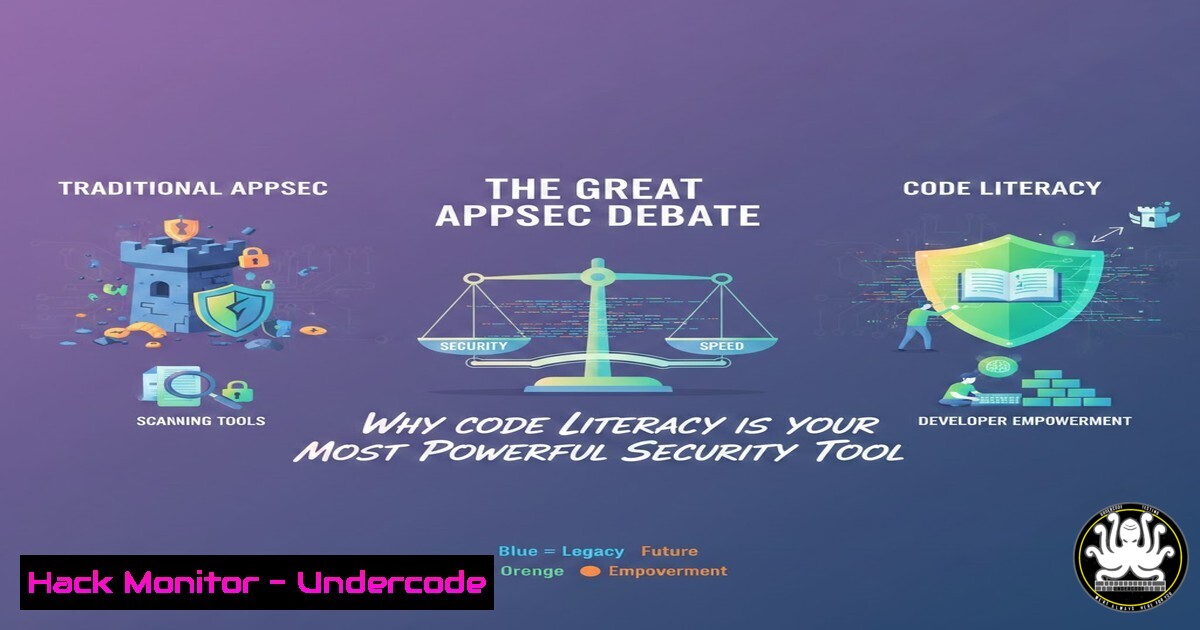
Introduction:
The cybersecurity industry is currently fractured by a contentious debate: must application security professionals possess the ability to read and write code, or is a high-level understanding of vulnerabilities sufficient? While automated scanners and dependency checkers have become staples of the modern DevSecOps pipeline, they remain blunt instruments incapable of dissecting complex business logic flaws or identifying subtle authorization bypasses. True application security requires a forensic understanding of how software is constructed, tracing data flows from user input to database query to ensure that every potential execution path is scrutinized for weaknesses.
Learning Objectives:
- Objective 1: Understand why static code analysis is non-negotiable for identifying business logic flaws that scanners miss.
- Objective 2: Learn to identify critical security flaws in Node.js/JavaScript request handling code.
- Objective 3: Acquire practical hardening techniques and remediation strategies for common server-side vulnerabilities.
You Should Know:
- The Anatomy of a Code Review: Identifying the Attack Surface
To move beyond the “scanner mentality,” one must approach code review with an adversarial mindset. When analyzing the provided Node.js HTTPS snippet (or any backend logic), you are essentially mapping the attack surface. You are looking for how the application handles the “triad” of trust: user input, external data, and internal processing.
Let’s dissect potential flaws in a typical Node.js HTTPS request handler. Imagine a code block like this:
const https = require('https');
const url = req.body.userProvidedUrl;

// Vulnerability 1: Lack of Input Validation (SSRF)
https.get(url, (response) => {
let data = '';
response.on('data', (chunk) => { data += chunk; });
response.on('end', () => {
// Vulnerability 2: Insecure Data Handling
eval('processResult(' + data + ')'); // DANGEROUS: Eval of remote data
res.send(data);
});
}).on('error', (err) => {
// Vulnerability 3: Information Disclosure
res.status(500).send(<code>Internal Error: ${err.message}</code>); // Leaks stack traces/paths
});

// Vulnerability 4: Missing Timeouts (Resource Exhaustion)
req.setTimeout(0); // No timeout = DoS risk
Step‑by‑step breakdown:
- SSRF Identification: The code takes a `userProvidedUrl` without validation. An attacker could point this to internal services like
http://169.254.169.254/latest/meta-data/` (AWS Metadata) orhttp://localhost:8080/admin`. - Code Injection: The use of `eval()` on external data is catastrophic. If the remote server is compromised or malicious, it can inject arbitrary JavaScript into your process.
- Error Handling: Returning raw `err.message` to the client reveals system paths, library versions, and infrastructure details.
- Resource Control: Without a timeout, a slow response or a hanging connection will exhaust server thread pools, leading to Denial of Service (DoS).
2. TLS/SSL Configuration Hardening
The “S” in HTTPS is only as strong as its configuration. Reviewing the TLS setup often reveals misconfigurations that allow downgrade attacks or weak cipher suites.
To check a live server’s TLS configuration (Linux command):
 Using openssl s_client to test connection security
echo | openssl s_client -connect example.com:443 -servername example.com -tls1_2 2>/dev/null | openssl x509 -text | grep "Signature Algorithm"

Using nmap to enumerate ciphers
nmap --script ssl-enum-ciphers -p 443 example.com
Hardening the Server (Node.js Example):
Instead of relying on default Node.js HTTPS settings, you must explicitly define secure options.
const https = require('https');
const fs = require('fs');

const options = {
key: fs.readFileSync('server.key'),
cert: fs.readFileSync('server.cert'),
// Explicit secure protocol versions
minVersion: 'TLSv1.2',
// Reject weak ciphers
ciphers: [
"ECDHE-ECDSA-AES128-GCM-SHA256",
"ECDHE-RSA-AES128-GCM-SHA256",
"ECDHE-ECDSA-AES256-GCM-SHA384",
"ECDHE-RSA-AES256-GCM-SHA384"
].join(':'),
// Enable Strict Transport Security (HSTS) via headers
// This is set in the response, not the server options
honorCipherOrder: true
};

https.createServer(options, (req, res) => {
// Set security headers manually
res.setHeader('Strict-Transport-Security', 'max-age=31536000; includeSubDomains; preload');
res.setHeader('X-Content-Type-Options', 'nosniff');
}).listen(443);
3. Input Validation and Allow-listing
Scanners cannot tell you if the validation logic is correct. You must verify that the code uses an allow-list (accept known good) rather than a deny-list (block known bad).
Example of Weak Validation:
// Attacker bypass: FILTER_FLAG_IPV4 can be bypassed with IPv6 or octal encoding
if (filter_var($user_input, FILTER_VALIDATE_URL, FILTER_FLAG_IPV4)) {
// Process URL
}
Secure Approach (Node.js):
const URL = require('url').URL;

function validateUrl(input) {
try {
const parsed = new URL(input);
// Allow-list protocols
if (!['https:', 'http:'].includes(parsed.protocol)) {
return false;
}
// Block internal IP ranges (SSRF Prevention)
const hostname = parsed.hostname;
if (isInternalIP(hostname)) { // Custom function to check RFC 1918
return false;
}
return true;
} catch (e) {
return false; // Invalid URL format
}
}
4. Mitigating SSRF and Request Smuggling
Server-Side Request Forgery (SSRF) is a direct consequence of trusting user input for network calls. Hardening involves restricting the destination.
Linux iptables (Defense in Depth):
Even if the app is compromised, you can block access to metadata services at the host level.
 Block access to AWS metadata service
iptables -A OUTPUT -d 169.254.169.254 -j DROP

Block access to internal networks from the app user
iptables -A OUTPUT -d 10.0.0.0/8 -m owner --uid-owner nodeuser -j DROP
iptables -A OUTPUT -d 172.16.0.0/12 -m owner --uid-owner nodeuser -j DROP
iptables -A OUTPUT -d 192.168.0.0/16 -m owner --uid-owner nodeuser -j DROP
Windows Firewall (PowerShell):
 Block SSRF attempts to internal admin panels
New-NetFirewallRule -DisplayName "Block SSRF to Admin" -Direction Outbound -Protocol TCP -RemoteAddress 192.168.1.0/24 -RemotePort 80,443 -Action Block
5. Secure Deserialization and Eval Alternatives
The use of `eval()` or `Function()` constructors on dynamic data is a red flag.
Insecure:
let userFunction = req.body.userFunction;
let result = eval(userFunction); // Arbitrary code execution
Secure:
Use sandboxing libraries like `vm2` (Node.js) if absolutely necessary, but preferably, avoid dynamic code generation.
const { VM } = require('vm2');
const vm = new VM({ timeout: 1000, sandbox: {} });

try {
// Run untrusted code in a restricted sandbox
let result = vm.run(userCode);
} catch (e) {
// Handle sandbox violation
}
6. Hardening Response Headers and Output Encoding
Preventing XSS isn’t just about sanitizing input; it’s about contextual output encoding.
Checklist for Hardened Headers:
- Content-Security-Policy: `default-src ‘self’`
– X-Frame-Options: `DENY`
– X-Content-Type-Options: `nosniff`
Manual Testing (cURL):
curl -I -X GET https://example.com
 Look for missing or misconfigured security headers
What Undercode Say:
- Code is the Source of Truth: Scanners and automated tools are reactive; they can only find what has been seen before. Reading code allows you to be proactive, identifying zero-day logic flaws and implementation errors unique to the application’s business domain.
- The Translator Role: An AppSec engineer without coding skills is a translator who speaks only one language. To communicate a vulnerability’s impact and a viable fix to a developer, you must speak their language. Recommending “input validation” is useless; showing them the specific regex or allow-list function to implement is invaluable.
- Bridging the Gap: The debate often frames security and development as opposing forces. However, code literacy transforms the security professional from a critic into a collaborator. It shifts the conversation from “this is broken” to “here is how we build it securely from the start,” which is the essence of DevSecOps. Ultimately, if you cannot read the blueprint, you cannot effectively defend the building.
Prediction:
As artificial intelligence begins to generate increasingly complex codebases, the role of the human AppSec engineer will pivot from finding syntax errors to auditing AI-generated logic. The ability to read and trace execution paths will become the primary differentiator between security professionals who are merely “tool operators” and those who are true “security architects.” The future belongs to those who can dissect code, regardless of whether it was written by a human or a machine.
▶️ Related Video (82% Match):
🎯Let’s Practice For Free:
IT/Security Reporter URL:
Reported By: Akwaeze Gerald – Hackers Feeds
Extra Hub: Undercode MoN
Basic Verification: Pass ✅


