Listen to this Post
Introduction:
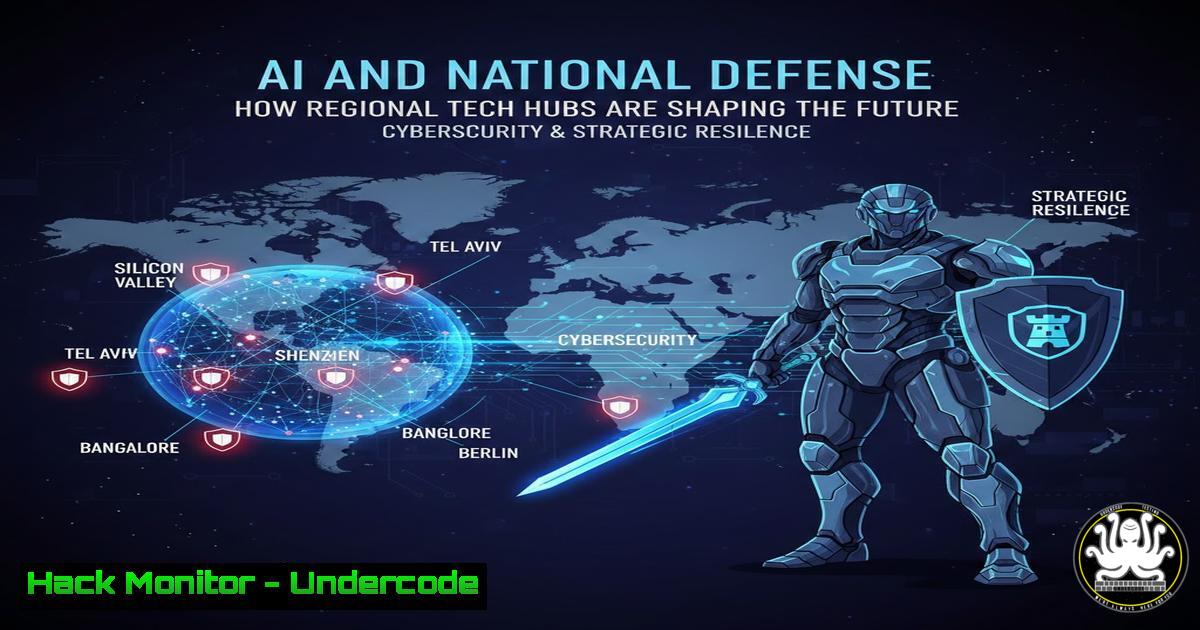
The convergence of artificial intelligence and national security is no longer a futuristic concept but a present-day strategic imperative. Recent discussions at the AI & Big Data Conference in Romania, which brought together the Minister of Defense and leaders from NATO’s industrial advisory groups, highlight a critical shift: cybersecurity is now intrinsically linked to geopolitical resilience. As nation-states and defense contractors integrate dual-use AI technologies, the attack surface expands, requiring a new breed of security professionals capable of defending both cloud infrastructures and autonomous systems.
Learning Objectives:
- Understand the intersection of AI, defense policy, and cybersecurity in the context of NATO and EU frameworks.
- Learn the technical configurations required to secure AI-driven defense applications and cloud environments.
- Analyze the role of dual-use technologies in modern warfare and the specific vulnerabilities they introduce.
You Should Know:
- The Role of AI in Modern Defense Strategies
The conference keynote by Romania’s Minister of Defense, Angel Tîlvăr (noting the correction from the post’s mention of Radu Miruta), alongside NATO representatives, underscores that AI is now a core component of defense. Tools like Shield AI’s autonomous systems and Oves Enterprise’s defense software are designed to operate in contested environments. However, these systems rely heavily on data integrity and secure communication channels.
Step‑by‑step guide: Verifying AI Model Integrity in Linux Environments
To ensure that AI models used in defense haven’t been tampered with (poisoning attacks), security teams must verify cryptographic hashes and establish secure pipelines.
 1. Generate a SHA-256 checksum of your AI model file to establish a baseline
sha256sum defense_model_v2.h5 > model_checksum.sha256

<ol>
<li>Periodically verify the model against the baseline to detect unauthorized changes
sha256sum -c model_checksum.sha256</p></li>
<li><p>Implement filesystem integrity monitoring using AIDE (Advanced Intrusion Detection Environment)
sudo apt-get install aide
sudo aideinit
Compare current state against the database
sudo aide --check
2. Hardening Cloud and Identity Architectures (Zero Trust)
With Mihai Forlafu from Microsoft moderating discussions on security transformation, the focus shifts to Zero Trust. Defense contractors and government agencies must assume breach and continuously validate identities. This is particularly critical for cloud environments hosting sensitive defense data.
Step‑by‑step guide: Implementing Conditional Access for Defense Contractors (Azure CLI)
To protect access to classified or sensitive data, strict Conditional Access policies must be enforced.
 Install Azure CLI and sign in
az login

Create a Conditional Access policy requiring multi-factor authentication for all users accessing the defense app
az rest --method post --uri "https://graph.microsoft.com/v1.0/identity/conditionalAccess/policies" --body '{
"displayName": "Block legacy auth and require MFA for Defense Portal",
"state": "enabled",
"conditions": {
"applications": {
"includeApplications": ["<Your-Defense-App-ID>"]
},
"users": {
"includeUsers": ["All"]
},
"clientAppTypes": ["all"]
},
"grantControls": {
"operator": "AND",
"builtInControls": ["mfa"]
}
}'
3. AI and Dual-Use Technology Vulnerabilities
The conference highlighted experts from Thales Group and NATO’s DIANA accelerator, focusing on dual-use technologies. These are commercial technologies adapted for military use, such as AI-driven surveillance or drone autonomy. The security risk lies in the “consumerization” of defense tech—using off-the-shelf components that may contain unpatched vulnerabilities.
Step‑by‑step guide: Scanning Container Images for Vulnerabilities in Defense CI/CD Pipelines
Defense software, like that developed by Oves Enterprise, must be scanned for CVEs before deployment.
 Using Trivy to scan a Docker image for vulnerabilities (Common Vulnerabilities and Exposures)
trivy image --severity CRITICAL,HIGH my-defense-repo/ai-surveillance:latest

Integrating into a pipeline to fail the build if critical vulnerabilities exist
trivy image --exit-code 1 --severity CRITICAL my-defense-repo/ai-surveillance:latest

For Windows containers, use the same tool or integrate with Windows Defender via PowerShell
 Example: Scan a Windows container image using Docker and Trivy in WSL
docker run --rm -v /var/run/docker.sock:/var/run/docker.sock aquasec/trivy image your-windows-container-image
- Securing the Communication Fabric: From NATO to Tactical Edge
Speakers coordinating NATO software centers emphasized the need for resilient communication. In a conflict scenario, AI-driven defense units must operate even under cyberattack. This requires encrypted, authenticated communication between edge devices and central command.
Step‑by‑step guide: Establishing an Encrypted Tunnel for IoT/Edge Defense Devices
Using WireGuard on Linux to create a secure point-to-point tunnel for drone telemetry data.
 Install WireGuard on the server (Command Center)
sudo apt update && sudo apt install wireguard
 Generate private and public keys
wg genkey | tee privatekey | wg pubkey > publickey

Create configuration file /etc/wireguard/wg0.conf
 [bash]
 Address = 10.0.0.1/24
 PrivateKey = <server-private-key>
 ListenPort = 51820

[bash]
 PublicKey = <drone-public-key>
 AllowedIPs = 10.0.0.2/32

Start the interface
sudo wg-quick up wg0

On the drone (Linux-based edge device), perform similar steps and connect to the server.
5. Mitigating AI-Specific Attacks: Adversarial Machine Learning
As defense ministries adopt AI for threat detection, adversaries will attempt to fool these models. Adversarial attacks can cause autonomous systems to misclassify objects (e.g., identifying a tank as a civilian vehicle). Security teams must harden models against these inputs.
Step‑by‑step guide: Implementing Adversarial Training in Python
This example uses the Adversarial Robustness Toolbox (ART) to augment training data with adversarial samples.
 pip install adversarial-robustness-toolbox
from art.estimators.classification import KerasClassifier
from art.attacks.evasion import FastGradientMethod
from art.defences.trainer import AdversarialTrainer
import tensorflow as tf

Assume 'model' is your pre-trained Keras defense classifier
classifier = KerasClassifier(model=model, clip_values=(0, 1))

Generate adversarial examples during training
attack = FastGradientMethod(estimator=classifier, eps=0.2)
trainer = AdversarialTrainer(classifier, attacks=attack, ratio=0.5)

Train the model with adversarial robustness
trainer.fit(x_train, y_train, nb_epochs=10)
6. Governance and Compliance: Mapping to NATO Standards
The involvement of the NATO Industrial Advisory Group (NIAG) and DIANA means that any cybersecurity solution must comply with strict defense procurement standards, such as NATO’s FMN (Federated Mission Networking) profiles. This requires rigorous logging and auditing.
Step‑by‑step guide: Configuring Centralized Audit Logging for Compliance (Linux – Rsyslog)
To meet defense auditing requirements, logs must be aggregated and immutable.
 Configure a central log server
 On the client machine (AI server), edit /etc/rsyslog.conf to send logs
 . @<central-log-server-ip>:514

On the central server, ensure logs are written to a secure, append-only storage
sudo nano /etc/rsyslog.conf
 Uncomment the lines to provide TCP syslog reception
module(load="imtcp")
input(type="imtcp" port="514")

To make logs tamper-evident, forward them to a SIEM or use a blockchain-based logging solution (conceptual for high-security environments)
 Use 'chattr' to make log files immutable after rotation
sudo chattr +a /var/log/secure.log
What Undercode Say:
- Key Takeaway 1: The integration of AI into defense is accelerating, but it introduces critical software supply chain risks. Security teams must move beyond traditional perimeter defense and focus on data integrity and model verification.
- Key Takeaway 2: Collaboration between commercial tech firms and military entities (dual-use) requires a fundamental shift to Zero Trust architectures and compliance with international standards (NATO FMN, DIANA frameworks) to ensure interoperability and security in joint operations.
The conference in Romania exemplifies a growing trend: cybersecurity is no longer just about protecting data; it’s about protecting the very logic that drives autonomous defense systems. The convergence of AI, cloud, and defense means that a vulnerability in a machine learning pipeline could have kinetic consequences. Professionals must now be fluent in both cloud hardening (Azure/AWS) and adversarial ML defense. The involvement of figures from Microsoft, Thales, and NATO suggests that the future battlefield will be coded, automated, and ruthlessly targeted by cyber attacks, making proactive defense and international cooperation non-negotiable.
Prediction:
Within the next three years, we will see the formalization of “AI Security” as a distinct discipline within NATO and national defense strategies. This will lead to the creation of international “AI Armistice Lines” in cyberspace, where nations agree (or unilaterally enforce) red lines against tampering with autonomous defense algorithms. Simultaneously, the demand for hybrid professionals—those skilled in both offensive security and data science—will outstrip supply, making this the most critical career path in the defense industrial base.
▶️ Related Video (74% Match):
🎯Let’s Practice For Free:
IT/Security Reporter URL:
Reported By: Mihaigforlafu Not – Hackers Feeds
Extra Hub: Undercode MoN
Basic Verification: Pass ✅


