
Listen to this Post
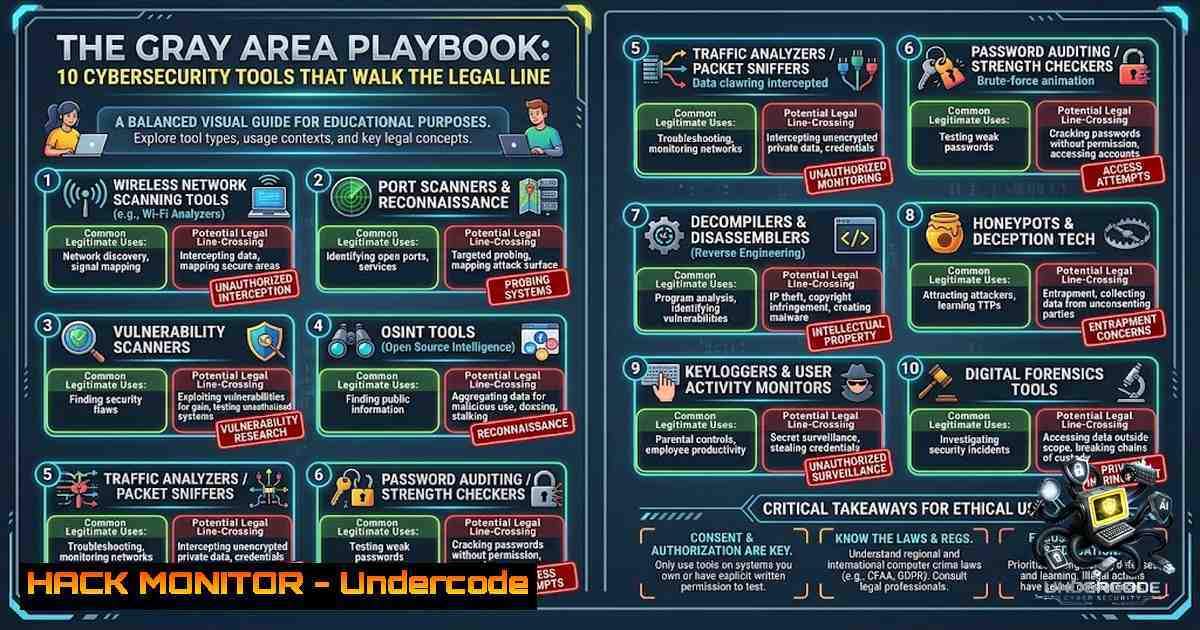
Introduction:
The internet’s underbelly is not always dark—sometimes it’s just gray. A recent viral post highlighted “10 websites that feel illegal but aren’t,” sparking curiosity across cybersecurity, IT, and development communities. From ethical hacking platforms like Hackermode.io to privacy-centric utilities and OSINT toolkits, these resources exist in a legal twilight zone where intent determines legality. This article dissects each tool through a technical lens, providing actionable commands, configuration guides, and security hardening techniques for professionals who want to explore these tools ethically and effectively.
Learning Objectives & Secrets:
- Objective 1: Master Ethical Hacking Foundations – Understand how platforms like Hack The Box and Hacker101 simulate real-world penetration testing environments, and learn to navigate legal bug bounty programs.
- Objective 2 Secret Tip: OSINT isn’t just about Googling—leverage automated frameworks like SpiderFoot and Sherlock to map digital footprints across 450+ data sources in minutes.
- Objective 3 Secret Tip: Disposable identities aren’t just for spam—use temp mail APIs and encrypted file-sharing tools (e.g., OnionShare) to conduct anonymous, metadata-free security research without leaving traces.
You Should Know:
- Ethical Hacking & Bug Bounty Platforms: Your Legal Sandbox
Platforms like Hack The Box, Hacker101, and Bugcrowd provide legally sanctioned environments to test your skills. Unlike black-hat hacking, these platforms operate under safe harbor agreements that protect researchers who disclose vulnerabilities responsibly.
Step-by-Step Guide: Setting Up Your First CTF Environment
- Register on Hack The Box (requires an invitation code) or Hacker101 (free, no invite needed).
- Connect via VPN – HTB uses OpenVPN. Download your configuration file and run:
sudo openvpn --config your-config.ovpn
- Start with beginner machines – Use `nmap` for reconnaissance:
nmap -sV -sC -A target-ip
- For web challenges, use Burp Suite or OWASP ZAP to intercept and modify HTTP requests.
- Document findings professionally—bug bounty reports require clear reproduction steps and impact analysis.
Windows Alternative: Use PuTTY for SSH connections and Wireshark for packet analysis. For API security testing, Postman with automated scripts can streamline vulnerability discovery.
- OSINT Toolkits: The Digital Investigator’s Swiss Army Knife
Open Source Intelligence (OSINT) involves gathering publicly available information from social media, domains, breached databases, and more. Tools like the OSINT Search Tool aggregate 450+ engines across 16 categories.
Step-by-Step Guide: Deploying a Local OSINT Framework
1. Clone the OSINT Search Tool repository:
git clone https://github.com/hasamba/osint-search-tool.git
cd osint-search-tool
2. Install Python dependencies:
pip install -r requirements.txt
3. Run the Flask application:
python app.py
4. Access locally – Open `http://localhost:5000` in your browser.
5. Select a category (e.g., “Email Analysis”) and enter a target. Use “Search All” to query 35+ breach databases simultaneously.
For advanced reconnaissance, use Sherlock to find usernames across platforms:
git clone https://github.com/sherlock-project/sherlock.git
cd sherlock
python3 sherlock.py username
Legal Warning: Never target individuals or organizations without explicit authorization. OSINT is for research, not harassment.
3. Privacy-First Utilities: Temporary Email & Disposable Identities
Services like 10 Minute Mail and Temp.orary.me generate ephemeral inboxes that self-destruct. These are invaluable for testing registration flows, avoiding spam, and conducting anonymous research.
Step-by-Step Guide: Automating Disposable Email with Python
- Use the mail.tm API (used by GhostIdentity and similar tools):
import requests Create a disposable account response = requests.post('https://api.mail.tm/accounts', json={ "address": "[email protected]", "password": "securepassword" }) Retrieve inbox messages messages = requests.get('https://api.mail.tm/messages', headers={'Authorization': f'Bearer {token}'}) - Integrate with testing frameworks – Use temp emails to validate CAPTCHA flows, 2FA registration, and password reset mechanisms without polluting your primary inbox.
Security Consideration: These services are not encrypted end-to-end. Never use them for sensitive communications.
4. Encrypted File Sharing: OnionShare & Peer-to-Peer Security
OnionShare allows anonymous, end-to-end encrypted file transfers over the Tor network. Unlike cloud storage, no third-party server stores your data.
Step-by-Step Guide: Sharing Files Anonymously
1. Install OnionShare:
sudo apt install onionshare  Linux
 Windows: Download from onionshare.org
2. Share a file:
onionshare --receive
This generates a .onion URL. Share it securely with your recipient.
3. The recipient opens the URL in Tor Browser and downloads the file directly—no metadata, no logs.
For self-hosted solutions, consider SkySend or LocalSend for offline, encrypted peer-to-peer transfers.
5. Z-Library & The Copyright Conundrum
Z-Library is a shadow library offering free access to millions of books and journal articles. However, it operates without rights holders’ consent, violating copyright laws in most jurisdictions. In 2022, U.S. authorities seized its domains and arrested its operators.
Technical Takeaway: While the platform’s infrastructure is technically impressive (distributed storage, anti-censorship measures), using it carries legal risk. For legitimate research, consider open-access repositories like arXiv or PubMed Central.
6. Image Background Removal: Remove.bg & AI-Powered Editing
Remove.bg uses deep learning models to isolate foreground subjects. While seemingly trivial, this technology has security implications—attackers can use similar models to create deepfakes or bypass biometric systems.
Command-Line Alternative: Use `rembg` (open-source):
pip install rembg
rembg i input.jpg output.png
7. Cybersecurity Communities & CTF Platforms
Communities like CTFtime, picoCTF, and Hackerverse offer structured learning paths. CTFd is an open-source platform for hosting jeopardy-style CTFs.
Step-by-Step Guide: Hosting Your Own CTF with CTFd
1. Clone and deploy:
git clone https://github.com/CTFd/CTFd.git
cd CTFd
docker-compose up -d
2. Access `http://localhost:8000` and configure challenges (web, crypto, forensics, pwn).
3. Invite participants and monitor scoreboards in real-time.
8. Vulnerability Exploitation & Mitigation: The Defender’s Perspective
Understanding exploitation is key to defense. Platforms like Exploit Education provide systematic training on buffer overflows, format strings, and use-after-free vulnerabilities.
Linux Command for Memory Analysis:
gdb ./vulnerable_binary
(gdb) run $(python -c 'print("A"100)')
Mitigation: Always compile with stack canaries (-fstack-protector-strong) and ASLR enabled.
9. API Security & Cloud Hardening
Many of these tools expose APIs (e.g., mail.tm, OSINT frameworks). Securing API keys and implementing rate limiting is critical.
Best Practices:
- Use environment variables for secrets (
export API_KEY=your_key). - Implement JWT-based authentication for custom OSINT dashboards.
- Regularly rotate credentials and monitor for anomalous access.
10. The Legal & Ethical Framework
“Hidden doesn’t mean illegal—and anonymous doesn’t mean consequence-free,” as the original post warns. The Computer Fraud and Abuse Act (CFAA) in the U.S. and similar laws globally criminalize unauthorized access. Always operate within scope, respect terms of service, and never access systems without permission.
What Undercode Say:
- Key Takeaway 1: The line between “legal” and “illegal” online is often defined by intent and authorization, not the tool itself. A vulnerability scanner is legal when used on your own infrastructure; it becomes illegal when pointed at someone else’s without consent.
- Key Takeaway 2: Mastery of OSINT, ethical hacking, and privacy tools requires not just technical skill but also a deep understanding of legal frameworks. Safe harbor provisions in bug bounty programs protect researchers, but only if they follow strict disclosure guidelines.
Analysis: The viral list reflects a growing tension between digital curiosity and regulatory boundaries. As AI and automation make these tools more accessible, the cybersecurity community must double down on ethics training. The best hackers aren’t those who break things—they’re the ones who understand how things work and use that knowledge to protect, not destroy. The tools discussed here are force multipliers for good when wielded responsibly, but they are also weapons when misused. The future of cybersecurity hinges on this distinction.
Prediction:
- +1 The democratization of ethical hacking platforms will continue to shrink the cybersecurity skills gap, producing a new generation of defenders who are battle-ready from day one.
- +1 OSINT automation will become a standard component of corporate security teams, enabling proactive threat hunting and rapid incident response.
- -1 The rise of AI-powered OSINT and deepfake detection tools will parallel an increase in sophisticated social engineering attacks, forcing organizations to adopt zero-trust architectures sooner than anticipated.
- -1 Legal crackdowns on shadow libraries like Z-Library will push users toward decentralized, blockchain-based alternatives, creating new challenges for copyright enforcement and digital rights management.
- +1 Bug bounty programs will expand to cover AI and LLM security, with platforms like HackerOne already pioneering safe harbor frameworks for AI research.
▶️ Related Video (84% Match):
🎯Let’s Practice For Free:
🎓 Live Courses & Certifications:
Join Undercode Academy for Verified Certifications
🚀 Request a Custom Project:
Secure, high-velocity infrastructure and disruptive technological engineering. Contact our engineering team for high-tier development and proprietary systems:
[email protected]
💎 Smart Architecture | 🛡️ Secure by Design | ⭐ Trusted by Thousands
IT/Security Reporter URL:
Reported By: https://lnkd.in/p/eH4wFmGi – Hackers Feeds
Extra Hub: Undercode MoN
Basic Verification: Pass ✅


