Listen to this Post
Introduction:
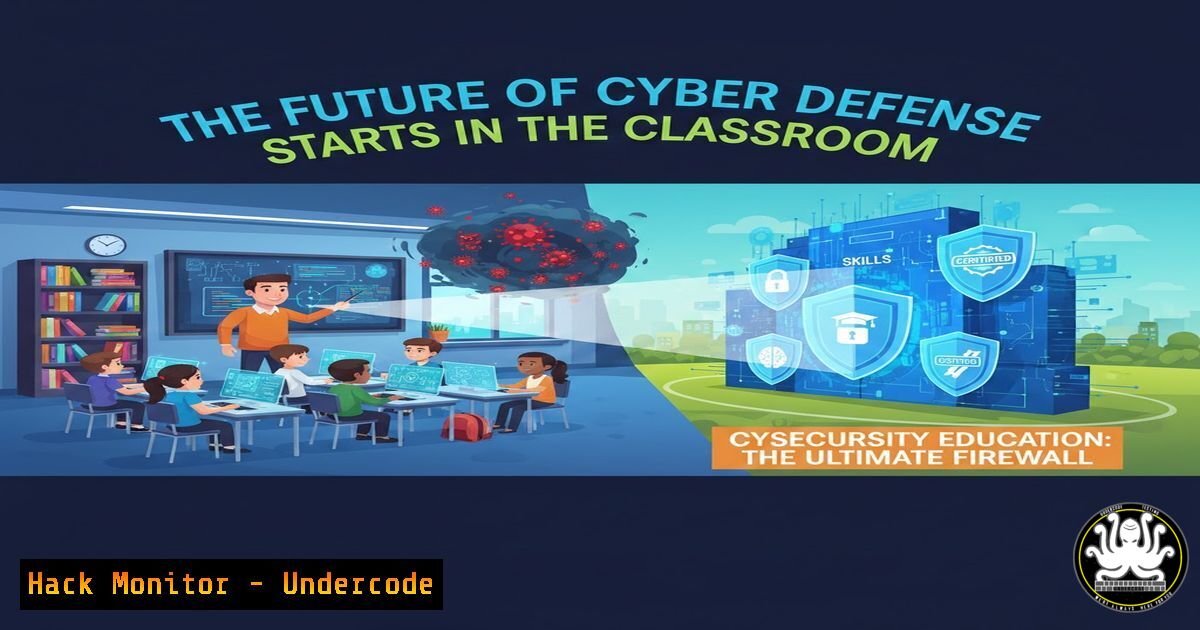
The escalating threat landscape of the digital world necessitates a paradigm shift from reactive security measures to proactive cultural education. As highlighted by recent outreach initiatives, fostering cybersecurity awareness from a foundational level is no longer optional but a critical component of national and organizational defense strategies. This article delves into the technical and procedural knowledge essential for building a cyber-resilient generation.
Learning Objectives:
- Understand the core technical pillars of personal digital safety, including password hygiene, software management, and network security.
- Learn to identify and mitigate common social engineering and phishing attacks through practical command-line and analytical techniques.
- Develop a foundational mindset for secure online behavior applicable across personal and future professional environments.
You Should Know:
- The Anatomy of a Strong Password and Hash Integrity
A strong password is the first line of defense. It’s not just about complexity but length and unpredictability. Modern systems don’t store passwords in plain text but as cryptographic hashes. Understanding this is key to appreciating why password strength matters.
Step-by-step guide:
Concept: When you create a password, it is processed by a one-way hash function (like bcrypt, SHA-256). The output, a string of fixed-length characters, is what gets stored. During login, your entered password is hashed again and compared to the stored hash.
Why it Matters: Weak passwords are vulnerable to brute-force or dictionary attacks, where attackers use powerful tools to guess passwords by hashing billions of common words and comparing them to a stolen hash list.
Practical Check (Linux): You can use command-line tools to generate hashes and understand their properties.
 Using OpenSSL to generate an MD5 hash (for demonstration - MD5 is considered weak)
echo -n "MyStrongPassword!" | openssl md5
 Output: (a 32-character hash string)

Using a more modern, recommended hash function (SHA-512)
echo -n "MyStrongPassword!" | openssl sha512
 Output: (a 128-character hash string)
Notice how changing a single character completely alters the hash. This demonstrates the “avalanche effect,” a property of secure hash functions.
2. Decoding Phishing Links: A Technical Inspection
Phishing relies on deception. Attackers disguise malicious links to appear legitimate. Learning to technically inspect a URL before clicking is a crucial skill.
Step-by-step guide:
Step 1: Hover Over the Link. Before clicking, hover your mouse over the link. Your browser will display the true destination URL in the bottom-left corner. Check for inconsistencies.
Step 2: Analyze the URL Structure. Look for misspellings of legitimate domains (e.g., `paypa1.com` instead of paypal.com), the use of suspicious subdomains, or the wrong top-level domain (TLD).
Step 3: Use Command-Line Tools for Investigation. If you receive a suspicious link, you can investigate it safely from a Linux terminal.
 Use 'curl' to fetch only the HTTP headers of the URL without visiting the site.
curl -I "http://suspicious-website.example.com"

For a more detailed analysis, you can trace the redirect path.
curl -L -I "http://suspicious-website.example.com"
This command can reveal if the link redirects through multiple suspicious domains, a common phishing tactic.
- The Non-Negotiable Habit of Software Updates and Patch Management
Unpatched software is a primary attack vector. Updates and patches fix critical security vulnerabilities that attackers actively exploit.
Step-by-step guide:
Concept: Software vendors regularly release patches to address discovered Common Vulnerabilities and Exposures (CVEs). Delaying these updates leaves your system exposed to known threats.
Windows – Configure Automatic Updates:
1. Go to Settings > Windows Update.
- Ensure automatic updates are turned on. For advanced management in a domain environment, Group Policy Objects (GPOs) are used to control update deployment.
Linux – Update via Command Line:
 For Debian/Ubuntu based systems:
sudo apt update && sudo apt upgrade -y

For Red Hat/CentOS/Fedora based systems:
sudo dnf update -y
 or for older versions: sudo yum update -y
This fetches the latest package lists and upgrades all installed software to their most secure versions.
- Securing Your Home Network: The First Digital Perimeter
Your home Wi-Fi is your personal network. An unsecured network can be a gateway for attackers to intercept your data or attack your devices.
Step-by-step guide:
Step 1: Change Default Credentials. Always change the default administrator username and password for your wireless router.
Step 2: Use Strong Encryption. Ensure your Wi-Fi is using WPA2 or, preferably, WPA3 encryption. Avoid the obsolete and easily crackable WEP.
Step 3: Disable WPS. Wi-Fi Protected Setup (WPS) is notoriously vulnerable and should be disabled in your router’s settings.
Step 4: Check Connected Devices. Regularly review the list of devices connected to your network. You can often find this in your router’s admin panel. Use command-line tools to see active connections on your machine.
 On Linux, use the 'ss' command (or 'netstat')
ss -tunp
 This shows all TCP and UDP connections and the processes that own them.
- The Principles of Least Privilege and User Account Control
The Principle of Least Privilege (PoLP) means users and applications should only have the minimum level of access necessary to perform their function.
Step-by-step guide:
Concept: Using a standard user account for daily tasks, rather than an administrator account, prevents malware from making system-wide changes if it infects your computer.
Windows – User Account Control (UAC): Always keep UAC enabled at its default level. It prompts for administrator consent when applications try to make changes, acting as a critical barrier.
Linux – Using `sudo`:
Instead of logging in as the `root` user, use a standard account and prefix administrative commands with sudo.
This limits the scope of power, requiring explicit permission for privileged actions.
 Good practice - using sudo for a single command
sudo systemctl restart apache2

Bad practice - working as root permanently
sudo su -
What Undercode Say:
- Cultural Shift is the Ultimate Patch. The most sophisticated technical controls can be bypassed by a single uninformed click. Embedding security consciousness from a young age creates a human firewall that is far more adaptive and resilient.
- Bridging the Awareness Gap is a Strategic Imperative. Initiatives like the one led by KPMG Nigeria are not just Corporate Social Responsibility; they are an investment in the future cybersecurity workforce and the overall health of the digital ecosystem. An aware user base reduces the attack surface for everyone.
Analysis: The post underscores a critical evolution in cybersecurity strategy: moving the front lines from the SOC to the classroom. While organizations spend millions on advanced threat detection and firewalls, the ROI is diminished if the foundational user is not educated. Engaging students at the secondary school level, a time when digital identity is being formed, is a profoundly strategic intervention. It builds a culture where security is intuitive, not an impediment. This foundational awareness is a prerequisite for producing the next generation of cybersecurity professionals who think offensively and defensively from a place of ingrained principle, not just procedure.
Prediction:
The future impact of integrating cybersecurity fundamentals into early education will be a measurable reduction in the success rate of low-sophistication, high-volume attacks like phishing and credential stuffing. Within a decade, we will see a generation of digital natives entering the workforce who inherently question unusual URLs, value software updates, and understand basic network hygiene. This will force threat actors to invest more heavily in advanced, targeted attacks, fundamentally changing the economics of cybercrime and raising the barrier to entry for attackers. The organizations that support and leverage this culturally-aware workforce will possess a significant, sustainable competitive advantage in the cyber-defense arena.
🎯Let’s Practice For Free:
IT/Security Reporter URL:
Reported By: Chinaza Onyemaizu – Hackers Feeds
Extra Hub: Undercode MoN
Basic Verification: Pass ✅


