Listen to this Post
Introduction:
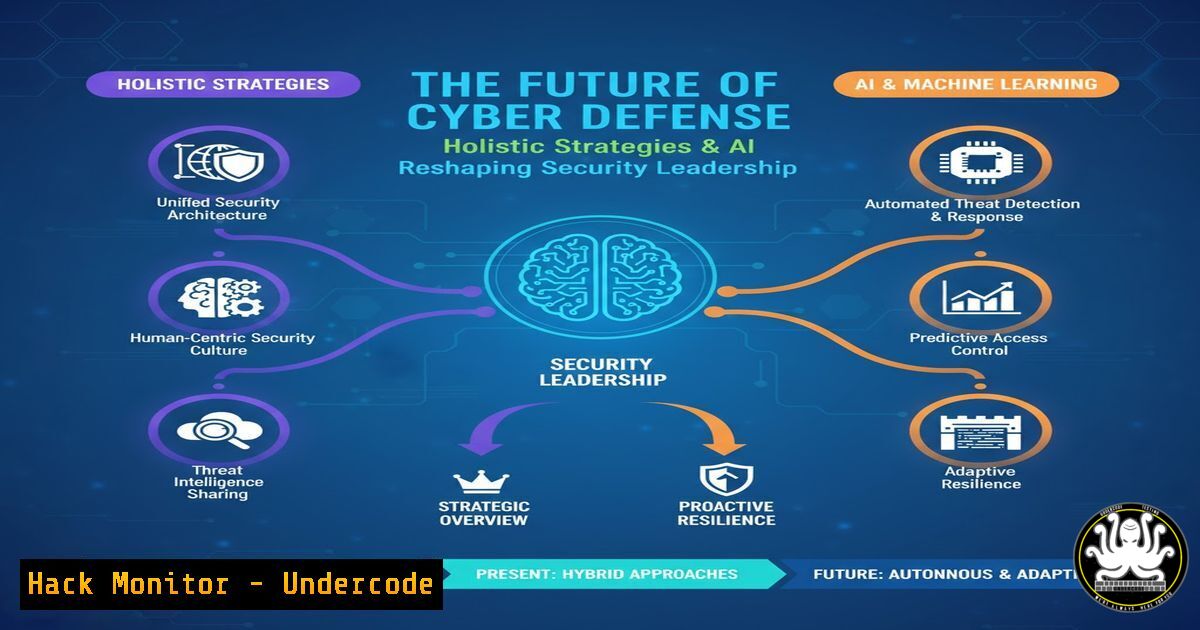
The evolving digital threat landscape demands a shift from purely technical defenses to strategies encompassing human behavior, organizational culture, and emerging technology. At the recent World Economic Forum meeting, global cybersecurity leaders highlighted the critical need for holistic cyber resilience, measured behavioral change, and the integration of AI into security leadership. This article breaks down the key challenges and provides actionable technical guidance.
Learning Objectives:
- Understand and implement frameworks for measuring cyber resilience and behavioral change.
- Develop non-technical training channels to enhance civilian and organizational digital security.
- Leverage AI and automation to augment cybersecurity leadership and threat response.
You Should Know:
1. Measuring Cyber Resilience with Quantitative Frameworks
Cyber resilience goes beyond preventing attacks to ensuring continuous operation during and after an incident. A holistic measurement strategy involves technical, procedural, and human metrics.
Step‑by‑step guide explaining what this does and how to use it.
1. Define Critical Assets and Services: Identify your crown jewels—e.g., customer databases, key web applications, payment systems.
2. Establish Key Risk Indicators (KRIs): Monitor metrics like:
MTTD (Mean Time to Detect): The average time to identify a threat.
MTTR (Mean Time to Respond): The average time to contain and eradicate a threat.
Recovery Time Objective (RTO): The maximum acceptable downtime for a service.
3. Implement Continuous Monitoring: Use Security Information and Event Management (SIEM) systems to collect data. A basic query in a tool like Elasticsearch (often part of SIEM solutions) to detect failed login bursts might look like:
GET /winlogbeat-/_search
{
"query": {
"bool": {
"must": [
{ "match": { "event.code": "4625" } }, // Failed logon event ID
{ "range": { "@timestamp": { "gte": "now-1h" } } }
]
}
},
"aggs": {
"failed_logons_per_user": {
"terms": { "field": "user.name" },
"aggs": {
"over_time": {
"date_histogram": { "field": "@timestamp", "calendar_interval": "minute" }
}
}
}
}
}
This query aggregates failed logons by user over the last hour, helping to quantify an attack surface.
2. Building Effective Non-Technical Cybersecurity Training
For civilians and non-technical staff, traditional training fails. The goal is to embed security into existing habits through relatable scenarios.
Step‑by‑step guide explaining what this does and how to use it.
1. Identify the Audience: Segment users by risk profile (e.g., finance team, remote workers, general public).
2. Develop Scenario-Based Content: Create short, engaging videos or interactive graphics on topics like:
Identifying phishing attempts in personal email.
The importance of software updates on personal devices.
Secure practices for public Wi-Fi (using a VPN).
3. Utilize Non-Tech Channels: Disseminate this content through internal newsletters, physical posters with QR codes linking to tutorials, or brief discussions in team meetings. The key is repetition and integration into daily workflows, not a one-off training session.
3. Quantifying Behavioral Change in Security Habits
Measuring the success of training requires moving beyond completion rates to observable actions.
Step‑by‑step guide explaining what this does and how to use it.
1. Define Target Behaviors: Specify desired outcomes, e.g., “a 50% reduction in password reuse” or “95% adoption of multi-factor authentication (MFA).”
2. Conduct Phishing Simulation Campaigns: Use controlled platforms to send simulated phishing emails and track click-through rates over time. A decreasing rate indicates positive behavioral change.
3. Analyze Authentication Logs: Monitor for improvements. For instance, on a Linux system using `grep` to count MFA successes from a log file like /var/log/auth.log:
 Count successful MFA authentications for a service like SSH
grep "Accepted publickey" /var/log/auth.log | wc -l
Comparing this count before and after a training campaign can show MFA adoption.
4. Integrating AI into Cybersecurity Operations
AI is transforming security from a reactive to a proactive and predictive discipline, directly impacting leadership decisions.
Step‑by‑step guide explaining what this does and how to use it.
1. Threat Intelligence Augmentation: Use AI to process global threat feeds. Tools can automatically correlate IOCs (Indicators of Compromise) with your internal logs.
2. Anomaly Detection with Machine Learning: Deploy ML models to establish a baseline of normal network traffic and flag deviations. In a cloud environment (e.g., AWS), you can use Amazon GuardDuty, which uses ML to analyze VPC Flow Logs and DNS logs for suspicious activity.
3. Automated Incident Response: Create playbooks that leverage AI. For example, if a user’s account shows anomalous behavior, an automated script could temporarily disable the account and alert the SOC.
Example Windows Command (as Administrator) to disable a user:
net username <username> /active:no
This immediate action contains a potential breach while human analysis is underway.
5. Hardening Digital Security for Civilian Populations
Projects like Nadiyno.org focus on providing accessible security help. This principle can be extended through public-facing tools and configurations.
Step‑by‑step guide explaining what this does and how to use it.
1. Promote Encrypted Communication: Advocate for the use of Signal or WhatsApp (with E2E encryption). For more technical users, guide them to configure a VPN.
2. Secure Browser Configuration: Provide tutorials on installing ad-blockers (uBlock Origin) and privacy-focused extensions like HTTPS Everywhere.
3. Basic System Hardening Script: For Windows users, a simple batch script can enforce basic settings. Caution: Test in a non-production environment first.
@echo off
echo Disabling SMBv1 for security...
sc config lanmanworkstation depend= bowser/mrxsmb20/nsi
sc config mrxsmb10 start= disabled
dism /online /disable-feature /featurename:SMB1Protocol
echo Ensuring Windows Defender is running...
sc config WinDefend start= auto
net start WinDefend
echo Basic hardening complete.
pause
This script disables the vulnerable SMBv1 protocol and ensures Windows Defender is active.
What Undercode Say:
- Human Behavior is the New Perimeter. The most advanced technical controls are futile without addressing the human element through continuous, engaging education.
- AI is a Force Multiplier, Not a Replacement. Effective leaders will use AI to handle data volume and initial triage, freeing human experts for complex analysis and strategic decision-making.
The discussions at the World Economic Forum underscore a pivotal moment where cybersecurity is no longer a siloed IT function. It is a multidisciplinary challenge that intersects with psychology, education, and ethics. The focus on “cybersecurity for civilians” highlights the democratization of threats, where national resilience is tied to the digital hygiene of every citizen. Success in this new era will belong to organizations and nations that can effectively measure and influence human behavior while intelligently automating their technical defenses.
Prediction:
The holistic, human-centric approach to cybersecurity, championed by leaders at the WEF, will become the global standard by 2026. We will see a surge in AI-driven behavioral analytics tools that seamlessly integrate security training into daily digital workflows. Furthermore, nation-state actors will increasingly target civilian populations to destabilize societies, making community-based defense initiatives, like the Nadiyno helpline in Ukraine, a critical and widely replicated component of national security infrastructure worldwide.
🎯Let’s Practice For Free:
IT/Security Reporter URL:
Reported By: Oleksandramarchenko How – Hackers Feeds
Extra Hub: Undercode MoN
Basic Verification: Pass ✅


