Listen to this Post
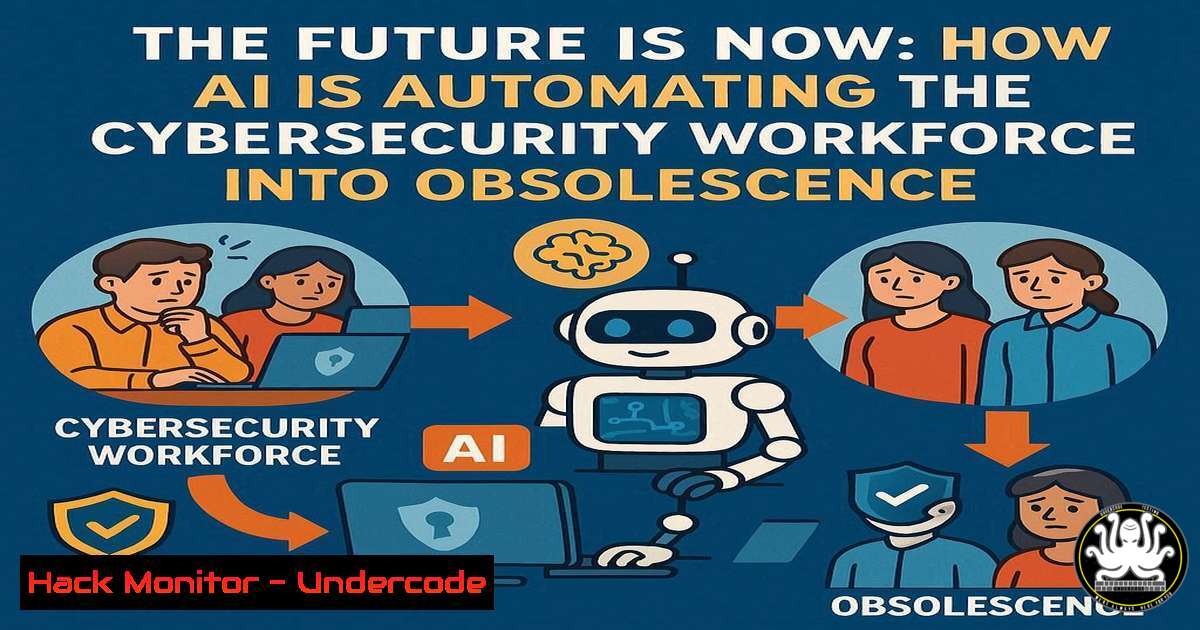
Introduction:
The rapid advancement of Artificial Intelligence (AI) is fundamentally reshaping the cybersecurity landscape, automating tasks once thought to be the exclusive domain of human experts. From threat hunting to incident response, AI-driven systems are performing with a speed and scale that human teams cannot match, leading to a critical juncture for professionals in the field. This article explores the specific technical domains where AI is making the most significant impact and provides the command-level knowledge needed to stay relevant.
Learning Objectives:
- Identify the key cybersecurity functions being automated by AI and machine learning.
- Acquire practical command-line and tool-specific skills to work alongside, not against, AI systems.
- Understand the critical shift from manual execution to strategic oversight and AI model management.
You Should Know:
1. AI-Powered Log Analysis with Splunk and MLTK
The manual sifting through terabytes of log data is becoming obsolete. AI can identify anomalous patterns indicative of a breach in seconds.
 Using Splunk's Machine Learning Toolkit (MLTK) to find outliers in web traffic
| inputlookup web_traffic.csv
| fit MLTKOutlier "response_size" into model_web_traffic
| search model_web_traffic=1
Step-by-step guide: This Splunk Search Processing Language (SPL) command first loads a dataset of web traffic. The `fit` command from the MLTK applies an outlier detection algorithm to the “response_size” field, flagging any records that statistically deviate from the norm. The final line filters the results to show only the outliers, which could indicate data exfiltration or a denial-of-service attack in progress.
- Automating Network Threat Hunting with Python and Scapy
AI models can generate detection rules for novel threats, which can then be deployed automatically across the network.Python script using Scapy to detect suspicious DNS traffic (e.g., DNS tunneling) from scapy.all import def dns_monitor(pkt): if pkt.haslayer(DNSQR): Check for DNS Question Record query = pkt[bash].qname.decode() if len(query) > 50 or any(sub in query for sub in ['.txt', '.php', '.exe']): print(f"[!] Suspicious DNS Query: {query} from {pkt[bash].src}") sniff(iface="eth0", filter="udp port 53", prn=dns_monitor)Step-by-step guide: This script uses the Scapy library to sniff packets on the eth0 interface, filtering for DNS traffic (UDP port 53). For each DNS packet, it examines the query name. It flags queries that are unusually long or contain unexpected file extensions, which are common indicators of DNS tunneling used for command and control or data exfiltration.
3. Vulnerability Assessment with Nmap and NSE Automation
AI can prioritize vulnerabilities based on exploitability and asset criticality, but the initial scanning is already highly automated.
 Nmap command using NSE scripts for comprehensive vulnerability scanning
nmap -sV --script vuln,exploit -O -T4 <target_ip>
Step-by-step guide: This Nmap command performs a service version detection (-sV) and OS fingerprinting (-O). The `–script vuln,exploit` directive runs all scripts in the “vuln” and “exploit” categories against the target. These scripts automatically check for known vulnerabilities and whether they are exploitable, generating a report that an AI system can then triage.
- Cloud Security Hardening with AWS CLI and Security Hub
AI analyzes cloud configuration posture at scale, but the remediation commands are executed via CLI.Check for S3 buckets with public read access and then remediate aws s3api list-buckets --query "Buckets[].Name" --output text aws s3api get-bucket-acl --bucket <bucket_name> Check ACL aws s3api put-bucket-acl --bucket <bucket_name> --acl private Enforce private ACL Enable AWS Security Hub for automated compliance checking aws securityhub enable-security-hub --region us-east-1
Step-by-step guide: The first commands list all S3 buckets and inspect their Access Control Lists (ACLs). If a bucket is found to be publicly readable, the `put-bucket-acl` command is used to enforce a private ACL. Enabling Security Hub allows an AI-driven service to continuously monitor for misconfigurations and compliance violations across the entire AWS environment.
5. Incident Response Automation with Linux Forensics
During an incident, AI can correlate events, but a human or automated script must still acquire the necessary forensic artifacts.
 Live triage command sequence to collect critical data
ps aux --forest > /opt/forensics/process_tree.txt  Process tree
netstat -tulnpa > /opt/forensics/network_connections.txt  Network connections
lsof -i -P -n > /opt/forensics/open_ports.txt  Open ports and processes
ss -tulnpa > /opt/forensics/socket_stats.txt  Socket statistics
cat /etc/passwd | grep -v "nologin" | grep -v "false" > /opt/forensics/valid_users.txt  Valid interactive users
grep -r "Accepted password" /var/log/auth.log > /opt/forensics/successful_logins.txt  Successful SSH logins
Step-by-step guide: This series of commands is a foundational script for live incident response. It captures a snapshot of the running system, including processes, network connections, user accounts, and authentication logs. This data can be fed into a Security Information and Event Management (SIEM) system where AI algorithms can look for patterns of compromise.
6. API Security Testing with curl and jq
AI can fuzz APIs for novel vulnerabilities, but basic security checks are scriptable with standard tools.
 Testing for common API vulnerabilities: Broken Object Level Authorization (BOLA)
curl -H "Authorization: Bearer $TOKEN" https://api.example.com/v1/users/123
curl -H "Authorization: Bearer $TOKEN" https://api.example.com/v1/users/456

Testing for mass assignment
curl -X POST -H "Content-Type: application/json" -H "Authorization: Bearer $TOKEN" -d '{"email":"[email protected]", "role":"admin"}' https://api.example.com/v1/users

Parsing and analyzing API responses with jq
curl -s https://api.example.com/v1/users | jq '.[] | select(.isAdmin==true)'
Step-by-step guide: The first two `curl` commands test for BOLA by attempting to access different user records with the same token. The third command tests for mass assignment by trying to set a privileged “admin” role. The `jq` command is used to parse JSON output, which in this case filters a user list to show only administrators, helping to audit privilege levels.
7. Windows Security Module Analysis with PowerShell
AI can detect malicious PowerShell scripts, but analysts use PowerShell to investigate and harden systems.
 Check for recently installed PowerShell modules and their file hashes
Get-InstalledModule | Sort-Object PublishedDate -Descending | Select-Object -First 10

Analyze a PowerShell script for suspicious indicators without executing it
Get-Content suspicious_script.ps1 | Select-String "DownloadString", "Invoke-Expression", "Start-Process"

Harden PowerShell execution policy
Get-ExecutionPolicy -List
Set-ExecutionPolicy -ExecutionPolicy RemoteSigned -Force
Step-by-step guide: The first command lists the most recently installed modules, which could indicate a recent attacker tool installation. The second command performs a static analysis of a script, searching for common cmdlets used in malicious scripts. The final commands check and set the execution policy to “RemoteSigned,” which helps prevent the execution of untrusted scripts downloaded from the internet.
What Undercode Say:
- The era of the manual cybersecurity operator is ending. Value will be derived from those who can curate data, train AI models, and interpret their complex outputs.
- Resistance is futile. Professionals must pivot from being the primary “doers” of technical tasks to becoming the “orchestrators” and “validators” of automated AI systems.
The core analysis is that AI is not merely a tool but a transformative force. It excels in environments with clear, data-rich patterns—precisely the domain of many Tier 1 and Tier 2 security operations center (SOC) tasks. The human professional’s new role is threefold: to ask the right strategic questions of the AI, to manage the inevitable false positives and model drift, and to apply ethical and contextual judgment that AI currently lacks. The command-line skills remain critical, not for daily manual use, but for building, debugging, and supervising the automated systems that now perform the work.
Prediction:
Within the next 3-5 years, we will see a consolidation of security vendors into platforms dominated by a few AI-driven giants. Entry-level positions focused on repetitive task work will drastically diminish, replaced by roles in AI security data engineering and prompt engineering for security systems. The most devastating cyber-attacks will be AI-on-AI warfare, where offensive AI systematically probes and exploits defensive AI systems at a pace and complexity that human teams cannot hope to counter manually. The organizations that survive will be those that successfully fuse human strategic intelligence with autonomous AI execution.
🎯Let’s Practice For Free:
IT/Security Reporter URL:
Reported By: Padamskafle What – Hackers Feeds
Extra Hub: Undercode MoN
Basic Verification: Pass ✅


