Listen to this Post
Introduction:
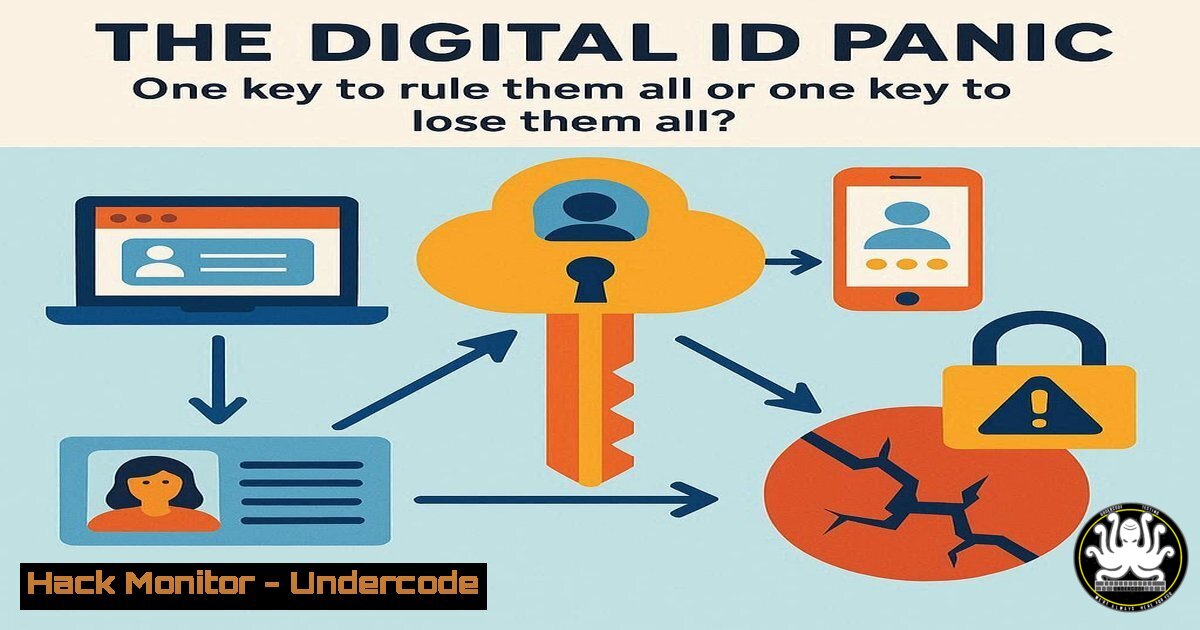
The push for a centralized Digital ID system, championed by EU leaders as a universal key for citizens’ digital lives, presents a paradigm shift in the relationship between individuals, technology, and the state. While promising unparalleled convenience, this initiative raises profound cybersecurity and privacy concerns that every technologist and citizen must understand. The core debate revolves around creating a single point of failure that could become the ultimate target for malicious actors and a potent tool for control.
Learning Objectives:
- Understand the critical cybersecurity architecture flaws inherent in centralized Digital ID systems.
- Learn practical commands and techniques for auditing, hardening, and understanding identity and access management (IAM) systems.
- Develop a threat model for single-point-of-failure systems and explore mitigation strategies.
You Should Know:
1. Auditing Local User and Group Permissions
A centralized Digital ID’s breach starts with understanding local access. These commands verify who has access to what on a system.
Windows (PowerShell):
 Get local users
Get-LocalUser
 Get members of the Administrators group
Get-LocalGroupMember -Group "Administrators"
 Get detailed user account information
net user [bash]
Linux:
 List all users
cat /etc/passwd
 List all groups
cat /etc/group
 Check sudo privileges for current user
sudo -l
Step-by-step guide:
1. Open PowerShell (Windows) or Terminal (Linux).
- Run `Get-LocalUser` or `cat /etc/passwd` to enumerate all user accounts on the system. Look for unexpected or dormant accounts.
- Use `Get-LocalGroupMember -Group “Administrators”` or `grep ‘sudo’ /etc/group` to identify all users with elevated privileges. This is a critical list; any compromise here equals total system compromise, mirroring the risk of a master Digital ID key.
2. Interrogating Active Directory for Centralized Control Points
Digital ID ecosystems resemble corporate Active Directory (AD) domains. Understanding AD is key to understanding the risks.
Windows (PowerShell):
 Get domain information
Get-ADDomain
 List all domain administrators
Get-ADGroupMember -Identity "Domain Admins"
 Find users with sensitive privileges
Get-ADUser -Filter  -Properties MemberOf | Where-Object {$_.MemberOf -like "Admin"}
Step-by-step guide:
- On a system connected to a Windows Domain, import the ActiveDirectory module:
Import-Module ActiveDirectory. - Execute
Get-ADGroupMember -Identity "Domain Admins". This small group holds the “master key” to the entire network, analogous to the administrators of a national Digital ID system. - The output reveals the extreme danger of centralization: breaching a single account in this list can lead to total domain compromise, known as “Golden Ticket” attacks.
3. Hardening API Security for Identity Endpoints
Digital IDs will rely heavily on APIs (like OAuth 2.0 and OpenID Connect). Securing these endpoints is non-negotiable.
Using curl for API Security Testing:
 Check for weak HTTP methods
curl -X OPTIONS -i http://api.example.com/identity/v1/token
 Test for missing security headers
curl -I http://api.example.com/identity/v1/userinfo
 Test for Injection flaws
curl -X POST http://api.example.com/identity/v1/token -d "username='OR'1'='1'--" -d "password=anything"
Step-by-step guide:
- Use `curl -I` to fetch the headers of a login or token endpoint. Verify the presence of `Strict-Transport-Security` (forcing HTTPS) and
Content-Security-Policy. - The `OPTIONS` request checks which HTTP methods (GET, POST, PUT, DELETE) are enabled. Unnecessary methods like PUT or DELETE on a public endpoint are a severe risk.
- The simple SQL injection test demonstrates how a flaw in the central ID database could allow bypassing authentication entirely.
4. Cloud IAM Auditing and Least Privilege
A national Digital ID would be a cloud-scale project. Misconfigured cloud IAM is a primary attack vector.
AWS CLI:
 List all IAM users
aws iam list-users
 List policies attached to a specific user
aws iam list-attached-user-policies --user-name Alice
 Simulate IAM policy permissions
aws iam simulate-principal-policy --policy-source-arn arn:aws:iam::123456789012:user/Alice --action-names "s3:GetObject" "iam:CreateUser"
Azure CLI:
 List all role assignments
az role assignment list --output table
Step-by-step guide:
1. Configure your AWS CLI with appropriate credentials.
- Run `aws iam list-users` to get a full inventory of who has access. In a Digital ID context, this is the citizen roster.
- The `simulate-principal-policy` command is crucial. It lets you verify if a user’s permissions are overly broad before a breach occurs, enforcing the “principle of least privilege.”
5. Network Monitoring for Data Exfiltration
If a central ID database is breached, the attacker will exfiltrate data. Detecting this is critical.
Using tcpdump for Traffic Analysis:
 Capture all traffic on port 443 (HTTPS)
sudo tcpdump -i any -A 'port 443'
 Capture DNS queries (a common exfiltration channel)
sudo tcpdump -i any -n 'port 53'
 Capture large outbound transfers
sudo tcpdump -i any -w capture.pcap 'greater 1024' and src your_network
Step-by-step guide:
- Run `sudo tcpdump -i any -n ‘port 53’` to monitor all DNS traffic. Attackers often encode stolen data in DNS queries to bypass firewalls.
- The `-w capture.pcap` command saves packets to a file for later analysis with tools like Wireshark.
- Look for patterns like repeated, large-volume connections to unknown external IP addresses, which could indicate a live data siphon from the central ID repository.
6. Cryptographic Key and Certificate Management
The “one key” is, literally, a cryptographic key. Proper key management is the bedrock of trust.
OpenSSL Commands:
 Generate a strong RSA private key
openssl genrsa -aes256 -out my-master-key.pem 4096
 Extract the public key
openssl rsa -in my-master-key.pem -pubout -out my-master-key.pub
 Check a certificate's validity and details
openssl x509 -in digital-id-certificate.crt -text -noout
Step-by-step guide:
- Use `openssl genrsa -out master.key 4096` to generate a 4096-bit RSA key. This strength is a minimum for a root-of-trust key.
- Inspect any public certificate with
openssl x509 -text -noout -in certificate.crt. Verify the Issuer, Validity period, and Subject. A compromised Certificate Authority (CA) for a Digital ID would invalidate the entire system’s security. - This highlights the need for a decentralized, resilient PKI, not a single, state-controlled CA.
7. Vulnerability Scanning the Identity Fabric
The entire digital ecosystem that relies on the central ID must be constantly scanned for vulnerabilities.
Using Nmap for Service Discovery:
 Scan for open ports on a target system
nmap -sS -T4 -p- target-identity-server.com
 Scan for specific vulnerability scripts
nmap -sV --script ssl-heartbleed,http-vuln-cve2017-5638 target-server.com
 OS and service version detection
nmap -A -T4 target-server.com
Using Nikto for Web Application Scanning:
 Basic web vulnerability scan
nikto -h http://login.portal.gov
Step-by-step guide:
- Perform a TCP SYN scan (
-sS) on the hypothetical identity provider’s server to discover every open port and service. - The `-A` flag enables OS and version detection, revealing if the server is running outdated, vulnerable software.
- Tools like Nikto probe for thousands of known web flaws. A single unpatched vulnerability in the login portal could be the entry point that collapses the entire “one key” system.
What Undercode Say:
- The Single Point of Failure is The Single Point of Attack. Centralizing a nation’s identity creates a target so valuable that it guarantees an endless, sophisticated assault. The question is not if but when and how often it will be breached.
- Convenience is the Antithesis of Security. The drive for seamless, one-click access inherently conflicts with robust security principles like segmentation, multi-factor authentication, and least privilege. A system designed for ultimate convenience will, by definition, have security trade-offs.
The technical analysis reveals that while the components for building a secure Digital ID exist, their assembly into a centralized, mandatory system introduces catastrophic risk. The commands shown for auditing AD, cloud IAM, and APIs demonstrate that complexity is the enemy of security. A system of this scale would be impossibly complex to secure perfectly. The push for “one key” is a step backward in security architecture, resurrecting the flawed castle-and-moat model in an age of borderless networks and advanced persistent threats. The only resilient future is decentralized, user-centric identity, where the compromise of one provider does not mean the compromise of an entire population’s digital life.
Prediction:
The aggressive push for centralized Digital ID will lead to the most catastrophic data breach in history within the next decade. This breach will not merely leak passwords but will irrevocably expose the financial, medical, and social histories of hundreds of millions of citizens. The aftermath will cripple digital trust for a generation, spurring a forced and chaotic migration to decentralized identity models based on blockchain and zero-knowledge proofs, but only after immense collateral damage to personal privacy and financial security. The era of convenient, all-in-one digital identity will be remembered as a well-intentioned but fatal architectural blunder.
🎯Let’s Practice For Free:
IT/Security Reporter URL:
Reported By: Renatesiekmann Digitalid – Hackers Feeds
Extra Hub: Undercode MoN
Basic Verification: Pass ✅


