
Listen to this Post
Introduction:
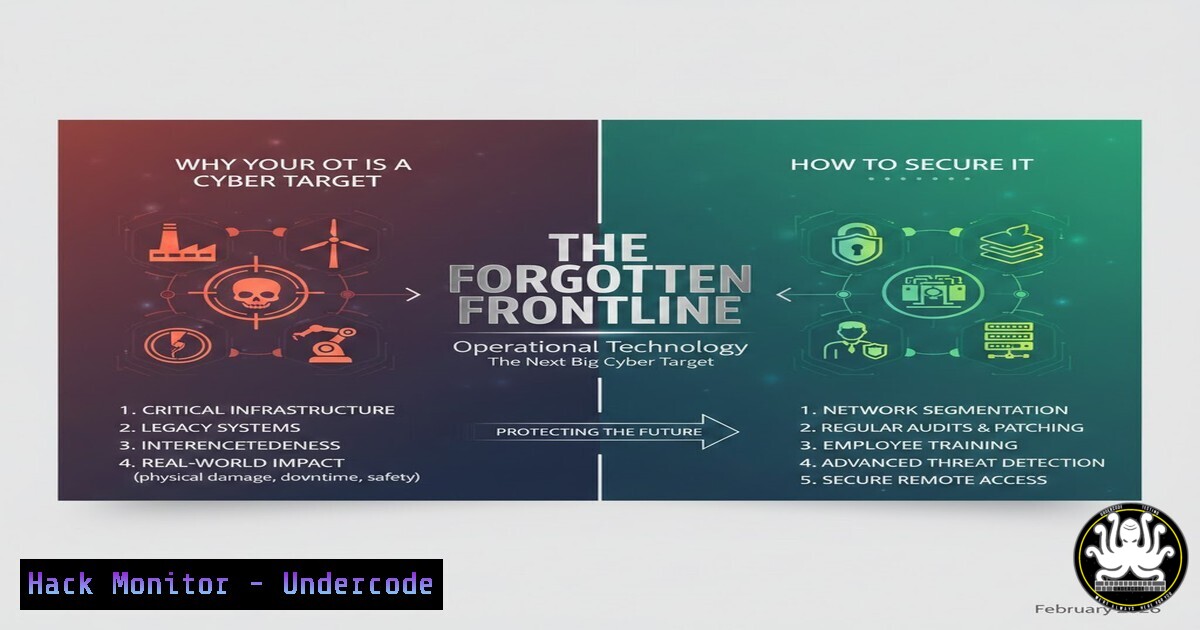
Operational Technology (OT) – the systems controlling physical processes in sectors like healthcare, manufacturing, and utilities – has long existed in a dangerous blind spot. As these once-isolated networks converge with IT systems, they become lucrative targets for ransomware and state-sponsored attacks. This article moves beyond awareness to provide a tactical blueprint for securing these critical environments without disrupting essential operations.
Learning Objectives:
- Understand the unique risks and attack surfaces present in Operational Technology environments.
- Implement practical network segmentation and monitoring strategies tailored for OT.
- Develop a governance and incident response framework that ensures OT resilience and recoverability.
You Should Know:
1. OT Security Starts with Governance, Not Gadgets
The foundational step is shifting from a “set and forget” mentality to proactive governance. This begins with comprehensive asset discovery and risk assessment specifically for OT.
Step‑by‑step guide explaining what this does and how to use it.
Step 1: Conduct an OT-Specific Asset Inventory. Use passive network monitoring tools to identify all devices (PLCs, HMIs, sensors, building HVAC) without disrupting processes. A tool like `nmap` can be used cautiously with non-intrusive scans on designated management segments.
Command Example (Linux, for approved IP range): `sudo nmap -sU -p 161,102 -O –script s7-info 192.168.1.0/24` This scans for common OT protocols (SNMP, S7comm) and attempts OS detection.
Step 2: Risk Register Integration. Classify assets by criticality to operations and safety. Document known vulnerabilities for each device model/firmware. This formalizes OT risk, making it actionable for the board.
Step 3: Establish OT Security Policies. Create clear policies for patch management (often requiring vendor coordination), network access, and physical security for OT areas.
2. Architecting a “Secure by Design” OT Network
Smart network design is your most powerful tool. The goal is segmentation to contain breaches and prevent lateral movement from IT to OT.
Step‑by‑step guide explaining what this does and how to use it.
Step 1: Implement a Demilitarized Zone (DMZ). Never allow direct IT-to-OT communication. All data must flow through a secured DMZ where jump servers, data historians, and security controls reside.
Step 2: Enforce Micro-segmentation. Use next-generation firewalls (NGFWs) or OT-aware switches to create zones. For example, isolate building management systems from clinical equipment in a hospital.
Concept: Configure Access Control Lists (ACLs) to only permit specific, necessary communication between zones (e.g., allow only TCP port 44818 from the engineering station zone to the PLC zone for Allen-Bradley systems).
Step 3: Harden Network Devices. Change all default credentials on switches, routers, and firewalls. Disable unused ports and services like SNMP v1/v2c if not critically needed.
3. Implementing Continuous, OT-Aware Monitoring
Traditional IT monitoring tools fail in OT. You need visibility tailored to industrial protocols and behaviors.
Step‑by‑step guide explaining what this does and how to use it.
Step 1: Deploy Network Traffic Analysis (NTA). Use tools like Security Onion (open-source) or commercial OT SIEMs to monitor east-west traffic within the OT network.
Step 2: Baseline Normal Operations. Record normal network traffic patterns, process values, and device communications. Any deviation can be an early indicator of compromise or failure.
Step 3: Set Alert Rules for OT Threats. Configure alerts for malicious indicators: detection of scanning activity within OT zones, unauthorized use of engineering software (e.g., STEP 7, TIA Portal), or commands that could cause physical harm (e.g., forcing a valve to open/close).
4. Building an OT-Capable Incident Response Plan
Assume a breach will occur. Your response plan must prioritize human safety and operational continuity over data confidentiality.
Step‑by‑step guide explaining what this does and how to use it.
Step 1: Develop OT-Specific Playbooks. Create procedures for common OT attack scenarios (e.g., ransomware on HMI, malicious command injection). Clearly define when to shut down processes versus when to operate in a degraded, manual mode.
Step 2: Secure Remote Access. If remote OT support is required, mandate a VPN combined with multi-factor authentication (MFA) and jump hosts. Never expose OT devices directly to the internet.
Windows Command to verify listening ports (on jump host): `netstat -ano | findstr :3389` (Check for RDP exposure).
Step 3: Maintain Air-Gapped Backups. Ensure offline, restorable backups of PLC logic, HMI configurations, and SCADA databases. Regularly test restoration in a sandbox environment.
5. Ensuring Compliance and Ongoing Assurance
OT security is a continuous cycle, not a one-time project. Align efforts with critical infrastructure frameworks.
Step‑by‑step guide explaining what this does and how to use it.
Step 1: Map Controls to Standards. Align your program with frameworks like NIST SP 800-82 (Guide to Industrial Control Systems Security), ISA/IEC 62443, or sector-specific regulations.
Step 2: Schedule Regular Tabletop Exercises. Involve OT engineers, IT security, and operations managers in simulated attacks to test communication and response plans.
Step 3: Conduct Penetration Testing. Engage specialized OT penetration testers to safely assess the security of your environment. Ensure they use vendor-approved methods to avoid causing outages.
What Undercode Say:
- Mindset Over Product: The most sophisticated security tool fails without the foundational governance mindset that OT is a dynamic, high-risk environment requiring executive oversight.
- Segmentation is Non-Negotiable: Proper network architecture, featuring a strong DMZ and internal micro-segmentation, is the single most effective technical control to limit blast radius and prevent IT-born threats from crippling physical operations.
Prediction:
The convergence of IT and OT will accelerate, driven by IoT and Industry 4.0. This expands the attack surface, making sophisticated, cross-domain attacks the norm. Future regulatory pressures will mandate minimum OT security standards, moving it from a best practice to a legal requirement. Organizations that fail to integrate OT into their core cybersecurity strategy will face not just downtime, but catastrophic safety failures and existential reputational damage. The era of “lights-on” systems being invisible is over.
▶️ Related Video (72% Match):
🎯Let’s Practice For Free:
IT/Security Reporter URL:
Reported By: Dalejenkins Otsecurity – Hackers Feeds
Extra Hub: Undercode MoN
Basic Verification: Pass ✅


