
Listen to this Post
Introduction:
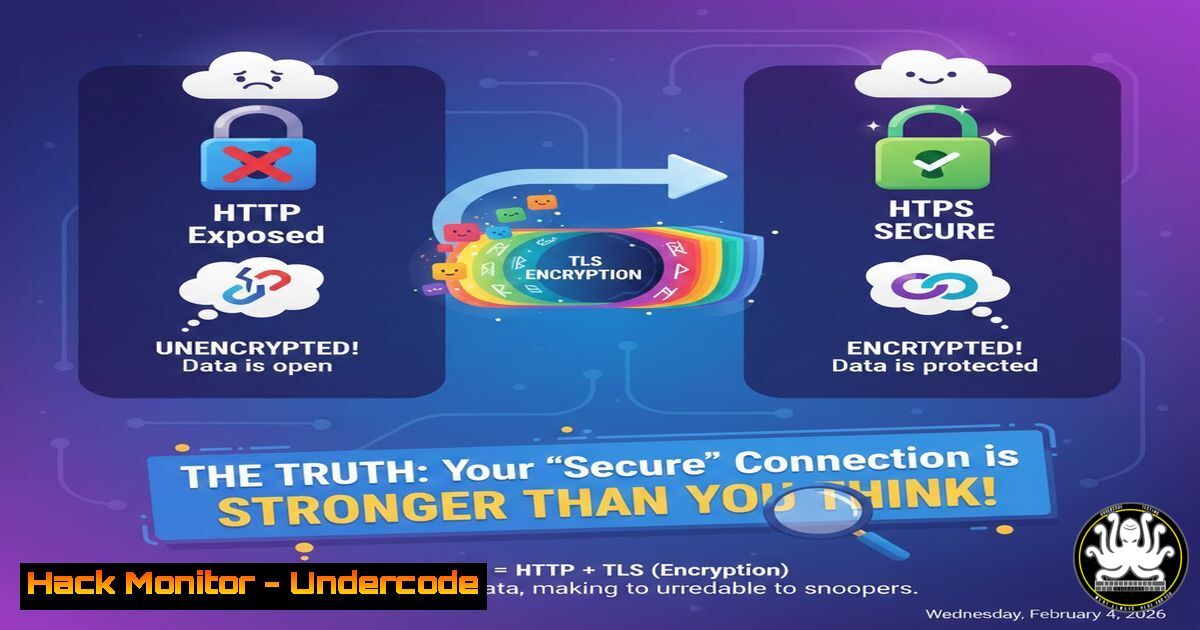
A pervasive myth suggests that HTTPS initiates a connection with strong cryptography only to downgrade to weaker encryption for the remainder of the session, sacrificing security for speed. This misconception fundamentally misunderstands the TLS protocol’s design, which leverages different cryptographic primitives for specific, optimal purposes. Understanding this distinction is crucial for cybersecurity professionals to accurately assess risk, properly configure services, and combat misinformation that can lead to misdirected security efforts.
Learning Objectives:
- Distinguish between asymmetric and symmetric cryptography and their respective roles within the TLS handshake and data session.
- Understand the principle of Forward Secrecy and how ephemeral key exchange protects past communications.
- Identify the actual, common vulnerabilities in HTTPS implementations and learn how to audit and harden them.
You Should Know:
1. Demystifying the TLS Handshake & Session Crypto
The TLS protocol is not a monolithic cipher but a sophisticated framework that uses the right tool for each job. The initial handshake employs asymmetric cryptography (like RSA or ECDSA). This is computationally expensive but necessary for two critical functions that don’t involve your actual data: authenticating the server’s identity via its certificate and securely negotiating a shared secret without transmitting it over the wire.
Once trust is established and a secret is agreed upon, the session switches to symmetric cryptography (like AES-256-GCM or ChaCha20-Poly1305). This is not a “downgrade.” Symmetric algorithms are exponentially faster for bulk data encryption and are, by modern standards, extremely strong. Encrypting all web traffic with RSA would be cryptographically sound but would bring global internet throughput to a crawl.
Step‑by‑step guide explaining what this does and how to use it:
You can inspect this process using command-line tools. On Linux, use `openssl` to connect to a site and view the negotiated cipher suite.
openssl s_client -connect example.com:443 -servername example.com 2>/dev/null | grep "Cipher suite"
The output (e.g., `ECDHE-RSA-AES256-GCM-SHA384`) decodes as:
ECDHE: Ephemeral Elliptic Curve Diffie-Hellman (key exchange algorithm).
`RSA`: RSA signature (used for server authentication).
AES256-GCM: The symmetric cipher used for the session data.
- The Magic of Forward Secrecy: Why Recording Handshakes is Futile
The myth suggests an attacker could record the encrypted session and later decrypt it if they compromise the server’s private key. Modern TLS mitigates this with Perfect Forward Secrecy (PFS). With PFS, the session keys are derived from ephemeral Diffie-Hellman parameters. These temporary keys are deleted after the session ends. Even if the server’s long-term private key is stolen in the future, it cannot be used to derive past session keys.
Step‑by‑step guide explaining what this does and how to use it:
To verify a server supports forward secrecy, you can check for ephemeral key exchange methods in the cipher suite. The presence of `DHE` or `ECDHE` indicates PFS.
nmap --script ssl-enum-ciphers -p 443 example.com
Look for cipher suites containing `ECDHE` or `DHE` in the output. Administrators must explicitly disable older, non-PFS ciphers (like those beginning with `RSA` without DHE/ECDHE).
3. The Real Risks: Misconfiguration and Outdated Protocols
The true vulnerabilities lie in implementation. Servers supporting deprecated protocols (SSLv2/3, TLS 1.0) or weak cipher suites (e.g., RC4, DES, CBC-mode ciphers without proper mitigations) are susceptible to known attacks like POODLE or BEAST.
Step‑by‑step guide explaining what this does and how to use it:
Use the `testssl.sh` tool for a comprehensive audit of your web server’s TLS configuration.
./testssl.sh --color 0 https://yourserver.com
This will identify issues like:
Supported TLS protocols.
Weak or non-PFS cipher suites.
Certificate validity and trust issues.
Vulnerabilities like Heartbleed or ROBOT.
4. Hardening Your Web Server’s TLS Configuration
For system administrators, the goal is to disable weak protocols and ciphers while enabling strong, modern ones. Here’s an example for an NGINX server configuration snippet:
ssl_protocols TLSv1.2 TLSv1.3;  Disable older protocols
ssl_prefer_server_ciphers on;
 Prioritize strong, modern ciphers with PFS
ssl_ciphers 'ECDHE-ECDSA-AES256-GCM-SHA384:ECDHE-RSA-AES256-GCM-SHA384:ECDHE-ECDSA-CHACHA20-POLY1305:ECDHE-RSA-CHACHA20-POLY1305';
ssl_ecdh_curve secp384r1;  Strong curve for ECDHE
For Windows IIS, this hardening is done via the registry or using the `IISCrypto` graphical tool from Nartac Software to easily disable weak ciphers and protocols.
- Beyond the Lock: Endpoint Risks and Certificate Trust
The padlock signifies transport encryption, not website legitimacy. Phishing sites can easily obtain a valid certificate. The chain of trust relies on Certificate Authorities (CAs). Compromise of a CA (as with DigiNotar) or the issuance of a fraudulent certificate are ecosystem risks. Furthermore, malware on the client or server endpoint can read data before it’s encrypted or after it’s decrypted, completely bypassing TLS.
Step‑by‑step guide explaining what this does and how to use it:
Users and admins should regularly audit trusted root certificates. On Windows, run `certlm.msc` to open the Local Machine Certificate store and examine the contents of Trusted Root Certification Authorities. On Linux (Debian/Ubuntu), they are in `/usr/share/ca-certificates/` and managed with update-ca-certificates.
What Undercode Say:
- Key Takeaway 1: TLS’s use of symmetric cryptography for the data session is a deliberate, secure design choice for performance, not a security downgrade. The real strength lies in the ephemeral key exchange (PFS) that protects session keys.
- Key Takeaway 2: The attack surface of HTTPS/TLS is predominantly in its configuration and the surrounding trust ecosystem—not in the core cryptographic negotiation. Security efforts should focus on protocol disabling, cipher suite hardening, certificate management, and endpoint security.
The analysis reveals a common pattern in security: a surface-level understanding of a complex system leads to misidentified threats. This distracts from actionable defense. By myth-busting the “weak crypto” fallacy, we redirect focus to measurable, critical tasks: eliminating TLS 1.0/1.1, enforcing PFS-only ciphers, and monitoring certificate transparency logs. The cryptographic core of modern TLS (1.2/1.3) remains robust; our vigilance must be applied to the human and operational layers that support it.
Prediction:
The future of HTTPS security will see the accelerated deprecation of legacy protocols and cipher suites, driven by browser and platform mandates (as with Apple and Google’s requirements for TLS 1.2+). TLS 1.3, which removes non-PFS key exchange and hides more of the handshake to prevent protocol downgrade attacks, will become the universal baseline. The primary battleground will shift further towards post-quantum cryptography integration and automating the defense of the software supply chain to prevent compromised endpoints and build systems from undermining the strong transport layer.
🎯Let’s Practice For Free:
IT/Security Reporter URL:
Reported By: Qforand Ive – Hackers Feeds
Extra Hub: Undercode MoN
Basic Verification: Pass ✅


