
Listen to this Post
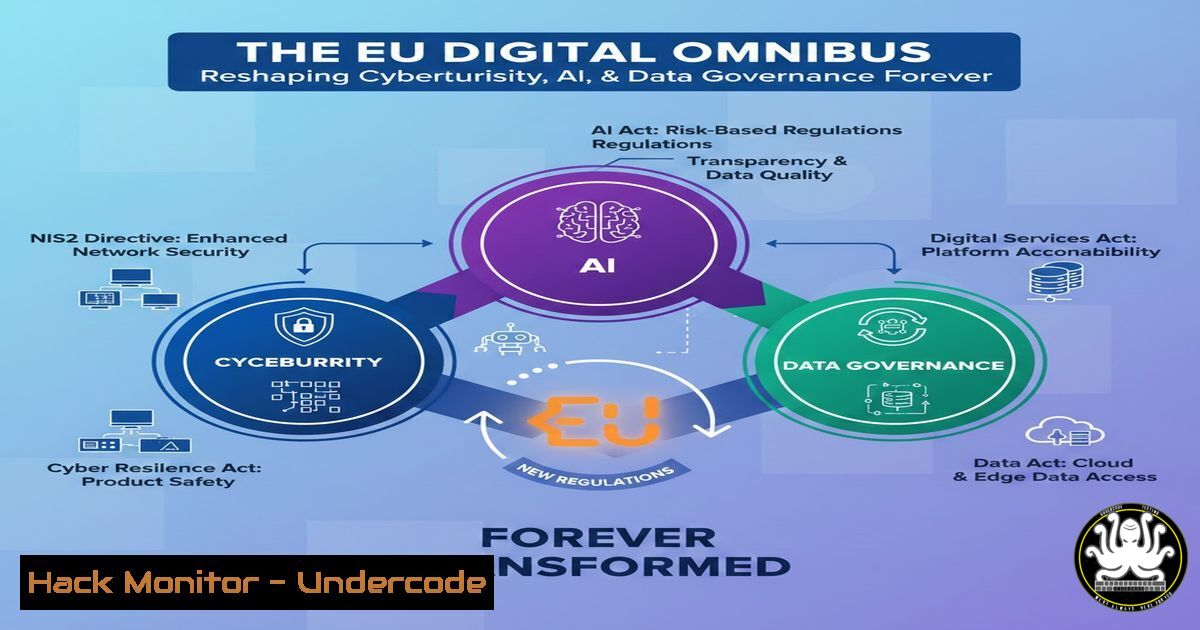
Introduction:
The European Commission has unveiled the Digital Omnibus, a landmark legislative package designed to modernize and harmonize Europe’s rules on artificial intelligence, cybersecurity, and data. This sweeping initiative aims to simplify the complex digital regulatory landscape, creating a more cohesive framework for the single market. For IT professionals, security architects, and developers, understanding the technical implications of this omnibus is crucial for future compliance and system design.
Learning Objectives:
- Decipher the core technical mandates for AI systems and their development lifecycle.
- Understand the enhanced cybersecurity obligations for critical and high-risk AI systems.
- Learn the practical steps for data governance and cross-border data flow under the new rules.
You Should Know:
- Securing High-Risk AI Systems: A Practical Implementation Guide
The Digital Omnibus will impose stringent security requirements on AI systems classified as high-risk, particularly those used in critical infrastructure. This necessitates a shift-left security approach, embedding security controls from the initial design phase.
Step‑by‑step guide explaining what this does and how to use it.
Step 1: Conduct a Threat Model Assessment. Before writing code, identify potential threats (e.g., data poisoning, model evasion, adversarial attacks) using a framework like STRIDE.
Step 2: Implement Secure Development Practices. Integrate security scanning into your CI/CD pipeline. Use tools to scan for vulnerabilities in dependencies.
Example Command (using Trivy in a CI pipeline):
 Scan a Docker image for vulnerabilities
trivy image your-company/ai-model:latest
Step 3: Enforce Robust Access Controls. Ensure only authorized services and users can interact with the AI model API. Implement API keys, OAuth 2.0, or mutual TLS (mTLS).
Example Concept (Kubernetes NetworkPolicy):
apiVersion: networking.k8s.io/v1
kind: NetworkPolicy
metadata:
name: allow-only-payment-service-to-ai
spec:
podSelector:
matchLabels:
app: ai-inference-engine
policyTypes:
- Ingress
ingress:
- from:
- podSelector:
matchLabels:
app: payment-service
ports:
- protocol: TCP
port: 8080
- API Security and Data Encryption: The New Bedrock for Compliance
With data protection being a pillar of the Omnibus, securing the APIs that handle data and enforcing encryption-in-transit and at-rest become non-negotiable. This involves moving beyond basic HTTPS.
Step‑by‑step guide explaining what this does and how to use it.
Step 1: Mandate TLS 1.3 Everywhere. Disable older, vulnerable protocols like TLS 1.0 and 1.1. Configure your web servers and API gateways to use only strong cipher suites.
Example Command (Testing TLS configuration with nmap):
 Check supported TLS protocols on a server
nmap --script ssl-enum-ciphers -p 443 your-api-endpoint.com
Step 2: Implement Comprehensive API Security. Use a gateway to enforce rate limiting, validate schemas, and check for common exploits like SQL injection.
Example Command (Using curl with API Key authentication):
 Access a protected API endpoint
curl -H "X-API-Key: your_secret_key_here" https://api.yourcompany.com/v1/user/data
Step 3: Manage Encryption Keys Securely. Never hardcode encryption keys. Use a cloud provider’s Key Management Service (KMS) or HashiCorp Vault.
Example Concept (AWS CLI to encrypt a file using KMS):
 Encrypt a file using AWS KMS
aws kms encrypt --key-id alias/your-data-key --plaintext fileb://plaintextfile.txt --output text --query CiphertextBlob | base64 --decode > encryptedfile.enc
3. Cloud Hardening and Shared Responsibility Alignment
The regulation reinforces the shared responsibility model in cloud environments. Organizations are responsible for securing in the cloud (their data, OS, applications), even if the cloud provider secures the cloud itself.
Step‑by‑step guide explaining what this does and how to use it.
Step 1: Harden Operating System Images. Use standardized, hardened images (e.g., CIS Hardened Images) and automate configuration checks.
Example Command (Linux – Check for unnecessary open ports):
 List all listening ports
ss -tuln
Step 2: Enforce Infrastructure as Code (IaC) Security. Scan IaC templates (Terraform, CloudFormation) for misconfigurations before deployment.
Example Command (Using tfsec to scan Terraform code):
 Scan current Terraform directory
tfsec .
Step 3: Implement Logging and Monitoring. Ensure all access to cloud resources, especially those handling sensitive data, is logged and monitored for anomalous behavior.
4. Vulnerability Management and Proactive Patching
The Omnibus will likely formalize requirements for proactive vulnerability management, demanding robust processes for identifying, classifying, and remediating weaknesses.
Step‑by‑step guide explaining what this does and how to use it.
Step 1: Automate Vulnerability Scanning. Use tools to continuously scan your environments, from containers to network devices.
Example Command (Using OpenVAS to start a scan):
 This is a simplified example. Typically done via the web UI or API.
gvm-cli --gmp-username admin --gmp-password password --xml "<create_task><name>Network Scan</name>... </create_task>"
Step 2: Prioritize Based on Risk. Use a framework like CVSS (Common Vulnerability Scoring System) to prioritize patches based on exploitability and impact.
Step 3: Test and Deploy Patches. Establish a staged rollout process for patches to minimize operational risk, using deployment tools like Ansible.
Example Command (Ansible ad-hoc command to patch a web server group):
ansible webservers -b -m apt -a "upgrade=dist" --become
5. Data Anonymization and Pseudonymization Techniques
To facilitate data sharing and innovation while complying with data protection rules, the Omnibus will encourage the use of anonymization and pseudonymization.
Step‑by‑step guide explaining what this does and how to use it.
Step 1: Differentiate Between Techniques. Understand that pseudonymization (e.g., replacing a name with a token) is reversible with a key, while anonymization is irreversible.
Step 2: Implement Pseudonymization in Databases.
Example Concept (PostgreSQL using pgcrypto):
-- Encrypt a column using a secret key
UPDATE users SET ssn = pgp_sym_encrypt('123-45-6789', 'my_secret_key');
Step 3: Apply Anonymization for Analytics. Use techniques like k-anonymity or differential privacy in data lakes to ensure individuals cannot be re-identified.
What Undercode Say:
- Compliance is Becoming a Technical Feature: Adherence to regulations like the Digital Omnibus will no longer be a purely legal checkbox but a core, technical requirement that must be engineered into systems from the ground up. Security and privacy by design are transitioning from best practices to legal mandates.
- The Skills Gap Will Widen: The technical depth required to implement these controls—from securing AI model supply chains to configuring complex cloud network policies—will create an even greater demand for highly skilled cybersecurity and DevOps engineers. Organizations must invest in upskilling their teams now.
The analysis is clear: the EU Digital Omnibus represents a fundamental pivot from principle-based guidance to technically enforceable law. This moves the burden of digital regulation from the boardroom to the server room. IT departments can no longer be passive recipients of legal requirements; they must be active participants in their implementation. The organizations that treat this as a strategic opportunity to bolster their technical foundations will gain a significant competitive advantage, while those that lag will face not only regulatory fines but also increased cyber risk. The time for proactive preparation is now.
Prediction:
The EU Digital Omnibus will act as a global catalyst, setting a de facto standard for digital regulation much like the GDPR did for data privacy. We predict a rapid “Brussels Effect,” where multinational corporations will adopt these stringent EU standards as their global baseline to streamline compliance. This will inevitably lead to a new wave of specialized SaaS tools focused on automated compliance auditing for AI and cloud security. Furthermore, the definition of “high-risk” AI will become a critical battleground, with industries lobbying to exclude their systems while cybersecurity advocates push for broader inclusion, leading to a more secure but complex operational environment for all digital services.
🎯Let’s Practice For Free:
IT/Security Reporter URL:
Reported By: Centre For – Hackers Feeds
Extra Hub: Undercode MoN
Basic Verification: Pass ✅


