Listen to this Post
Introduction:
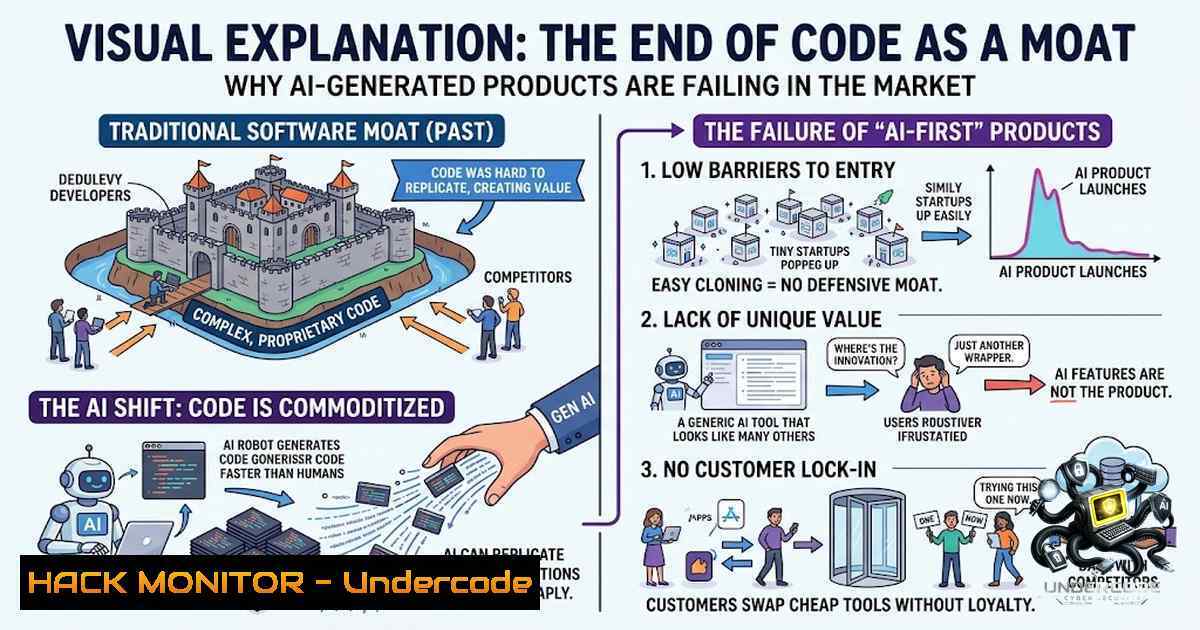
The proliferation of AI-driven code generation has democratized software creation, effectively eliminating the traditional barrier of high development costs. However, this technological leap has merely shifted the bottleneck from the engineering department to the marketing and growth departments. In the current landscape, building a Minimum Viable Product (MVP) is a weekend project, but achieving product-market fit without a massive burn rate has become the new, more complex challenge for cybersecurity, IT, and AI professionals.
Learning Objectives:
- Understand the shift in competitive advantage from software development to customer acquisition in the age of AI.
- Identify the cybersecurity and technical risks associated with rapid AI-generated code deployment.
- Learn practical Growth Hacking techniques and automation scripts to validate products without a huge budget.
You Should Know:
1. The Security Debt of Rapid Development
The ability to spin up complex SaaS-like products in a weekend using AI (like ChatGPT or Copilot) introduces significant “security debt.” While the code works, it often lacks robust authentication, input sanitization, and proper API security configurations. Attackers are actively scanning for AI-generated endpoints because they often follow predictable patterns and miss edge-case vulnerabilities.
Step‑by‑step guide: Hardening a Rapidly Developed AI App
- Step 1: Environment Check. In Linux, use `env | grep -i secret` to ensure no hardcoded keys are exposed in your environment variables. In Windows (PowerShell), use
Get-ChildItem Env: | Where-Object {$_.Name -match "secret"}. - Step 2: API Security. If your product uses APIs, implement rate limiting. For Linux, use `iptables -A INPUT -p tcp –dport 443 -m limit –limit 25/minute –limit-burst 100 -j ACCEPT` to prevent brute-force.
- Step 3: Dependency Scanning. Run `npm audit` or `pip-audit` to scan for known vulnerabilities in the AI-generated libraries, as AI often pulls the latest (and sometimes unstable) packages.
- Step 4: Input Validation. Ensure all user inputs are sanitized. For a Node.js app, add `express-validator` and use `.trim().escape()` to prevent XSS and SQL injection.
2. The “Cold Start” Problem in SaaS
The post highlights that while products are abundant, audiences are not. For IT professionals, this means understanding cloud hardening and auto-scaling is useless if you don’t have users to scale for. The lack of a “discovery mechanism” is the primary reason these products fail.
Step‑by‑step guide: Setting Up a Zero-Cost User Analytics Pipeline
– Step 1: Set up a lightweight analytics system. Instead of expensive SaaS tools, use Plausible or Umami (open-source). Deploy using Docker: docker run -d -p 3000:3000 ghcr.io/umami-software/umami:postgresql-latest.
– Step 2: Configure a webhook to alert you when a user signs up. Use `curl -X POST https://your-server.com/hook -d ‘{“user”:”new”,”source”:”referral”}’` to log data.
– Step 3: Use `grep` and `awk` in Linux to parse server logs for user-agent strings to identify if your traffic is bots or real humans: cat access.log | grep -v bot | awk '{print $1}' | sort | uniq -c.
- Building a Growth Hacking Tech Stack with AI Agents
The author mentions using “agents” to bypass the need for a massive ad budget. In technical terms, this involves using automation scripts and AI to manage outreach, content creation, and SEO. However, automating these processes introduces API security risks and potential account bans if not configured correctly.
Step‑by‑step guide: Setting Up an AI Outreach Agent Safely
– Step 1: Headless Browser Setup. Use Puppeteer or Playwright for automation. Ensure you rotate User-Agents to avoid detection: const userAgent = 'Mozilla/5.0 (Windows NT 10.0; Win64; x64)...'.
– Step 2: Proxy Configuration. Implement rotating proxies to prevent IP bans. Export a variable: export PROXY="http://user:pass@proxy:8080".
– Step 3: AI Content Generation. Integrate an OpenAI API key securely. Use curl https://api.openai.com/v1/completions -H "Authorization: Bearer $OPENAI_KEY" -d '{"prompt":"Write a cold email for SaaS"}'.
– Step 4: Monitoring. Set up a cron job to monitor your API usage. `crontab -e` and add: 0 curl -s https://api.usage.com/check > /var/log/usage.log.
4. The Investors’ POC Trap
Investors now demand a Proof of Concept that includes usability and Customer Acquisition Cost (CAC) data. To gather this data without spending millions, you must implement zero-party data strategies. This involves setting up landing pages with technical tracking using UTM parameters and converting traffic into leads via technical implementations like Zapier or Make.com alternatives (e.g., N8N).
Step‑by‑step guide: Building a Lead Magnet Pipeline
- Step 1: Deploy a Landing Page. Use a static site generator like Hugo or Jekyll for speed. Host on Vercel or Netlify for free.
- Step 2: Form Handling. Create a serverless function to capture leads. Example `index.js` on Vercel:
export default function handler(req, res) { res.status(200).json({ body: req.body }); }. - Step 3: Notification. Use `sendmail` or `mailx` in Linux to notify yourself of new signups:
echo "New lead: $EMAIL" | mail -s "Lead" [email protected].
5. The Marketing Blindspot for Developers
The author notes developers assume “good products sell themselves.” This is a dangerous fallacy in cybersecurity and AI, where trust is paramount. You must implement Trust Buttons (like security badges) and automate the creation of social proof.
Step‑by‑step guide: Automating Trust Signals
- Step 1: Automatically generate security compliance reports. Use `openssl` to check SSL cert expiration:
openssl x509 -enddate -1oout -in cert.pem. - Step 2: Implement a status page. Use Uptime Kuma:
docker run -d --restart=always -p 3001:3001 louislam/uptime-kuma. - Step 3: Use `cron` to ping monitoring services: `/5 curl -s https://ping.uptimerobot.com/your-endpoint`.
What Undercode Say:
- Key Takeaway 1: The primary bottleneck has shifted from engineering capacity to marketing execution and distribution.
- Key Takeaway 2: Rapid AI development leads to high-security debt; technical founders must prioritize basic hardening and automation to avoid “vulnerability overload” while scaling.
Analysis:
The current wave of AI-powered development is flooding the market with “ghost” products—functional but unseen. For the cybersecurity professional, this presents a dual threat: internally, the rush to market leaves massive attack surfaces; externally, it creates noise that makes legitimate security solutions harder to sell. The winners in the next 18 months will not be the best coders but the best architects of Growth Hacking systems. They will combine AI agents with SEO automation and API-first marketing stacks to bypass the traditional ad model. This reduces the reliance on venture capital for customer acquisition, allowing bootstrapped security tools to compete with giants. The technical challenge is no longer just about zero-days; it’s about zero-traffic. The engineers who learn to use Python for web scraping, Bash for automation, and JavaScript for interactive lead magnets will be the ones who survive the coming culling.
Prediction:
- +1: The commoditization of code will lead to a boom in niche, hyper-specific cybersecurity utilities that address micro-threats, as developers can build and deploy them instantly.
- -1: A surge in “zombie” AI-generated applications will lead to a massive increase in supply chain attacks and data leaks due to poor initial security configurations.
- -1: Venture capital will dry up for “me-too” products, forcing many AI startups to close due to insufficient user acquisition, regardless of their technical sophistication.
- +1: Marketing automation via AI agents will become the new “hacker” skill, leading to the creation of Open Source Growth Hacking tools that challenge Big Tech’s ad monopoly.
▶️ Related Video (78% Match):
🎯Let’s Practice For Free:
🎓 Live Courses & Certifications:
Join Undercode Academy for Verified Certifications
🚀 Request a Custom Project:
Secure, high-velocity infrastructure and disruptive technological engineering. Contact our engineering team for high-tier development and proprietary systems:
[email protected]
💎 Smart Architecture | 🛡️ Secure by Design | ⭐ Trusted by Thousands
IT/Security Reporter URL:
Reported By: https://lnkd.in/p/e2XHrJ8c – Hackers Feeds
Extra Hub: Undercode MoN
Basic Verification: Pass ✅


