Listen to this Post
Introduction:
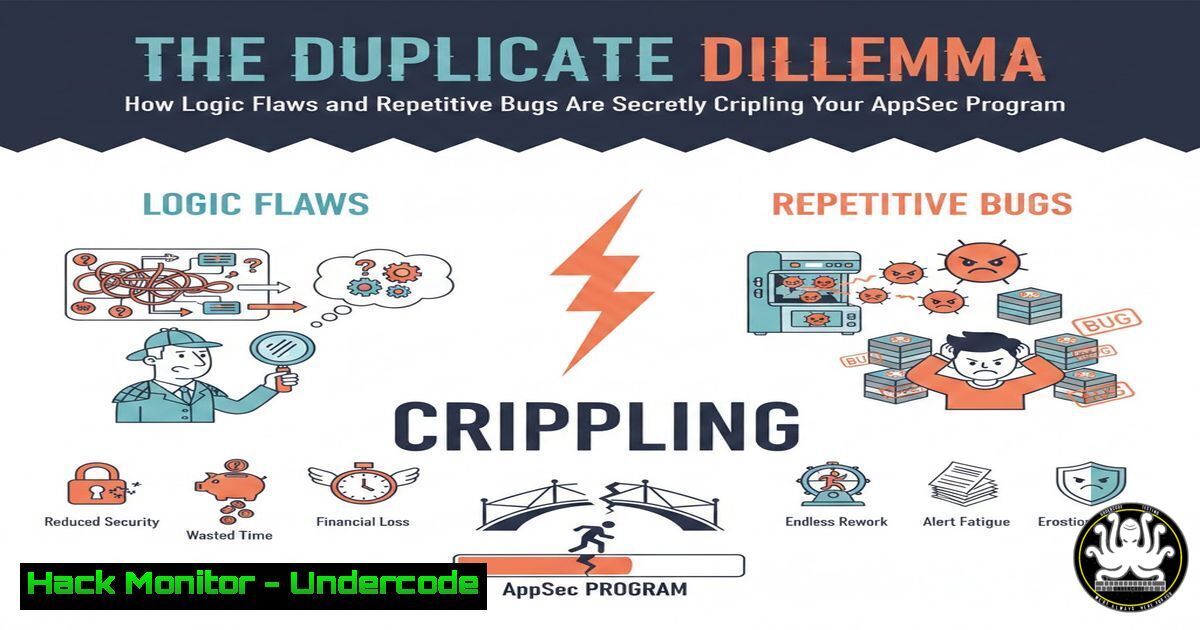
In the competitive arena of bug bounty hunting, researchers often encounter a frustrating reality: the “duplicate” tag. A recent social media post by a hunter highlights two critical logic bugs dismissed as duplicates, a common story revealing systemic gaps in application security. This scenario underscores a deeper issue where automated scanners miss nuanced logical vulnerabilities, and triage teams, overwhelmed by volume, may undervalue recurrent flaw patterns that point to fundamental architectural weaknesses.
Learning Objectives:
- Understand the nature of logic bugs and why they frequently result in duplicate reports.
- Learn methodologies to uniquely prove the impact of seemingly repetitive vulnerabilities.
- Implement developer and triager actions to break the cycle of duplicate logic flaws.
You Should Know:
1. The Anatomy of a “Duplicate” Logic Bug
A logic bug is a flaw in the application’s business workflow, not its code syntax. Unlike SQLi or XSS, it exploits intended functions in unintended ways—like manipulating a payment process to apply a discount multiple times or bypassing a state-changing action’s validation. These bugs are often duplicates because the same flawed logic pervades multiple endpoints (e.g., every API route that processes an order) or recurs after superficial patches that don’t address the root cause.
Step-by-step guide for Hunters: Isolating Unique Impact
The key is to demonstrate a unique attack vector or consequence. If a discount reuse bug is marked duplicate, probe deeper.
1. Map the Flow: Use Burp Suite’s `Target` tab to map all endpoints related to the vulnerable function (e.g., /api/apply-coupon, /api/confirm-payment, /api/refund).
2. Vary the Injection Point: The core logic flaw might be in how the server validates user state. Test if the bug triggers when the action is performed via a different method (e.g., GraphQL mutation vs. REST POST request).
 Original vulnerable request (REST)
POST /api/v1/cart/apply-coupon HTTP/1.1
{"coupon_code":"WELCOME50"}

Alternative vector (GraphQL)
POST /graphql HTTP/1.1
{"query":"mutation { applyCoupon(cartId: \"123\", code: \"WELCOME50\") { total } }"}
3. Chain with Another Low-Severity Issue: Combine the logic flaw with, for instance, a low-impact IDOR to affect another user’s resources, creating a new, composite vulnerability with higher severity.
2. From Hunter’s Frustration to Triage Protocol
Triage teams must differentiate between true duplicates (same bug, same endpoint) and pattern duplicates (same root cause, different location). The latter indicates a critical systemic flaw.
Step-by-step guide for Triagers: Evolving Past “Dup”
- Implement “Root Cause” Tagging: Use a tag like `RootCause:Discount-Double-Spend` across all related reports. This aggregates data for developers.
- Require Scope Expansion in Acceptance Criteria: When accepting the first report, mandate a code audit of all similar workflows. Close subsequent reports with a message like: “Accepted as part of RC-01. Thank you for reinforcing the scope of the issue.”
- Utilize Triage Automation Scripts: Write simple scripts to parse incoming reports against known root causes.
Example pseudo-script for triage dashboard import re known_patterns = ["coupon_reuse", "race_condition_checkout"] new_report = "User can apply same coupon twice via race condition." for pattern in known_patterns: if re.search(pattern, new_report, re.I): print(f"Potential pattern duplicate. Tag with: {pattern}") Auto-assign to existing root cause ticket -
Developer Hardening: Fixing the Logic, Not the Symptom
A patch that only blocks a single endpoint is insufficient. The fix must be applied to the business logic layer shared across the application.
Step-by-step guide for Developers: Architectural Patch
- Identify the Shared Service: Locate the backend service function handling the business rule (e.g.,
PaymentService.applyDiscount(userId, couponCode)). - Implement Idempotency and State Checks: Ensure operations like coupon application are idempotent (multiple identical requests have the same effect as one). Use database transactions and atomic operations.
// Pseudo-code for idempotent coupon application
async function applyCoupon(userId, couponCode, idempotencyKey) {
await db.transaction(async (tx) => {
// Check or store idempotency key to prevent replay
const keyExists = await tx.idempotencyKeys.findUnique(idempotencyKey);
if (keyExists) return keyExists.result;</li>
</ol>

<p>// Atomic operation: check AND apply in one query
const coupon = await tx.coupon.update({
where: { code: couponCode, usagesLeft: { gt: 0 }, userId: null },
data: { usagesLeft: { decrement: 1 }, userId: userId }
});
if (!coupon) throw new Error("Invalid or used coupon");
// ... complete transaction
});
}
3. Write Integration Tests for the Pattern: Create tests that attack the logic pattern from various user roles and entry points.
- Leveraging AI in Triage: From Noise to Signal
AI and ML models can be trained to cluster bug reports by underlying root cause, reducing triage fatigue and surfacing systemic issues.
Step-by-step guide for Security Engineers:
- Data Collection: Export historical bug bounty report data (sanitized).
- Feature Extraction: Use NLP to extract features from report titles and descriptions (e.g., “coupon,” “reuse,” “race condition,” “checkout”).
- Clustering: Apply unsupervised learning (e.g., K-means, DBSCAN) to group reports. Reports clustered together but marked “duplicate” across different features indicate a widespread logic flaw.
- Tool Integration: Feed clustering results into the triage platform to highlight new reports that belong to a known problematic cluster.
5. The Bug Hunter’s Mindset: Documenting to Educate
When you find a pattern duplicate, your report should be a tutorial for the development team.
Step-by-step guide for Reporting:
- “Root Cause: Race Condition in Idempotency Checks Affecting All Checkout Actions”
- Summary: Clearly state this is likely a pattern, not an isolated bug.
- Evidence: Provide `curl` commands for at least 3 different endpoints demonstrating the same flaw.
Test 1: Coupon Application curl -X POST https://api.target.com/v1/checkout/coupon -d '{"code":"BUG50"}' -H "Authorization: Bearer $token" Test 2: Inventory Hold curl -X POST https://api.target.com/v1/checkout/hold-inventory -d '{"item_id":"789"}' -H "Authorization: Bearer $token" Test 3: Payment Capture curl -X POST https://api.target.com/v1/checkout/capture-payment -d '{"order_id":"ABC123"}' -H "Authorization: Bearer $token" - Remediation Advice: Offer a high-level fix, like implementing a distributed lock (using Redis or similar) for user-state mutations.
import redis
redis_client = redis.Redis()
def acquire_user_lock(user_id, ttl=5):
Prevent parallel processing for this user
return redis_client.set(f"lock:{user_id}", "1", nx=True, ex=ttl)
What Undercode Say:
- Pattern Duplicates Are Critical Security Debt: Recurring logic bugs are not just duplicates; they are glaring indicators of unaddressed security debt in the core application architecture. Treating them as mere duplicates allows the root cause to fester and proliferate.
- The Human Element in Automated Triage: While AI can assist, the final judgement must consider context. A triager’s role is evolving from classifier to risk analyst, connecting the dots between reports to identify systemic breakdowns.
Analysis: The hunter’s post is a microcosm of a major AppSec inefficiency. The frustration of “Duplicate At every where” points to a failure in communication and remediation between hunters, triage teams, and developers. True maturity is achieved when a “duplicate” report is not an endpoint, but a trigger for a targeted security audit of related functionalities. Organizations that build feedback loops from bounty reports to secure development lifecycle (SDLC) requirements will turn this frustration into a powerful force for hardening their entire system, transforming their bug bounty program from a cost center into a strategic asset for proactive security.
Prediction:
Within the next 2-3 years, advanced bug bounty platforms will integrate mandatory “Root Cause Analysis” fields for triagers and AI-powered “Pattern Detection” alerts that automatically group submissions and assign them to broader architectural review tickets. This will shift the focus from paying for individual bugs to funding the eradication of vulnerability classes. Furthermore, we will see the rise of “Logic Bug Hunting” as a specialized, high-value subset of bug bounty hunting, with hunters using custom fuzzers and state-machine analysis tools to systematically exploit business logic flaws, forcing a fundamental redesign of how application state is managed and validated.
▶️ Related Video (78% Match):
🎯Let’s Practice For Free:
IT/Security Reporter URL:
Reported By: Zyad Abdelftah – Hackers Feeds
Extra Hub: Undercode MoN
Basic Verification: Pass ✅🔐JOIN OUR CYBER WORLD [ CVE News • HackMonitor • UndercodeNews ]
📢 Follow UndercodeTesting & Stay Tuned:
- Leveraging AI in Triage: From Noise to Signal


