Listen to this Post
Introduction:
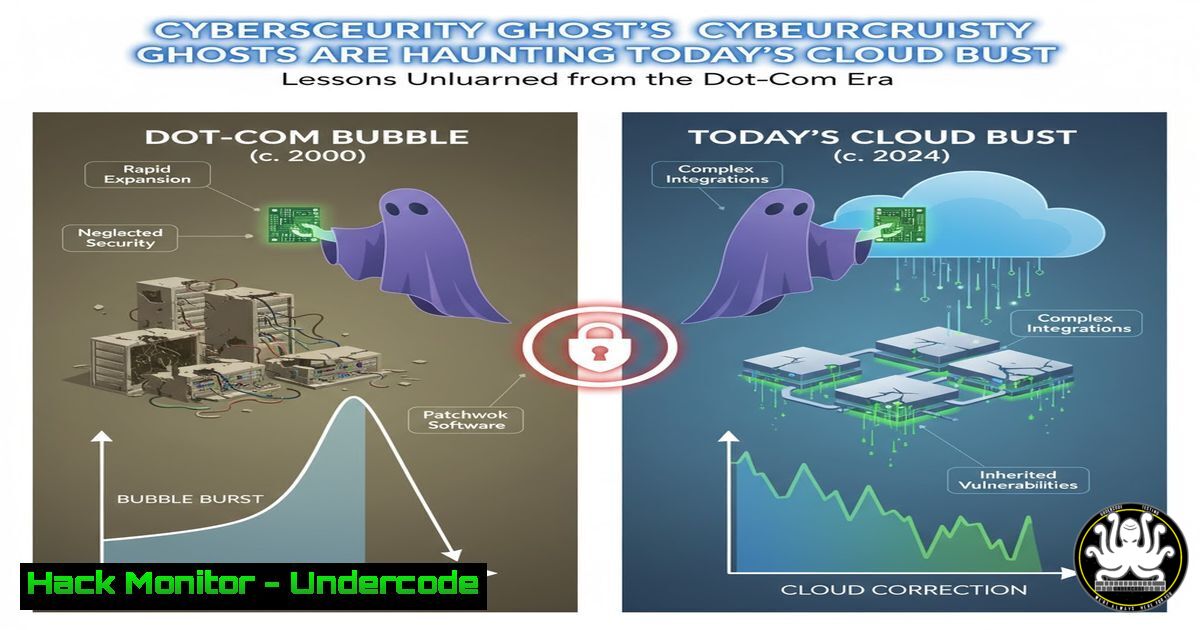
The recent social media jest about Herman Miller chairs as relics of the dot-com bubble unveils a profound, recurring pattern in tech economics. Just as the 2000 crash left behind physical assets, a potential modern “cloud bust” would leave a sprawling landscape of orphaned digital infrastructure. This creates a massive, low-cost attack surface for cybercriminals to exploit, turning neglected cloud instances, domains, and SaaS subscriptions into gateways for malicious activity.
Learning Objectives:
- Understand the direct correlation between economic downturns and the expansion of the cyber-attack surface.
- Learn how to identify and secure orphaned digital assets before they can be weaponized.
- Implement proactive monitoring to detect exploitation attempts stemming from abandoned infrastructure.
You Should Know:
1. The Anatomy of an Orphaned Cloud Instance
When a startup fails or downsizes, its cloud environment is often the first to be neglected. These orphaned instances, still running and billed to a corporate card, are prime targets. They frequently run outdated software with unpatched vulnerabilities, lack ongoing security monitoring, and retain old access keys.
Step-by-step guide explaining what this does and how to use it.
First, identify all assets. Use cloud provider tools to generate a complete inventory.
AWS CLI Command to List All EC2 Instances:
aws ec2 describe-instances --query 'Reservations[].Instances[].[InstanceId,State.Name,LaunchTime]' --output table
Azure CLI Command to List All VMs:
az vm list --show-details --query '[].{Name:name,ResourceGroup:resourceGroup,PowerState:powerState}' -o table
This provides a baseline. Cross-reference this list with your active projects and teams. Any instance not mapped to a current, approved initiative should be flagged for immediate investigation. Next, check for outdated AMIs (Amazon Machine Images) or VM images, as these can be used to spin up new vulnerable instances.
2. Hunting for Abandoned Domains and SSL Certificates
An expired domain registration is a golden ticket for attackers. They can purchase the domain, impersonate your company for phishing campaigns, and receive emails intended for your former employees. Lapsed SSL certificates break your services and create trust issues for users.
Step-by-step guide explaining what this does and how to use it.
Maintain a central registry of all corporate domains and their expiration dates. Use command-line tools to proactively check SSL certificate health.
OpenSSL Command to Check Certificate Expiry:
openssl s_client -connect yourdomain.com:443 -servername yourdomain.com 2>/dev/null | openssl x509 -noout -dates
This command will output the `notBefore` and `notAfter` dates. Automate this check with a simple bash script that parses the `notAfter` date and alerts you if the certificate expires within the next 30 days. For domains, use `whois` queries to track expiration.
3. Securing Orphaned SaaS and API Keys
SaaS applications like Slack, GitHub, or CRM platforms often contain sensitive data. When a team is disbanded, their accounts may remain active. Similarly, API keys embedded in old code or configuration files on public repositories can provide unmonitored access to your services.
Step-by-step guide explaining what this does and how to use it.
Conduct regular access reviews. For GitHub, use its security tools or the CLI to scan for exposed keys.
GitHub CLI Command to List Repository Secrets (requires gh):
gh secret list --repo <your-org/your-repo>
For AWS, rotate keys and identify unused ones.
AWS CLI Command to List Old Access Keys:
aws iam list-access-keys --user-name <username>
AWS CLI Command to Get Access Key Last Used Time:
aws iam get-access-key-last-used --access-key-id <AKIAIOSFODNN7EXAMPLE>
Deactivate any key that has not been used in the last 90 days. Implement a mandatory offboarding procedure that revokes all SaaS and API access.
4. Hardening the Digital Estate During Downsizing
A structured decommissioning process is critical. This is not just about shutting things down, but doing so securely to prevent data leakage and unauthorized access.
Step-by-step guide explaining what this does and how to use it.
Create a “Sunsetting” runbook. For a cloud server, the process should be:
1. Snapshot and Archive: Take a final snapshot for legal/compliance reasons, then securely archive it.
aws ec2 create-snapshot --volume-id vol-1234567890abcdef0 --description "Pre-decommissioning archive for Project X"
2. Terminate the Instance: Permanently delete the virtual machine.
aws ec2 terminate-instances --instance-ids i-1234567890abcdef0
3. Release Elastic IPs: These cost money and can be reassociated by an attacker.
aws ec2 release-address --allocation-id eipalloc-12345678
4. Delete Unattached Volumes and Old Snapshots: Clean up persistent storage.
5. Proactive Monitoring for Post-Breach Exploitation
Attackers won’t just use your abandoned assets; they will use them to attack others. Your company’s name may be associated with malicious traffic, damaging your reputation.
Step-by-step guide explaining what this does and how to use it.
Set up alerts for network traffic originating from IP ranges you no longer use or from decommissioned asset names. In your SIEM (Security Information and Event Management), create a correlation rule that triggers if communication is detected from an IP that is not in your current approved asset database. Use threat intelligence feeds to monitor for your old IPs or domains appearing in blocklists.
What Undercode Say:
- Economic downturns do not shrink the cyber-attack surface; they merely transfer control of parts of it from defenders to attackers. The cost of a decommissioned asset is zero to a threat actor, making it an infinite ROI opportunity for them.
- The modern “cloud bubble” has created an attack surface orders of magnitude larger and more complex than the dot-com era. The scale of the potential fallout is correspondingly greater, moving beyond phishing to include massive data breaches, cryptojacking, and DDoS botnets.
The cyclical nature of tech economies means that cybersecurity is inextricably linked to financial governance. The conversation about Herman Miller chairs is a metaphor for a much darker reality: the ghost IT that lingers after a company’s spirit has departed. A proactive, automated asset management and decommissioning strategy is no longer a best practice; it is a fundamental component of cyber resilience. Failing to manage your digital legacy is akin to leaving the keys to a bankrupt business in the front door for anyone to find.
Prediction:
The next major economic correction in the tech sector will trigger a secondary wave of cybersecurity incidents within 12-18 months. This wave will be characterized by sophisticated phishing campaigns using re-registered domains, large-scale data exfiltration from abandoned cloud storage, and a surge in attacks leveraging compromised API keys from failed startups. Organizations that have not implemented rigorous digital asset life-cycle management will face significant brand damage, regulatory fines, and loss of customer trust.
🎯Let’s Practice For Free:
IT/Security Reporter URL:
Reported By: Leonard Lee – Hackers Feeds
Extra Hub: Undercode MoN
Basic Verification: Pass ✅


