Listen to this Post
Introduction:
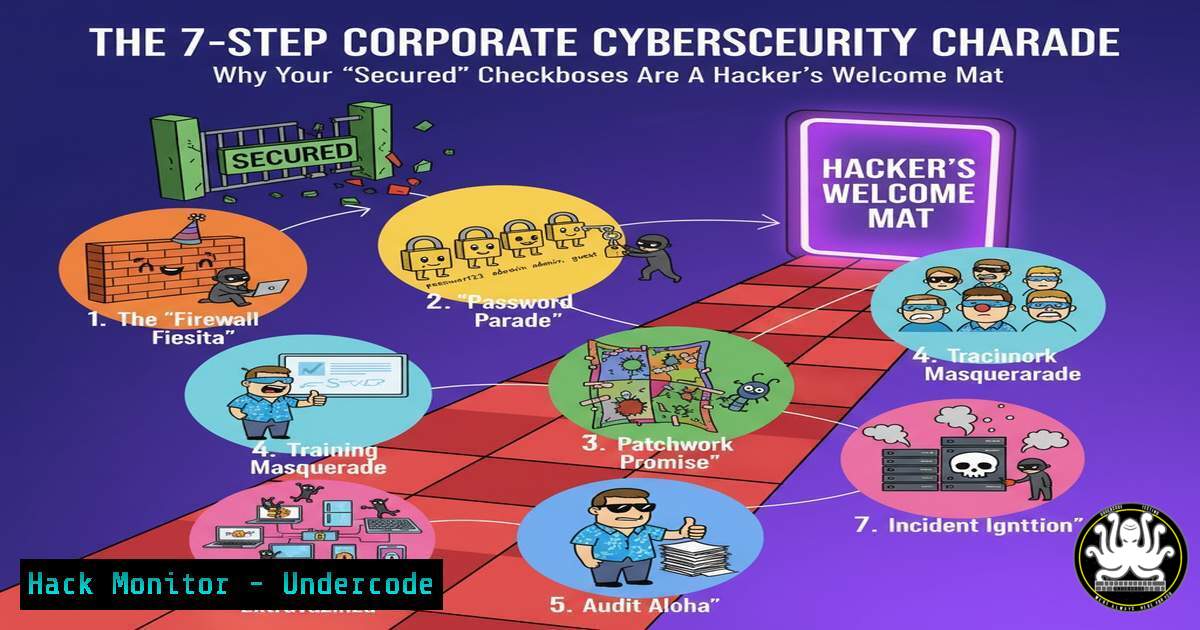
The modern cybersecurity procurement process has become a ritualized performance that prioritizes vendor relationships and compliance checkboxes over genuine risk reduction. Organizations routinely follow a flawed playbook that squanders budgets on mismatched solutions while creating dangerous gaps in their security posture. This charade leaves critical assets exposed under the illusion of protection, a vulnerability that attackers are eager to exploit.
Learning Objectives:
- Deconstruct the critical failures in the typical corporate cybersecurity purchasing workflow.
- Learn a strategic, risk-based framework for selecting and implementing security controls that align with actual organizational threats.
- Master the technical validation steps to ensure purchased security products are configured effectively and not merely generating a false sense of security.
You Should Know:
1. From “Google-Fu” to Strategic Needs Assessment
The initial failure occurs when a generic search replaces a thorough threat analysis. The post’s step of “I need an email firewall” is often a solution in search of a problem, rather than the outcome of a defined security requirement.
Step‑by‑step guide explaining what this does and how to use it.
Step 1: Identify Critical Assets. Before searching for solutions, you must know what you’re protecting. Use asset discovery tools to build an inventory.
Linux Command: `nmap -sS -O 192.168.1.0/24` (Perform a SYN scan with OS detection on your network segment to discover active hosts).
Cloud (AWS CLI): `aws ec2 describe-instances –query ‘Reservations[].Instances[].{ID:InstanceId,Type:InstanceType,IP:PublicIpAddress,State:State.Name}’ –output table`
Step 2: Conduct a Threat Modeling Session. Use a framework like STRIDE (Spoofing, Tampering, Repudiation, Information Disclosure, Denial of Service, Elevation of Privilege) to identify potential threats against your critical assets. Document these threats formally.
Step 3: Define Security Requirements. Based on the threats, define what a security control must do. Instead of “an email firewall,” the requirement becomes “a solution that can block phishing emails with malicious links, detect impersonation attempts, and quarantine messages with executable attachments.”
2. Vendor Vetting Beyond the Data Sheet
Writing to a single vendor found via Google creates a narrow and potentially biased view of the market. The subsequent fallback to a major MSSP partner often results in a one-size-fits-all solution that may not address your specific threats.
Step‑by‑step guide explaining what this does and how to use it.
Step 1: Create a Shortlist Based on Independent Research. Consult Gartner Magic Quadrants, MITRE ATT&CK evaluations, and peer reviews on platforms like G2. Aim for 3-5 vendors that specialize in your problem space.
Step 2: Develop a Proof-of-Concept (PoC) Test Plan. Do not buy based on a sales demo. Create a test plan that uses your own data and simulated attack traffic to validate the vendor’s claims.
Example for Email Security: Create a test mailbox and send benign test emails simulating common phishing tactics (e.g., emails with `http://malicious-test-domain.com/payload`). Does the product catch it? Does it generate a useful alert?
Step 3: Evaluate the API and Logging Capabilities. A product’s value is in its integration. Request API documentation and examine the structure of its logs. Can you easily ingest them into your SIEM?
Example SIEM Query (Splunk SPL): `index=email_security sourcetype=vendor_email action=blocked | stats count by reason` This helps you verify if the tool is blocking for the right reasons.
3. The Implementation Illusion: Checking the “Secured” Box
Listing a protected asset and checking a box is the pinnacle of security theater. This step represents a complete abdication of responsibility for verifying that the control is active, configured correctly, and effective.
Step‑by‑step guide explaining what this does and how to use it.
Step 1: Verify Control Activation. Confirm the product is actively processing traffic.
Windows (PowerShell): `Get-Service -Name “YourSecurityAgentService” | Select-Object Status, Name` Ensure the critical service is running.
Network Check: `tcpdump -i any -n host
Step 2: Validate Configuration Against Policy. A default configuration is an insecure configuration. Map your security requirements from Step 1 to the product’s settings. For example, if your policy blocks executable attachments, verify that rule is enabled and not in “monitor-only” mode.
Step 3: Generate and Monitor Test Attacks. Continuously validate efficacy. Use tools like `GoPhish` to run internal phishing simulations or `Metasploit` to generate malicious network traffic to ensure your controls are detecting and blocking as expected.
4. The Unmanaged “AI Upgrade” Threat
The bundled, often automatically enabled, AI features represent a new shadow IT risk. These capabilities can introduce unexpected data exfiltration paths, create new attack surfaces, and produce “black box” decisions that your team cannot troubleshoot.
Step‑by‑step guide explaining what this does and how to use it.
Step 1: Audit AI/ML Features. In the product’s admin console, locate all AI-powered settings. Document their function, what data they process, and whether they make autonomous blocking decisions.
Step 2: Sandbox and Monitor. Before enabling any AI feature in production, deploy it in a logging-only or “test” mode. Closely monitor its outbound connections and the decisions it makes.
Linux Command for Network Monitoring: `ss -tunp | grep
Step 3: Develop a Tuning and Oversight Process. AI models drift. Establish a regular review (e.g., quarterly) to analyze false positives/negatives generated by the AI and retrain or tune the models as necessary.
- Breaking the Cycle: Building a Continuous Security Validation Program
The final step of “enjoying the free vendor gifts” symbolizes complacency. True security is a continuous process, not a one-time purchase. You must move beyond static checkboxes to dynamic validation.
Step‑by‑step guide explaining what this does and how to use it.
Step 1: Implement a Breach and Attack Simulation (BAS) Tool. Use platforms like SafeBreach or AttackIQ to automatically run simulated attacks against your entire security stack, validating everything from email security to endpoint detection and response (EDR).
Step 2: Establish KPIs and Metrics. Track metrics that matter: Mean Time to Detect (MTTD), Mean Time to Respond (MTTR), and coverage percentage of your critical assets. Dashboards in your SIEM are critical for this.
Step 3: Conduct Purple Team Exercises. Regularly bring your offensive (red) and defensive (blue) teams together to test specific attack scenarios, ensuring that your purchased tools are not just installed, but are effectively integrated into your human-led response processes.
What Undercode Say:
- The greatest vulnerability in modern organizations is not a software flaw, but a procurement flaw. The process is optimized for convenience and compliance, not security.
- A checked box is not a control. The only valid measure of a security product’s effectiveness is its validated ability to disrupt a realistic attack chain during continuous testing.
The satirical post by Pete Herzog exposes a deep-seated cultural problem where the act of purchasing is confused with the act of securing. This theater provides cover for decision-makers but offers no defense against determined adversaries. The technical steps to rectify this are straightforward; the larger challenge is dismantling the organizational dogma that values the perception of security over its reality. As the comment by Charles Buchler astutely notes, changing this ingrained “dogma” is the fundamental problem that must be solved before any technical solution can be truly effective.
Prediction:
If this procurement dogma persists, we will witness a sharp rise in “compliant but compromised” organizations. Threat actors will increasingly target the gaps and misconfigurations inherent in these poorly integrated, checkbox-driven security stacks. The forced integration of immature AI features will compound this, leading to novel supply-chain attacks and data leaks originating from the very security products meant to prevent them. Organizations that fail to adopt a continuous validation mindset will find their expensive security investments to be little more than digital Potemkin villages.
🎯Let’s Practice For Free:
IT/Security Reporter URL:
Reported By: Peteherzog How – Hackers Feeds
Extra Hub: Undercode MoN
Basic Verification: Pass ✅


