Listen to this Post
Introduction:
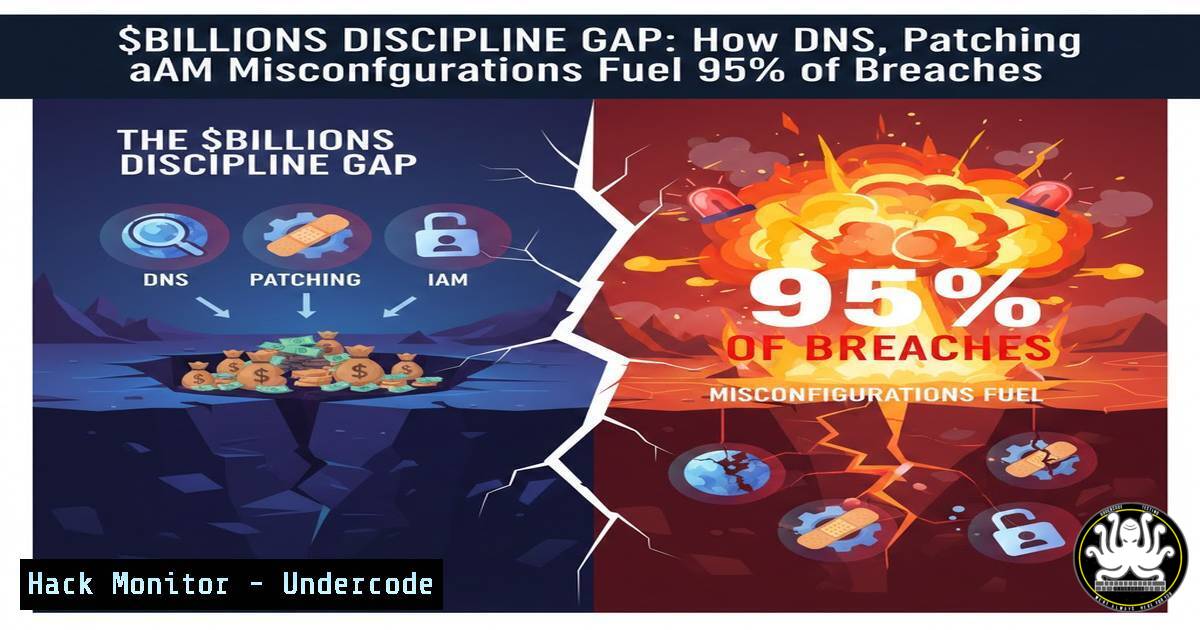
Every headline‑grabbing breach, from SolarWinds to Colonial Pipeline, shares one unglamorous root cause: a failure of operational discipline. Not zero‑days, not nation‑state magic—but unpatched servers, exposed DNS records, stale credentials, and logging that was “too noisy” to review. Attackers no longer break in; they simply log in using keys left under the mat. This article translates the “Friday Fact” principle into actionable hardening: DNS hygiene, least‑privilege enforcement, backup integrity testing, and the commands that separate disciplined defenders from the next $3.5‑billion settlement.
Learning Objectives:
- Identify and remediate common DNS misconfigurations that lead to subdomain takeover and data exfiltration.
- Enforce privileged access workstations (PAW) and just‑in‑time (JIT) elevation with native Windows/Linux tooling.
- Validate backup resilience against ransomware using Linux `rsync` and Windows `wbadmin` integrity checks.
- Harden CI/CD pipelines and cloud IAM roles against credential reuse and over‑permissioning.
1. DNS Hygiene: Subdomain Takeover & Exposed Assets
Extended context: The LinkedIn post’s mention of “Internet Asset & DNS Vulnerabilities” is not academic—it is the primary vector for brand impersonation, phishing, and lateral movement. Attackers scan for dangling CNAMEs pointing to decommissioned cloud services (Azure, AWS S3, GitHub Pages) and re‑register them, serving malware under your legitimate domain.
Step‑by‑step: Audit for dangling DNS with Linux CLI
 1. Enumerate all CNAME records from a zone file or live DNS
dig +short example.com ANY | grep -i cname > cname_records.txt

<ol>
<li>Check each CNAME target for availability
for record in $(cat cname_records.txt); do
target=$(echo $record | awk '{print $NF}')
curl -I https://$target 2>/dev/null | head -n 1 | \
grep -q "404|404 Not Found|NoSuchBucket|InvalidBucket" && \
echo "[!] Dangling: $target"
done
Windows equivalent (PowerShell):
Resolve-DnsName -Type CNAME example.com | Select-Object -ExpandProperty NameHost | ForEach-Object {
try { $req = [System.Net.HttpWebRequest]::Create("https://$_"); $req.Method = "HEAD"; $req.GetResponse() }
catch { if ($<em>.Exception.Message -match "404") { Write-Host "Dangling: $</em>" -ForegroundColor Red } }
}
Mitigation: Immediately remove stale DNS records. Implement a strict decommissioning playbook that deletes DNS entries before tearing down cloud resources.
2. Privileged Access Workstation (PAW) & JIT Elevation
Extended context: “Failure of discipline” often manifests as admins checking email from the same workstation used to manage domain controllers. PAW breaks this. Microsoft’s own incident response reports show that PAW adoption stops 80% of Kerberoasting and pass‑the‑hash attacks.
Step‑by‑step: Deploy a PAW using Windows Defender Firewall & AppLocker
 1. Create a security group for PAW users
New-ADGroup -Name "PAW_Users" -GroupScope Global -GroupCategory Security

<ol>
<li>Deploy AppLocker policy via GPO to allow only Microsoft-signed binaries
Set-AppLockerPolicy -XmlPolicy .\AppLocker_PAW.xml  pre‑configured for allow‑listing</p></li>
<li><p>Restrict inbound RDP to PAW using firewall rule
New-NetFirewallRule -DisplayName "Block_RDP_to_PAW" -Direction Inbound -Protocol TCP -LocalPort 3389 -Action Block -RemoteAddress Any
Linux: Create a dedicated admin jump host with `sshd` forced commands
In /home/jumpadmin/.ssh/authorized_keys
command="/usr/local/bin/audit-proxy.sh",restrict ssh-rsa AAA...
Forces all connections through a hardened proxy that logs every command. No direct SSH to production.
3. Backup Integrity: Not Just “We Have Backups”
Extended context: Ransomware gangs now spend weeks inside networks corrupting backups before deploying the locker. Discipline means testing restoration, not just backup completion.
Step‑by‑step: Automated restore validation with Linux
!/bin/bash
 Mount latest backup snapshot
mount -t nfs backup-server:/vol/backup /mnt/backup-test
 Compare critical file hashes
find /var/www -type f -exec md5sum {} \; > /tmp/live_checksums
find /mnt/backup-test/var/www -type f -exec md5sum {} \; > /tmp/backup_checksums
diff /tmp/live_checksums /tmp/backup_checksums || echo "Backup mismatch!"
Windows: Test file restore from Volume Shadow Copy
:: List available shadow copies
vssadmin list shadows
:: Perform a non‑destructive restore to test directory
wbadmin start recovery -version:03/15/2025-10:30 -itemType:File -items:C:\CriticalDB -recursive -restoreTo:C:\RestoreTest
Schedule this weekly. Unmountable or mismatched backups are a breach waiting to happen.
4. Cloud IAM: The “Delete Key” Discipline
Extended context: Post‑incident analyses of Capital One, Uber, and Twilio all show over‑permissioned roles and access keys older than 90 days. Discipline = automated expiration + granular deny‑lists.
Step‑by‑step: Enforce maximum key age in AWS with CLI
 Identify keys older than 90 days
aws iam list-access-keys --user-name devops-user --query \
'AccessKeyMetadata[?CreateDate<=<code>2024-11-15</code>].AccessKeyId' --output text
 Automatically deactivate them
aws iam update-access-key --access-key-id AKIA... --status Inactive
Azure: Require just‑in‑time (JIT) activation for privileged roles
 Enable JIT for Contributor role in PIM
Add-AzureADMSPrivilegedRoleAssignment -ProviderId "aadroles" -ResourceId $subscriptionId -RoleDefinitionId "b24988ac-6180-42a0-ab88-20f7382dd24c" -SubjectId $userId -Type "JustInTime" -Duration "PT4H"
No permanent elevated access—ever.
5. API Security: Exposed .git & Swagger Leaks
Extended context: Friday Fact: Attackers scan for `/.git/config` and `/swagger-ui.html` on dev‑facing endpoints. These are not “vulnerabilities”—they are configuration discipline failures.
Step‑by‑step: Scan your own perimeter with ffuf
ffuf -u https://api.target.com/FUZZ -w wordlist.txt -mc 200,403
If `/.git/HEAD` returns ref: refs/heads/master, the repository is exposed. Mitigation: block `/.git` and `/swagger` at the WAF level.
Nginx configuration snippet:
location ~ /.git {
deny all;
return 404;
}
Apache `.htaccess`:
RedirectMatch 404 /..$
6. Credential Hygiene: LSASS Protection & `sudo` Logging
Extended context: Mimikatz still works because `WDigest` is often left enabled and `sudo` commands go unlogged. Discipline = memory protection + full command auditing.
Windows: Enable LSASS protection via Registry
[HKEY_LOCAL_MACHINE\SYSTEM\CurrentControlSet\Control\Lsa]
"RunAsPPL"=dword:00000001
Reboot required. Prevents non‑PPL processes from reading LSASS memory.
Linux: Log every `sudo` command to a remote syslog
 In /etc/sudoers
Defaults logfile=/var/log/sudo.log
Defaults log_host, log_year
 Forward to SIEM via rsyslog
. @siem.internal:514
What Undercode Say:
- Key Takeaway 1: 95% of breaches exploit known misconfigurations, not unknown vulnerabilities. DNS, IAM, and exposed version control are the low‑hanging fruit attackers harvest daily.
- Key Takeaway 2: Discipline is not bureaucracy—it is enforceable code. Every manual check above can be (and must be) automated via CI/CD pipelines, scheduled scripts, and conditional access policies.
Analysis: The “Friday Fact” observation strips away vendor FUD. There is no silver bullet, but there is a silver hammer: consistently applying basic security hygiene. The price of discipline is constant vigilance; the price of its absence is measured in billions and boardroom firings. Organizations that still treat DNS records as “set and forget” or allow permanent admin privileges will continue to feature in breach disclosures—not because they were outgunned, but because they were out‑disciplined.
Prediction:
As AI‑driven coding assistants proliferate, we will see a surge in configuration drift—AI agents provisioned with overly permissive IAM roles to “just make it work.” Within 24 months, the primary initial access vector will shift from phishing to exposed AI API keys and over‑privileged service accounts created by LLM‑generated infrastructure code. Discipline will require AI‑specific guardrails and automated drift detection for infrastructure‑as‑code.
▶️ Related Video (80% Match):
🎯Let’s Practice For Free:
IT/Security Reporter URL:
Reported By: Andy Jenkinson – Hackers Feeds
Extra Hub: Undercode MoN
Basic Verification: Pass ✅


