Listen to this Post
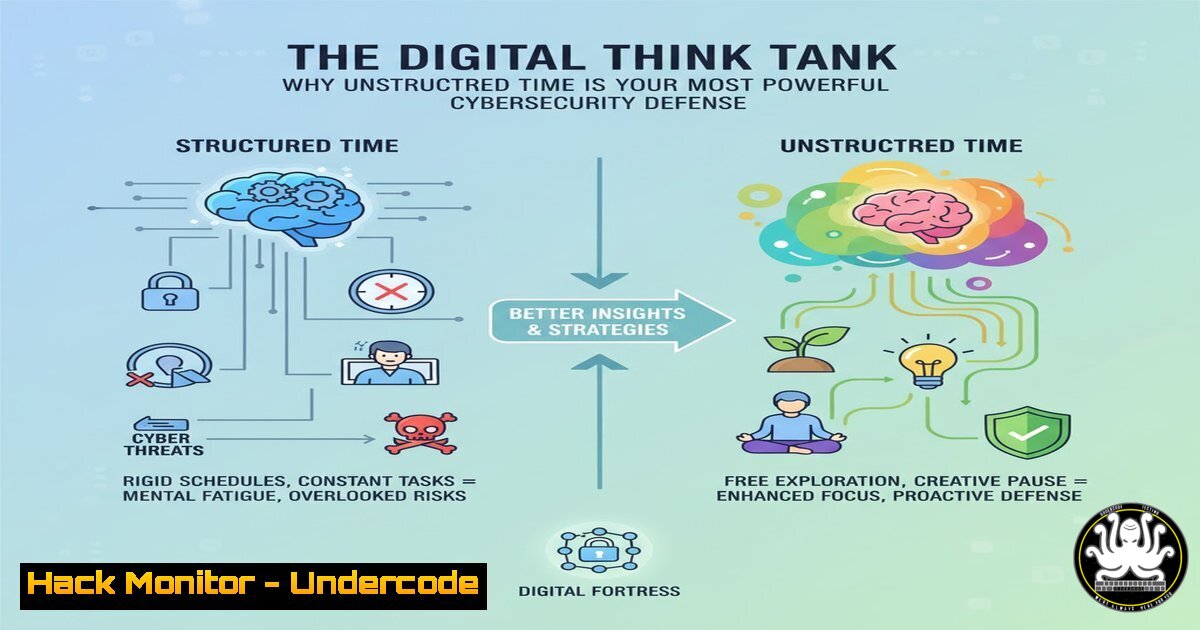
Introduction:
In an era of relentless cyber threats and AI-driven attacks, the most critical security resource isn’t a new tool but protected cognitive space. The legendary Henry Ford understood that breakthrough innovations emerged not from packed schedules but from dedicated thinking time—a principle that modern security teams must adopt to combat evolving threats effectively.
Learning Objectives:
- Understand how cognitive overload creates security vulnerabilities in IT infrastructure
- Implement practical strategies to protect analytical thinking time for security professionals
- Develop organizational structures that prioritize strategic security thinking over reactive firefighting
You Should Know:
- The Cognitive Attack Surface: How Mental Overload Creates Security Gaps
The modern security operations center (SOC) environment creates what psychologists call “attention residue”—where constantly switching between alerts prevents deep analysis of complex threats. This cognitive overload directly enables security breaches through missed subtle indicators and pattern recognition failures.
Step-by-step guide to reducing cognitive load:
- Implement mandatory “thinking blocks” in security team schedules using calendar enforcement:
PowerShell to block focus time in Outlook calendars
Add-PSSnapin Microsoft.Exchange.Management.PowerShell.SnapIn
Set-CalendarProcessing -Identity "SecurityTeam" -AddAdditionalResponse "Protected Thinking Time: No Alerts"
- Configure SIEM tools to aggregate low-priority alerts during designated thinking periods
- Establish “deep work” protocols where team members can disable notifications for 2-4 hour blocks
- Use Linux process prioritization to symbolize cognitive prioritization:
Renice security analysis processes to highest priority
sudo renice -n -20 -p $(pgrep security_analysis_tool)
2. Building Your Digital Thinking Booth: Technical Implementation
Henry Ford’s physical booth translates to digital protected environments where security professionals can conduct threat modeling without interruption. This requires both technical controls and cultural acceptance.
Step-by-step guide to creating protected analytical environments:
- Deploy isolated “thinking” virtual machines with no incoming notifications:
VMware ESXi command to create isolated analysis environment
vim-cmd vmsvc/createdummyvm "Security_ThinkTank" /vmfs/volumes/datastore1/
- Configure network segmentation to create analytical sandboxes:
iptables rules for think tank network isolation
iptables -A FORWARD -s 192.168.99.0/24 -d 0.0.0.0/0 -j DROP
iptables -A FORWARD -d 192.168.99.0/24 -s 0.0.0.0/0 -j DROP
- Implement mandatory focus time using group policy objects for Windows environments:
GPO to enforce focus blocks
Set-GPRegistryValue -Name "SecurityFocusTime" -Key "HKLM\SOFTWARE\Policies\Microsoft\Windows" -ValueName "FocusAssist" -Value 1 -Type DWord
3. Automating the Mundane: Freeing Cognitive Resources
The highest-paid thinker in Ford’s company was freed from operational tasks—similarly, security teams must automate routine tasks to preserve cognitive capacity for strategic threat analysis.
Step-by-step guide to security automation:
- Implement automated incident response playbooks using Python and SOAR platforms:
Python automation for routine alert triage
from soar_framework import SecurityOrchestrator
def auto_triage_low_risk_alert(alert):
if alert['risk_score'] < 7:
soar.run_standard_containment(alert)
log_automated_action(alert)
else:
escalate_human_analysis(alert)
- Deploy AI-powered log analysis to reduce manual review burden:
Splunk MLTK configuration for automated anomaly detection
| fit IsolationForest "feature1" "feature2" "feature3" into alert_anomaly_model
| apply alert_anomaly_model
| where anomaly_score > 0.8
- Configure automated compliance reporting using Azure Policy and PowerShell:
Automated compliance evidence collection
Get-AzPolicyState -Filter "complianceState eq 'NonCompliant'" | Export-Csv -Path "compliance_report.csv"
4. Cultivating Strategic Foresight: Threat Intelligence Synthesis
Bill Gates’ reading habit exemplifies continuous learning—for cybersecurity leaders, this translates to structured threat intelligence consumption and synthesis time.
Step-by-step guide to strategic threat intelligence:
- Establish dedicated intelligence synthesis sessions using structured analysis frameworks:
Threat intelligence prioritization matrix
Impact | Likelihood | Time Horizon | Analysis Depth Required
High | High | Immediate | Deep Dive - Thinking Time Required
- Implement intelligence processing pipelines using Python and threat intelligence platforms (TIP):
Automated IOC processing with human analysis triggers
def process_ioc_batch(ioc_list):
automated_analysis = analyze_iocs_automatically(ioc_list)
high_confidence_iocs = filter_high_confidence(automated_analysis)
if len(high_confidence_iocs) > threshold:
trigger_human_analysis_session(high_confidence_iocs)
- Create structured thinking frameworks for emerging threat analysis using mind mapping tools and attack tree diagrams
5. From Reactive to Proactive: Building Anticipatory Security
Warren Buffett’s reading habit enables him to see patterns others miss—security teams similarly need unstructured time to move from reacting to alerts to anticipating novel attack vectors.
Step-by-step guide to proactive security thinking:
- Conduct regular “assumption challenging” sessions using red team methodologies:
Scenario-based threat modeling template
Scenario: "Adversary with 3 months of uninterrupted access"
Assumptions to challenge: </li>
<li>Our EDR would detect persistent presence</li>
<li>Network segmentation contains lateral movement</li>
<li>MFA prevents credential reuse
- Implement architectural review sessions using STRIDE methodology:
STRIDE framework implementation guide
S - Spoofing: How could identity be compromised?
T - Tampering: How could data integrity be violated?
R - Repudiation: How could actions be denied?
I - Information Disclosure: How could data be exposed?
D - Denial of Service: How could availability be impacted?
E - Elevation of Privilege: How could privileges be escalated?
- Develop emerging technology threat forecasts through dedicated research sprints
6. Measuring Thinking ROI: Security Metrics That Matter
Ford understood the thinker’s value through innovation output—security leaders must similarly measure the ROI of protected thinking time through strategic outcomes rather than activity metrics.
Step-by-step guide to measuring cognitive security value:
- Track mean time to detection (MTTD) reduction following implementation of thinking time protocols
- Measure reduction in false positive rates through improved detection engineering:
SQL query to measure detection accuracy improvements
SELECT month,
COUNT() as total_alerts,
SUM(CASE WHEN false_positive = true THEN 1 ELSE 0 END) as false_positives,
(SUM(CASE WHEN false_positive = true THEN 1 ELSE 0 END) / COUNT())  100 as fp_percentage
FROM security_alerts
GROUP BY month
ORDER BY month;
- Quantify innovation outcomes through patents, novel detection rules, and process improvements
- Correlate thinking time allocation with reduction in security incident severity and business impact
What Undercode Say:
- Cognitive overload represents the most significant unaddressed vulnerability in modern security programs
- The highest-performing security organizations systematically protect at least 20% of analyst time for unstructured strategic thinking
- Technical controls that enforce focus time provide greater security ROI than most tool investments
- Organizations that fail to prioritize analytical thinking will remain perpetually reactive in the face of evolving threats
The Henry Ford story reveals a timeless principle: breakthrough security requires breakthrough thinking. In an industry obsessed with tools and technologies, we’ve neglected the most powerful defense mechanism—the human mind operating at its full analytical capacity. Security leaders must create the modern equivalent of Ford’s thinking booth, protecting cognitive space with the same rigor we apply to network segmentation. The organizations that master this balance between doing and thinking will develop the anticipatory capabilities needed to combat next-generation threats, while those stuck in reactive firefighting will continue to experience preventable breaches.
Prediction:
Within three years, forward-thinking organizations will establish formal “Security Think Tank” roles with protected time mandates, reporting directly to CISO leadership. These roles will be measured by strategic outcomes rather than operational metrics, focusing exclusively on emerging threat anticipation and architectural innovation. Meanwhile, organizations that fail to prioritize cognitive space will experience a 300% increase in novel attack success rates as AI-powered threats overwhelm traditional reactive defenses. The cybersecurity skills gap will increasingly become a cognitive availability gap, where organizations compete for professionals who can demonstrate strategic foresight rather than just technical proficiency.
🎯Let’s Practice For Free:
IT/Security Reporter URL:
Reported By: Vilislava Dimbareva – Hackers Feeds
Extra Hub: Undercode MoN
Basic Verification: Pass ✅


