Listen to this Post
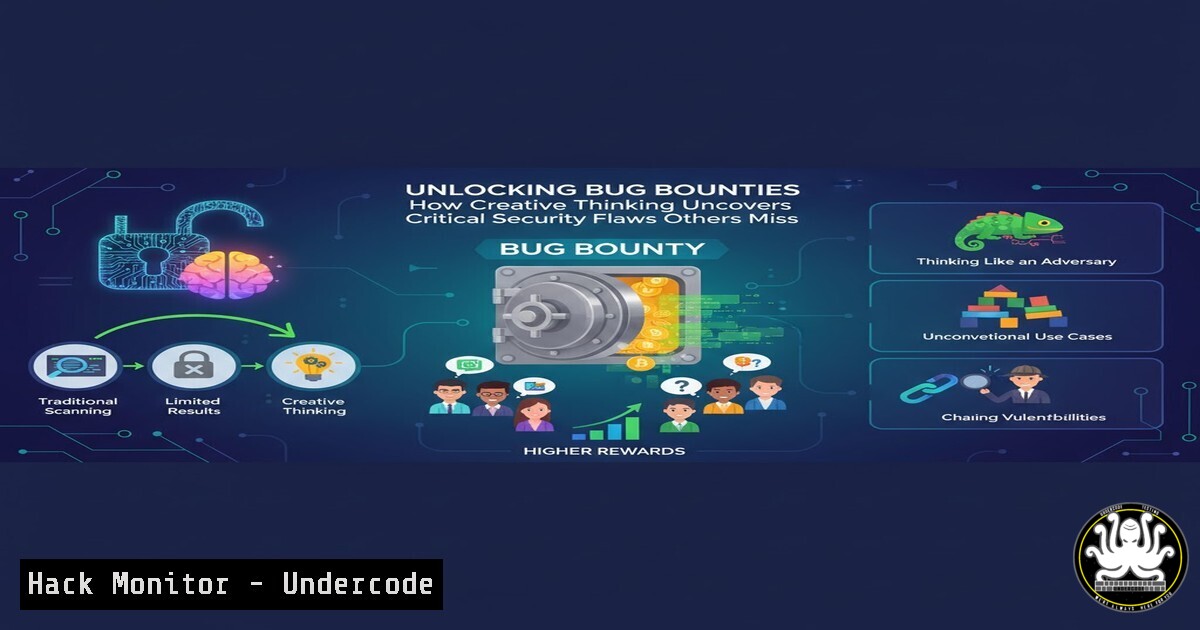
Introduction:
In the competitive realm of bug bounty hunting, technical skill alone is no longer sufficient for top-tier success. Modern web applications are fortified with standard security controls, making common vulnerabilities increasingly rare. The hunters who consistently earn bounties are those who leverage unconventional, creative methodologies to uncover logic flaws and complex attack chains that automated scanners cannot detect. This article deconstructs the mindset and techniques required to find these hidden vulnerabilities.
Learning Objectives:
- Develop a methodology for thinking beyond automated vulnerability scanners.
- Understand and exploit advanced vulnerability classes like Insecure Direct Object References (IDOR), Server-Side Request Forgery (SSRF), and subdomain takeovers.
- Learn practical command-line and tool configurations for manual reconnaissance and exploitation.
You Should Know:
1. The Hunter’s Mindset: Embracing Creativity Over Automation
The core principle of creative bug hunting is to question every assumption an application makes. Automated tools check for known signatures, but they cannot understand business logic, user privilege hierarchies, or unintended interactions between features. A creative hunter acts like an adversary who is not following a predefined rulebook.
Step-by-step guide:
- Step 1: Manual Application Mapping. Before using any tools, use the application manually. Create multiple user accounts with different privilege levels (e.g., free user, premium user, admin). Document every endpoint, parameter, and function.
- Step 2: Identify Security Assumptions. Note where the application assumes a user is who they claim to be. For example, does it rely solely on client-side controls to hide admin functions? Does it assume a user can only access their own data because the UI doesn’t show others’?
- Step 3: Challenge Assumptions Systematically. If the application assumes you can only see your own data, what happens if you change an `id` parameter in a GET request? If it assumes a request comes from a trusted user, can you forge it?
2. Advanced Reconnaissance: Discovering Hidden Attack Surfaces
A vast attack surface is often hidden from plain view. Creative hunters spend significant time on reconnaissance to find forgotten subdomains, exposed cloud storage, and outdated applications.
Step-by-step guide:
- Step 1: Subdomain Enumeration. Use tools like `amass` and `subfinder` to discover every subdomain associated with your target.
amass enum -d target.com -passive
subfinder -d target.com -all
- Step 2: Identifying Takeover Opportunities. Check if any of the discovered subdomains (especially those pointing to third-party services like GitHub Pages, Heroku, or AWS S3) are vulnerable to subdomain takeover. Use `subjack` or `nuclei` with takeover templates.
subjack -w subdomains.txt -t 100 -timeout 30 -ssl -c ~/fingerprints.json
- Step 3: Content Discovery. Use a tool like `ffuf` to find hidden directories and files on the main application and its subdomains.
ffuf -w /path/to/wordlist.txt -u https://target.com/FUZZ -mc 200,301,302,403
3. Exploiting Business Logic Flaws: The IDOR Example
Insecure Direct Object Reference (IDOR) is a classic logic flaw where an application provides direct access to an object based on user-supplied input. Creative hunting involves finding indirect and mass-assignment IDORs.
Step-by-step guide:
- Step 1: Find Direct Object References. Look for parameters like
?uid=123,?file=report.pdf, or `?order=1001` in HTTP requests. - Step 2: Test for Horizontal Privilege Escalation. Using two different user accounts (User A and User B), try to access User B’s objects by substituting their `uid` while authenticated as User A.
- Step 3: Test for Vertical Privilege Escalation. If you have a low-privilege user, try accessing parameters meant for administrators. For example, a `?is_admin=true` parameter in a POST request that is not visible in the UI.
- Chaining Vulnerabilities: From SSRF to Cloud Metadata Exploitation
Server-Side Request Forgery (SSRF) is a powerful vulnerability that can be chained with other weaknesses for critical impact, especially in cloud environments.
Step-by-step guide:
- Step 1: Find SSRF Entry Points. Look for features that fetch URLs, such as webhook configurations, document processing, or API endpoints that take a URL as a parameter.
- Step 2: Test for Internal Network Access. Try to make the application server request an internal resource.
http://169.254.169.254/latest/meta-data/
(This is the endpoint for AWS instance metadata).
- Step 3: Chain to Cloud Compromise. If the cloud metadata endpoint is accessible, you can potentially retrieve IAM credentials, leading to a full compromise of the cloud instance.
5. API Security Testing: The Modern Attack Frontier
Modern applications rely heavily on APIs (GraphQL and REST), which introduce a new set of attack vectors like broken object level authorization (BOLA) and excessive data exposure.
Step-by-step guide:
- Step 1: Discover API Endpoints. Look for
/api/,/graphql, and `/v1/` endpoints. Use tools like `kiterunner` to discover endpoints that may not be in common wordlists.kr scan https://target.com -w ~/api_wordlist.txt
- Step 2: Analyze API Responses. Send a request and observe the response. Does it return more data than the client needs? For example, a user profile endpoint might return a `”role”:”admin”` field even if it’s not displayed in the UI.
- Step 3: Test for BOLA. Similar to IDOR, if an endpoint is
/api/v1/users/123/orders, change the `user_id` to `124` to see if you can access another user’s data.
What Undercode Say:
- Creativity is Your Primary Tool. The most critical bugs are found by understanding application flow and attacking the logic, not just the code.
- Persistence is Non-Negotiable. What looks like a dead end might be a single step away from a critical finding. The difference between a low-value and a high-value bug is often just one more test case.
The shift from automated scanning to manual, creative exploration represents the evolution of bug bounty hunting. While tools are essential for scaling reconnaissance, the human brain’s ability to draw non-obvious connections and conceptualize complex attack chains remains the ultimate weapon. This approach requires deep curiosity and a willingness to test scenarios that seem, on the surface, unlikely to work. The hunters who master this art are consistently the ones who find the vulnerabilities that truly matter.
Prediction:
The future of bug bounties will be dominated by AI-assisted hunting, where AI will handle the tedious reconnaissance and initial vulnerability filtering. However, this will elevate, not replace, the creative human hunter. The focus will shift entirely to complex business logic flaws, AI model poisoning, and supply chain attacks that require a deep, contextual understanding of application behavior that AI cannot yet replicate. The premium for creative, critical-thinking security researchers will be higher than ever.
🎯Let’s Practice For Free:
IT/Security Reporter URL:
Reported By: R4jv33r Bugbounty – Hackers Feeds
Extra Hub: Undercode MoN
Basic Verification: Pass ✅


