Listen to this Post
Introduction:
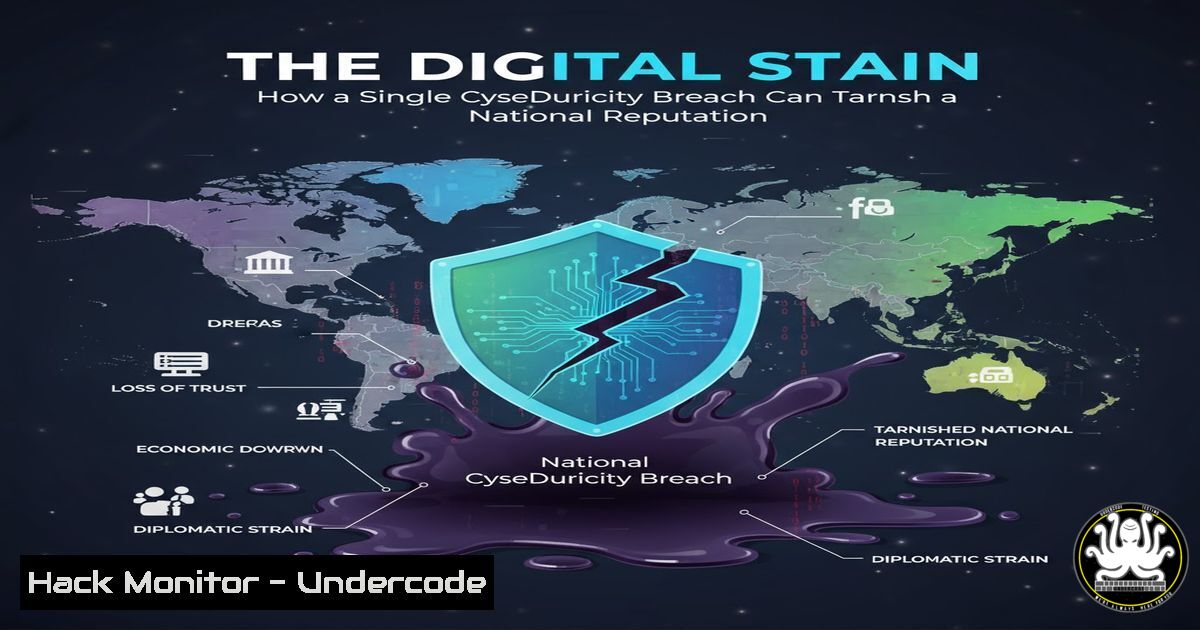
Just as a high-profile crime can stain a nation’s global image, a single, significant data breach can irrevocably damage a country’s reputation as a secure place for digital business. The incident involving a serial offender in Indore mirrors the persistent threat posed by repeat cyber-offenders who exploit known vulnerabilities. This article explores the technical parallels and the critical security measures necessary to protect national digital integrity.
Learning Objectives:
- Understand the key cybersecurity frameworks and commands for hardening public-facing digital infrastructure.
- Learn to conduct proactive threat hunting and vulnerability assessment using open-source tools.
- Implement advanced monitoring, logging, and incident response protocols to mitigate reputational damage.
You Should Know:
1. Infrastructure Hardening with CIS Benchmarks
A nation’s digital infrastructure is its new public square. Hardening it is the first line of defense.
 Linux - Check for unnecessary network services
sudo netstat -tulpn | grep LISTEN

Windows - Get a list of all running services
Get-Service | Where-Object {$_.Status -eq 'Running'}

Apply a specific CIS benchmark rule for SSH (Linux)
sudo sed -i 's/^PermitRootLogin yes/PermitRootLogin no/' /etc/ssh/sshd_config
sudo systemctl restart sshd
Step-by-step guide:
The `netstat` and `Get-Service` commands provide a snapshot of active network listeners and running services, which is the first step in identifying potential attack vectors. The CIS benchmark rule for SSH directly mitigates a common brute-force entry point by disabling root logins. After modifying the SSH configuration file, always restart the service to apply changes.
2. Proactive Vulnerability Scanning with Nmap and OpenVAS
Serial offenders, both physical and digital, rely on known weaknesses. Proactive scanning identifies these vulnerabilities before they are exploited.
 Nmap SYN Scan for discovering live hosts and open ports
nmap -sS -T4 -A -oA initial_scan 192.168.1.0/24

Nmap NSE script to check for common vulnerabilities
nmap -sV --script vuln target_ip

OpenVAS CLI to start a new scan task
omp -u admin -w admin_password --xml="<create_task><name>My_Scan</name><config id='daba56c8-73ec-11df-a475-002264764cea'/><target id='target_id'/></create_task>"
Step-by-step guide:
The `nmap -sS` command performs a stealthy SYN scan to map the network without completing TCP connections. The `-A` flag enables OS and version detection. The `–script vuln` option runs a suite of scripts designed to check for known vulnerabilities. For a more comprehensive assessment, OpenVAS (now Greenbone) can be automated via its CLI, omp, to schedule and manage deep-dive vulnerability scans.
3. Implementing Advanced Logging and SIEM Queries
Comprehensive logging is the digital equivalent of a city-wide CCTV network, providing crucial evidence and context post-incident.
 Linux - Forward logs to a central SIEM via rsyslog
. @central-siem-server:514

Windows PowerShell - Query security logs for specific event IDs
Get-WinEvent -FilterHashtable @{LogName='Security'; ID=4625,4672}

Splunk SPL query to detect brute-force attacks
index=auth (failed OR failure) | stats count by src_ip, user | where count > 10
Step-by-step guide:
Centralizing logs is critical for correlation. The rsyslog configuration line forwards all logs to a central SIEM server. In Windows, `Get-WinEvent` is a powerful cmdlet for querying the event log; Event ID 4625 indicates a failed logon, while 4672 is a special logon, both key for tracking access. The Splunk Query Language (SPL) example aggregates authentication failures to pinpoint potential brute-force attacks from a single source IP.
4. Cloud Security Posture Management (CSPM)
As government services move to the cloud, misconfigurations become a primary risk, potentially exposing citizen data.
 AWS CLI - Check for S3 buckets with public read access
aws s3api list-buckets --query "Buckets[].Name" | jq -r '.[]' | xargs -I {} aws s3api get-bucket-acl --bucket {} --output text | grep -l "ALLUsers"

Azure CLI - Audit for storage accounts allowing public blobs
az storage account list --query "[?allowBlobPublicAccess==true].{Name:name, ResourceGroup:resourceGroup}"

Terraform - Enforce private S3 bucket
resource "aws_s3_bucket_public_access_block" "example" {
bucket = aws_s3_bucket.example.id
block_public_acls = true
block_public_policy = true
ignore_public_acls = true
restrict_public_buckets = true
}
Step-by-step guide:
These commands and code snippets are designed to find and fix critical cloud misconfigurations. The AWS CLI command lists all S3 buckets and checks their ACLs for the ‘ALLUsers’ grant, which indicates public access. The Terraform resource `aws_s3_bucket_public_access_block` is a Infrastructure-as-Code (IaC) method to enforce that a bucket remains private by default, a fundamental security control.
5. API Security Testing with OWASP ZAP
Public APIs are the digital interfaces to national services and must be rigorously tested for vulnerabilities.
 Starting OWASP ZAP in daemon mode
zap.sh -daemon -host 127.0.0.1 -port 8080 -config api.disablekey=true

Using ZAP's API to run an active scan via cURL
curl "http://127.0.0.1:8080/JSON/ascan/action/scan/?url=http://target-api.com&recurse=true&inScopeOnly=true"

Python script to test for Broken Object Level Authorization (BOLA)
import requests
for id in range(100, 110):
response = requests.get(f'https://api.example.com/users/{id}/info', headers={'Authorization': 'Bearer YOUR_TOKEN'})
if response.status_code == 200:
print(f"Potential BOLA on ID {id}: Accessible")
Step-by-step guide:
OWASP ZAP is a leading tool for finding API vulnerabilities. It can be run headlessly and controlled via its API. The `curl` command triggers an active scan against a target API. The Python script demonstrates a simple but effective test for BOLA, a top API risk, by iterating through user IDs to see if the current authenticated session can access data it shouldn’t.
6. Digital Forensics and Incident Response (DFIR) Triage
When a breach occurs, a swift and methodical response is critical to contain the damage and preserve evidence.
 Linux - Capture memory for analysis
sudo dd if=/dev/mem of=/tmp/memory_dump.img bs=1M

Linux - Collect a timeline of file system activity
sudo fls -r -m / /dev/sda1 > bodyfile.txt
sudo mactime -b bodyfile.txt -d > timeline.csv

Windows - Using KAPE for triage collection
KAPE.exe --tsource C: --tdest C:\KAPE_Collection --target !SANS_Triage
Step-by-step guide:
The `dd` command creates a raw dump of the system’s memory, which can be analyzed for malware and attacker tools. The `fls` and `mactime` commands from The Sleuth Kit are used to build a detailed timeline of file system activity (MAC times: Modified, Accessed, Changed), which is fundamental for understanding the scope of an incident. KAPE is a powerful Windows tool that rapidly collects critical forensic artifacts.
7. Mitigating Zero-Days with Threat Intelligence and Segmentation
When a novel exploit emerges, containment and rapid patching are the only defenses.
 Linux - Isolate a compromised host using iptables
sudo iptables -A INPUT -s compromised_ip -j DROP
sudo iptables -A OUTPUT -d compromised_ip -j DROP

PowerShell - Query for a specific CVE patch status
Get-HotFix | Where-Object {$_.HotFixID -eq "KB5005565"}

YARA rule to detect a hypothetical zero-day payload
rule ZeroDay_Indicator {
meta:
description = "Detects suspicious PowerShell and WMI combination"
strings:
$s1 = "Get-WmiObject" nocase
$s2 = "Invoke-Expression" nocase
$s3 = "FromBase64String" nocase
condition:
all of them
}
Step-by-step guide:
The `iptables` commands immediately block all traffic to and from a compromised host, containing the threat. The PowerShell command checks if a specific security patch (identified by its KB number) is installed. The YARA rule is a simple example of how to create a signature to detect malware that uses a specific combination of PowerShell and WMI commands, which could indicate exploitation of a new vulnerability.
What Undercode Say:
- A nation’s cybersecurity posture is now inextricably linked to its global brand and economic stability. A single breach in a critical government or corporate entity can trigger a cascade of negative international press, eroding trust for years.
- The “serial offender” paradigm applies directly to cybercrime. Persistent threat actors will continuously probe for weaknesses, making continuous monitoring, proactive patching, and robust identity and access management non-negotiable for national infrastructure.
The incident in Indore is a powerful analog for the digital world. It demonstrates how the actions of one individual, exploiting systemic oversights, can disproportionately impact the perception of an entire nation. In cybersecurity, the “serial offender” is the Advanced Persistent Threat (APT) group or the repeat script-kiddie who, until stopped, will continue to attack. The global headlines following a major data breach are the digital equivalent of “India is unsafe for women”—they create a perception of lawlessness and instability. Therefore, national cybersecurity strategy must evolve beyond mere compliance to embody a proactive, intelligence-driven defense that protects not just data, but the country’s standing in the global digital economy.
Prediction:
The convergence of geopolitical tensions and increasingly sophisticated cybercrime will lead to a future where a major, reputation-damaging cyber incident against a nation-state’s critical infrastructure becomes a normalized tool of hybrid warfare. We will see more incidents designed not just for financial gain or espionage, but explicitly to sow distrust, create social unrest, and tarnish a country’s international brand, impacting foreign investment and diplomatic relations. The ability to rapidly attribute attacks and mount a transparent, effective response will become a key component of national security.
🎯Let’s Practice For Free:
IT/Security Reporter URL:
Reported By: Corporate Soldiers – Hackers Feeds
Extra Hub: Undercode MoN
Basic Verification: Pass ✅


