Listen to this Post
Introduction:
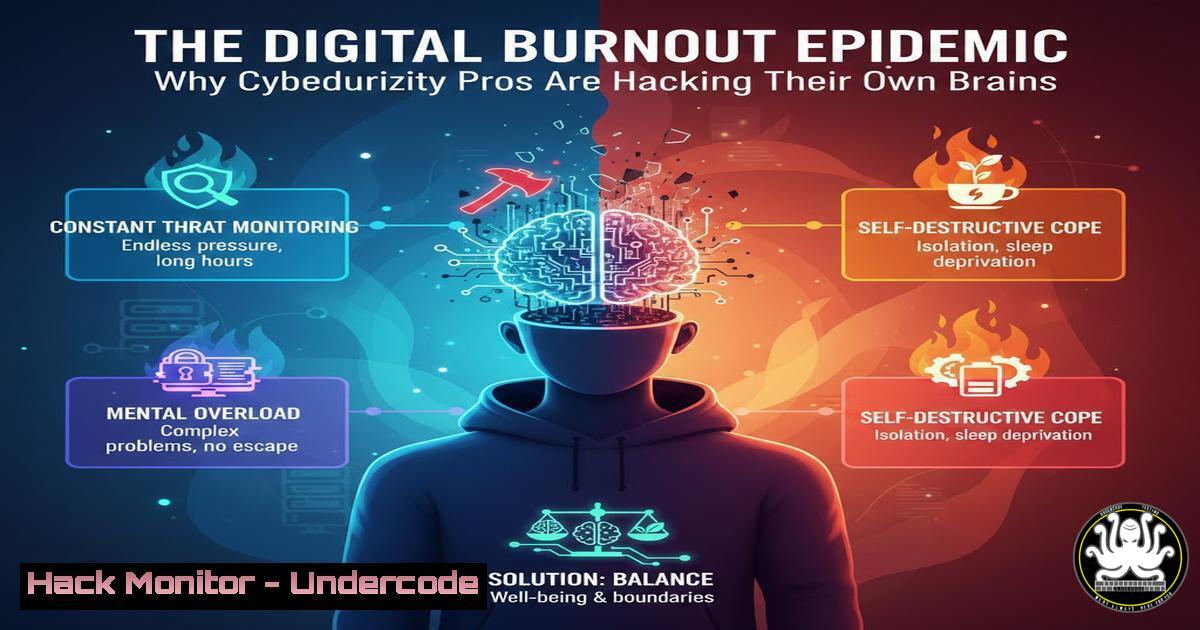
In an industry defined by relentless alerts and adversarial pressure, the cybersecurity professional’s greatest vulnerability is often their own mental stack. The constant cycle of threat hunting, incident response, and skill maintenance creates a perfect storm for cognitive overload, where the defender becomes the attack surface. This article reframes personal well-being not as soft skill, but as a critical component of operational security and sustained defensive efficacy.
Learning Objectives:
- Diagnose the symptoms of professional burnout and its impact on security judgment and workflow.
- Implement technical and procedural “circuit breakers” to enforce mental hygiene.
- Build a resilient personal infrastructure to maintain long-term career effectiveness.
You Should Know:
- The Psychology of the Analyst: Understanding Burnout as a System Failure
When a security operations center (SOC) analyst experiences burnout, their cognitive functions degrade in ways analogous to a system under resource exhaustion. Alert fatigue sets in, leading to missed true positives. Logical reasoning slows, increasing mean time to remediation (MTTR). This isn’t a “personal problem”; it’s a human-factor risk to the entire security posture.
Step-by-step guide:
Step 1: Self-Audit with Logs. Just
🎯Let’s Practice For Free:
IT/Security Reporter URL:
Reported By: Eden Ozturk – Hackers Feeds
Extra Hub: Undercode MoN
Basic Verification: Pass ✅


