Listen to this Post
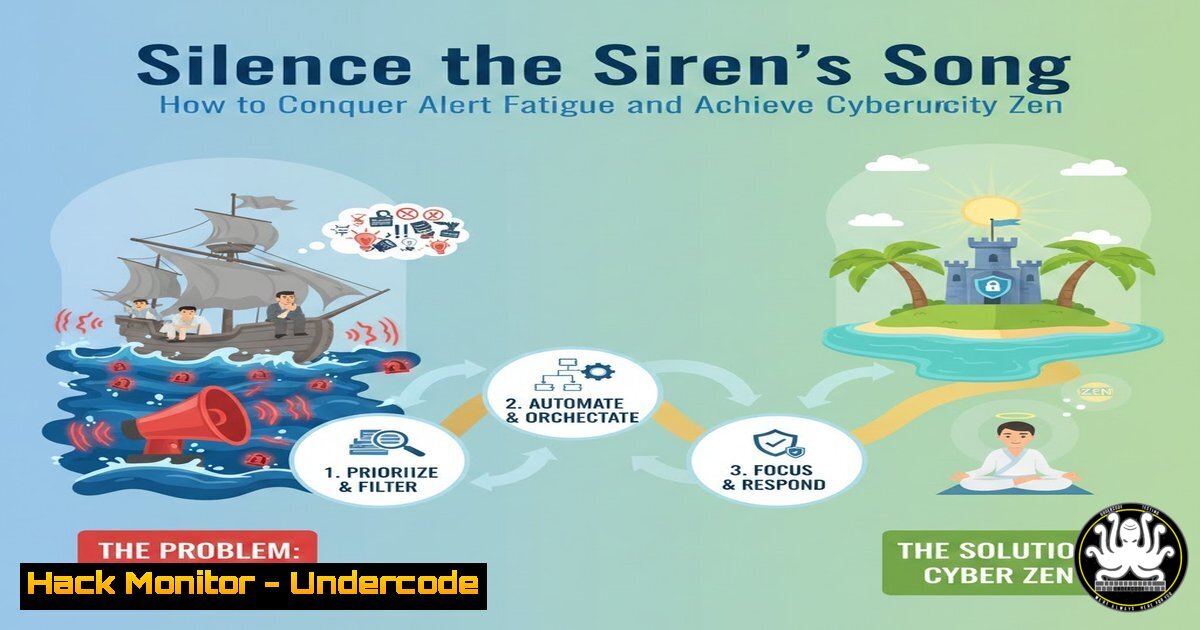
Introduction:
In an era of relentless cyber threats, security teams are drowning in a sea of notifications. Alert fatigue—the overwhelming sensation caused by excessive, low-fidelity alerts—has become a primary adversary, leading to burnout and critical oversights. Achieving operational peace requires a strategic shift from volume-based monitoring to intelligence-driven response, transforming chaotic noise into actionable signal.
Learning Objectives:
- Understand the technical and psychological causes of alert fatigue in modern SOCs.
- Implement filtering, tuning, and correlation techniques to reduce noise by over 70%.
- Master practical commands and configurations for major SIEM and logging platforms.
- Develop a proactive threat-hunting mindset to replace reactive alert chasing.
- Establish metrics and processes for continuous alert pipeline improvement.
You Should Know:
1. The Anatomy of a Noisy Alert
Modern Security Information and Event Management (SIEM) systems can ingest millions of events daily, but without proper tuning, they generate thousands of insignificant alerts. The core issue lies in default rulesets and broad detection logic that fail to account for an organization’s unique context. For instance, a single failed login attempt from a non-existent user in a public-facing system is common noise, not a critical threat.
Step‑by‑step guide explaining what this does and how to use it.
Step 1: Identify Top Noise Sources. Begin by analyzing your alert dashboard. Sort alerts by volume and identify the top 5 rule names generating the most frequent, low-severity alerts.
Step 2: Analyze a Sample Alert. Drill down into a specific, high-volume alert. Examine its components: the triggering log source, the detection rule logic, and the assigned severity.
Step 3: Tune the Rule. Instead of disabling the rule, add context-aware exceptions. For example, if an alert triggers on “Failed Login,” but the source is a known vulnerability scanner IP, add that IP to an exclusion list.
Example Splunk SPL Query to Find Noisy Alerts:
index=alerts earliest=-24h
| stats count by alert_name severity
| sort - count
This query lists all alerts from the last 24 hours, counted by name and severity, allowing you to quickly identify the most frequent, and potentially noisy, alerts.
2. Leveraging Log Correlation to Suppress Noise
A single event is often meaningless; a sequence of events tells the true story. Correlation is the process of linking multiple low-fidelity events to create a single, high-fidelity alert. This drastically reduces the alert count while increasing the severity and actionability of the alerts that do surface.
Step‑by‑step guide explaining what this does and how to use it.
Step 1: Define an Attack Chain. Model a common attack, like brute-forcing. It isn’t a single failed login; it’s many failures followed by a single success.
Step 2: Build a Correlation Rule. In your SIEM, create a new correlation rule that triggers only after a threshold of failed logins (e.g., 10 in 5 minutes) from a single source IP is met, followed by a successful login from that same IP.
Step 3: Test and Deploy. Run the new correlation rule in “log-only” mode for 48 hours to validate its accuracy before activating it to generate actual alerts.
Example Elasticsearch Query for Brute-Force Correlation:
{
"query": {
"bool": {
"must": [
{ "match": { "event.action": "password_change" } },
{ "range": { "@timestamp": { "gte": "now-1h" } } }
],
"filter": {
"script": {
"script": {
"source": "doc['user.name'].value == doc['source.ip'].value + '_attacker'"
}
}
}
}
}
}
(This is a conceptual example; actual implementation would use a sequence of queries or a dedicated detection engine.)
3. Strategic Use of Whitelisting and Baselining
Not all activity is malicious. Whitelisting known-good entities (IPs, applications, user roles) and establishing a behavioral baseline for your network are critical steps to filtering out legitimate “background noise.”
Step‑by‑step guide explaining what this does and how to use it.
Step 1: Create an Approved Application List. Use tools like AppLocker (Windows) or a HIPS (Host-based Intrusion Prevention System) to whitelist authorized software.
Step 2: Baseline Network Traffic. Use a tool like Wireshark or Zeek (formerly Bro) to analyze normal traffic patterns for 30 days. Identify standard ports, protocols, and communication peers.
Step 3: Implement Dynamic Allow Lists. Feed this baseline information into your firewall and IDS/IPS policies to automatically allow known-good traffic, letting analysts focus on anomalies.
Windows AppLocker Policy (PowerShell):
 Create a new rule to allow only executables from C:\Program Files\
New-AppLockerPolicy -RuleType Publisher, Path -User Everyone -Action Allow -Path "C:\Program Files\" -Xml | Set-AppLockerPolicy -Merge
Linux Baseline with Auditd:
 Monitor for any new executable files being placed in a web directory
auditctl -w /var/www/html/ -p wa -k web_content_change
4. Automating Triage with SOAR Playbooks
Security Orchestration, Automation, and Response (SOAR) platforms can automatically handle the initial triage of common, low-risk alerts. By automating enrichment and initial response actions, you free up human analysts for complex investigations.
Step‑by‑step guide explaining what this does and how to use it.
Step 1: Identify Automatable Alerts. Choose an alert with a high volume and a clear, repetitive triage process, such as a malware signature alert from a known EDR.
Step 2: Build a Playbook. The playbook should: 1) Receive the alert. 2) Enrich the involved IP/hash with threat intelligence. 3) If confidence is high, initiate an automated isolation of the host. 4) Create a ticket for a human to review the action.
Step 3: Measure Effectiveness. Track the number of alerts auto-remediated and the Mean Time to Respond (MTTR) for those alerts before and after automation.
5. Proactive Threat Hunting: From Reactive to Predictive
True “peace” comes not from silencing all alerts, but from knowing you are looking for the right things. Threat hunting is the proactive search for adversaries that have evaded your existing detection systems, turning unknown unknowns into knowns.
Step‑by‑step guide explaining what this does and how to use it.
Step 1: Formulate a Hypothesis. Based on current threats, form a hypothesis like, “An attacker may be using DNS tunneling for data exfiltration.”
Step 2: Query and Analyze. Use your SIEM and log data to search for evidence supporting your hypothesis.
Step 3: Refine and Document. Whether you find evidence or not, document your hunt. A successful hunt leads to a new, permanent detection rule. An unsuccessful hunt confirms your defenses are working against that specific technique.
Example Hunt for DNS Tunneling (Splunk):
index=dns
| stats dc(query) as unique_queries count by src_ip
| search unique_queries > 1000 count > 5000
| table src_ip unique_queries count
This hunt looks for source IPs making an unusually high number of unique DNS queries, a potential indicator of DNS tunneling.
What Undercode Say:
- Alert Fatigue is a Process Failure, Not a People Problem. The solution isn’t hiring more analysts; it’s engineering a smarter alerting pipeline through rigorous tuning, correlation, and automation.
- The Goal is Fidelity, Not Volume. A SOC that generates ten high-fidelity alerts per day is infinitely more effective than one drowning in ten thousand low-quality alerts. Quality of signal is the ultimate metric for a mature security program.
Analysis: The pursuit of “peace” in the original post is a powerful metaphor for the desired end-state of a modern SOC. This state is not achieved by turning off monitors, but by architecting a system where every alert demands and deserves attention. The techniques outlined—from basic log analysis to advanced hunting—form a maturity model. Organizations must progress from being passive recipients of data to active curators of intelligence. The integration of AI and Machine Learning for dynamic baselining and anomaly detection is the logical next step, promising a future where systems can autonomously distinguish between the benign “splash of a fish” and the ominous “glide of a predator.”
Prediction:
The future of cybersecurity operations lies in AI-driven autonomous response. Within five years, we will see the widespread adoption of self-tuning SIEMs that leverage machine learning to dynamically adjust alert thresholds and correlation rules in real-time, based on the observed threat landscape and business context. Furthermore, SOAR platforms will evolve from executing simple playbooks to managing complex, multi-stage incident response with minimal human intervention. This will fundamentally shift the SOC analyst’s role from alert triage to strategic threat hunting and security engineering, finally turning the chaotic siren’s song into a harmonious and manageable stream of intelligence.
🎯Let’s Practice For Free:
IT/Security Reporter URL:
Reported By: Leonard Lee – Hackers Feeds
Extra Hub: Undercode MoN
Basic Verification: Pass ✅


