Listen to this Post
Introduction:
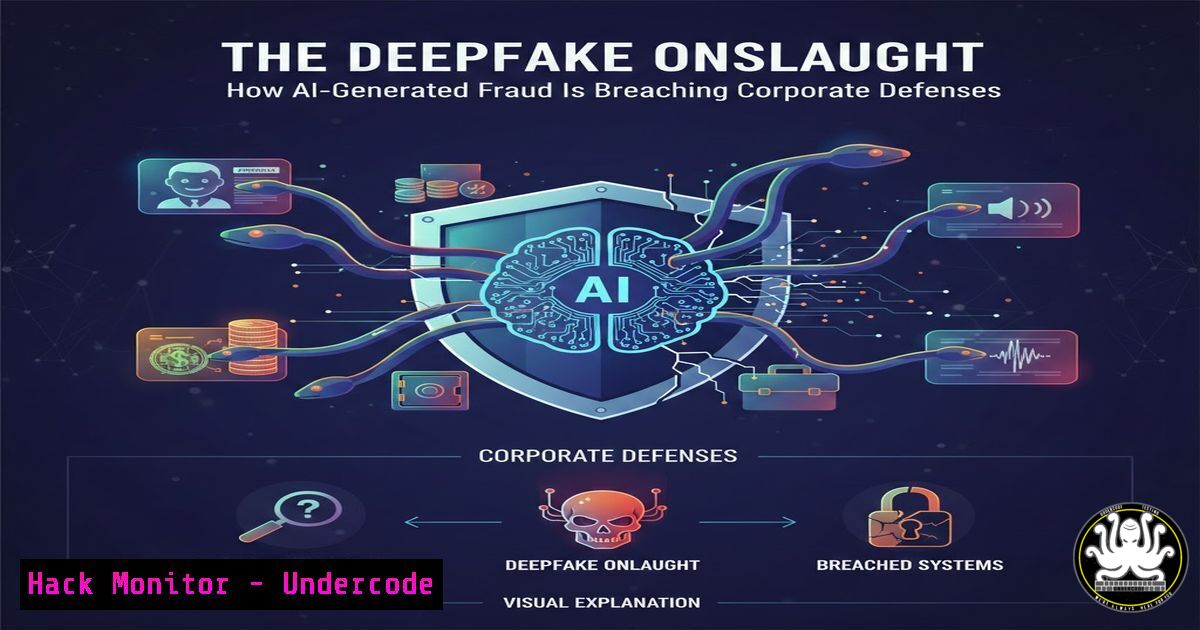
Deepfake technology has evolved from a novelty into a sophisticated weapon wielded by cybercriminals and nation-state actors. As Citi’s report, “AI Deepfakes: When Seeing and Hearing Can’t be Trusted,” highlights, these AI-generated forgeries are now responsible for a significant portion of fraud and corporate infiltration, challenging the very notion of trust in digital communications. This article deconstructs the threat and provides a technical blueprint for defense.
Learning Objectives:
- Understand the technical mechanisms behind deepfake-based attacks, including voice cloning and video synthesis.
- Implement multi-layered detection and mitigation strategies to protect against identity fraud and social engineering.
- Develop organizational policies and technical controls to harden human and digital systems against this emerging threat.
You Should Know:
1. The Anatomy of a Deepfake Attack
A deepfake attack is a multi-stage social engineering operation that leverages generative AI to create convincing forgeries. The process typically begins with data harvesting, where attackers scrape public sources like social media for audio and video samples of a target. Using tools like GANs (Generative Adversarial Networks) and Autoencoders, they then synthesize new content, such as a fake video call from a CEO authorizing an urgent wire transfer.
Step‑by‑step guide explaining what this does and how to use it.
Step 1: Reconnaissance. Attackers identify a high-value target (e.g., a CFO) and collect publicly available media.
Step 2: Model Training. Using open-source frameworks like `DeepFaceLab` or Wav2Lip, they train a model on the collected data. This requires significant computational power, often on stolen cloud GPU instances.
Example Command (for educational purposes only): A typical `DeepFaceLab` workflow involves extracting faces from a source video: `python main.py extract –input-dir data/data_src.mp4 –output-dir data/src`
Step 3: Payload Generation. The attacker generates the deepfake audio or video, often using a text-to-speech (TTS) engine for voice cloning.
Step 4: Social Engineering Deployment. The deepfake is deployed via a communication channel like a video conferencing platform or a voice call to execute the fraud.
2. Implementing Technical Deepfake Detection
Proactive detection is critical. Several tools and APIs can analyze media files for digital fingerprints indicative of AI generation. These tools look for inconsistencies in lighting, blinking patterns, head movements, and audio-visual sync.
Step‑by‑step guide explaining what this does and how to use it.
Step 1: Integrate Detection APIs. Services like Pindrop Security or Microsoft’s Video Authenticator API can be integrated into corporate communication platforms.
Example: Using a hypothetical API with `curl` (replace API_KEY and file path):
curl -X POST -H "Content-Type: video/mp4" -H "X-API-Key: YOUR_API_KEY" --data-binary @suspicious_call.mp4 https://api.detection-service.com/v1/analyze
Step 2: Deploy Endpoint Monitoring. Use EDR (Endpoint Detection and Response) solutions to flag unknown processes that may be deepfake generation tools, a sign of a compromised insider threat.
Step 3: Network Traffic Analysis. Monitor for large, unexpected uploads to known deepfake-as-a-service (DFaaS) domains or IP addresses, which could indicate corporate data being exfiltrated for model training.
3. Hardening Identity and Access Management (IAM)
The principle of “zero trust” is paramount. A single video call should never be the sole authorization for a sensitive action. IAM systems must enforce multi-factor authentication (MFA) and context-aware access policies.
Step‑by‑step guide explaining what this does and how to use it.
Step 1: Enforce Phishing-Resistant MFA. Mandate the use of FIDO2/WebAuthn security keys or certificate-based authentication for high-privilege actions, which cannot be bypassed by a deepfake.
Step 2: Implement Contextual Policies. In your IAM solution (e.g., Azure AD Conditional Access, Okta), create rules that block financial transactions if the request originates from an unmanaged device or an unfamiliar geographic location.
Step 3: Segregate Duties. Ensure that no single individual can authorize a significant payment. Require multiple, physically verified approvals through separate channels.
- Securing the Human Layer: Employee Training and Protocols
Technology alone is insufficient. Employees are the first and last line of defense. Training must move beyond generic phishing awareness to include deepfake-specific simulations.
Step‑by‑step guide explaining what this does and how to use it.
Step 1: Conduct Deepfake Drills. Simulate a deepfake attack on key personnel (e.g., a fake CEO video call) and measure the response.
Step 2: Establish Verification Protocols. Create a mandatory, out-of-band verification process for any unusual request. For example, a command to wire funds must be confirmed via a pre-established, encrypted messaging app or a phone call back to a known number.
Step 3: Promote Digital Hygiene. Educate employees on the risks of oversharing video and audio content online, which can be harvested to create more convincing deepfakes.
5. Leveraging Blockchain for Media Verification
For highly sensitive communications, cryptographic verification can ensure authenticity. By hashing and timestamping original media on a blockchain, any alteration becomes immediately detectable.
Step‑by‑step guide explaining what this does and how to use it.
Step 1: Create a Cryptographic Hash. Generate a hash of the original video file from a trusted source.
Example Linux command:
sha256sum official_ceo_message.mp4 > ceo_message.sha256
Step 2: Anchor the Hash. Use a service like `OpenTimestamps` or a private blockchain to create a publicly verifiable proof of the file’s existence at a specific time.
Example: Stamping a file with OpenTimestamps:
ots stamp official_ceo_message.mp4
Step 3: Verify Before Trusting. Before acting on a sensitive video, the recipient can hash the received file and check it against the anchored, trusted hash. A mismatch means the media is tampered with.
What Undercode Say:
- The Perimeter is Now Psychological. The most significant vulnerability is no longer a firewall misconfiguration but the human brain’s inherent trust in audio-visual stimuli. Defenses must be re-engineered accordingly.
- The Insider Threat is Morphing. The “insider” may not be a malicious employee but an external actor who has perfectly cloned an insider’s identity, making traditional monitoring ineffective.
Analysis: The Citi report’s statistics are a stark warning siren. A 5% deepfake fraud rate is not a niche problem; it’s a systemic risk. The North Korean infiltration campaign demonstrates that this is not just about financial theft but about long-term, state-sponsored espionage. The low cost and high accessibility of generative AI tools have democratized advanced impersonation attacks, allowing low-skilled threat actors to execute highly sophisticated campaigns. Organizations that fail to adapt their security posture from one of binary trust/distrust to one of continuous, verified validation will face catastrophic financial and reputational damage.
Prediction:
Deepfake technology will become seamlessly integrated into the cybercrime toolkit, leading to a surge in “bionic hacking”—a blend of AI-generated social engineering and traditional technical exploits. We will see the emergence of deepfake-powered Business Email Compromise (BEC) 2.0, where real-time video impersonation replaces simple email spoofing. Furthermore, the technology will be weaponized to create geopolitical instability and manipulate financial markets by faking statements from key political and corporate leaders, forcing a fundamental shift towards cryptographically verifiable digital identities for all public figures.
🎯Let’s Practice For Free:
IT/Security Reporter URL:
Reported By: Mthomasson Ai – Hackers Feeds
Extra Hub: Undercode MoN
Basic Verification: Pass ✅


