Listen to this Post
Introduction:
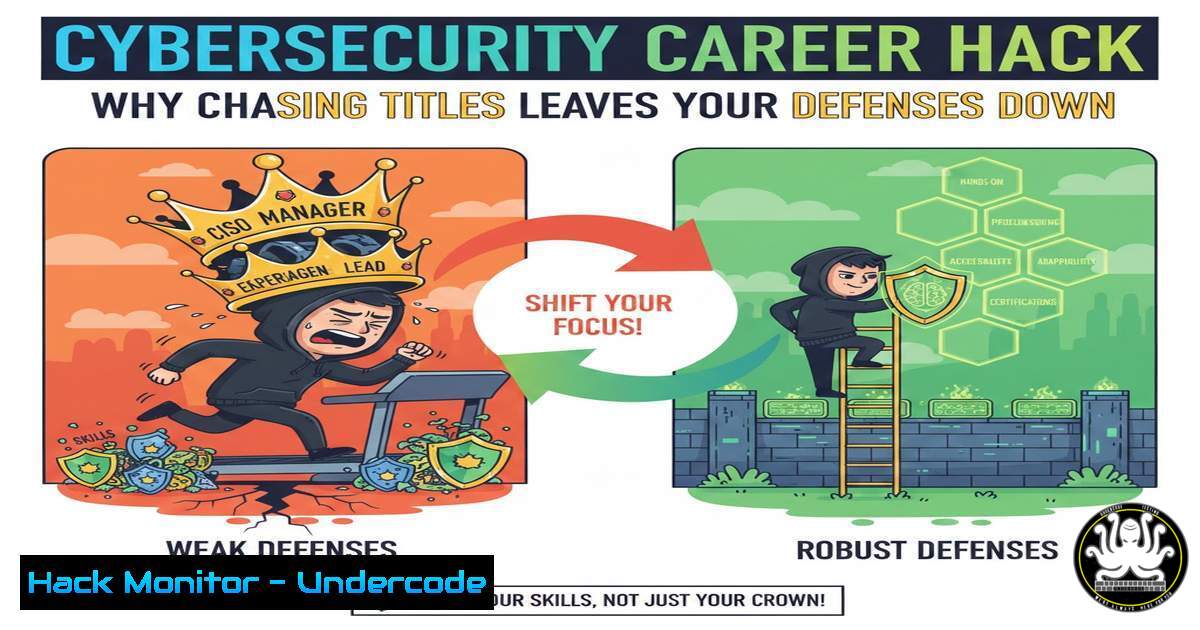
In the high-stakes world of cybersecurity, professionals often fall into the trap of measuring success by job titles, salary increments, or the prestige of the organizations they protect. However, true security maturity aligns not with external validation, but with achieving operational integrity, robust system hardening, and a sustainable work-life balance that prevents burnout. This evolution from chasing accolades to mastering fundamentals is what separates a reactive technician from a strategic security architect.
Learning Objectives:
- Understand how to map personal career growth to tangible technical skill acquisition in areas like cloud security, automation, and incident response.
- Develop strategies for implementing security controls and monitoring that provide true peace of mind, enabling effective disengagement after work hours.
- Learn to quantify success through system resilience and reduced mean time to detection (MTTD) rather than purely through career advancement metrics.
You Should Know:
- From “Proving You Belong” to Mastering Foundational Hardening
The early career focus on “being taken seriously” in cybersecurity is best achieved not by mere presence, but by demonstrating mastery over core system defenses. This involves moving beyond basic tool usage to understanding the underlying configurations that make systems inherently resilient.
Step‑by‑step guide explaining what this does and how to use it.
Step 1: Harden a Linux Web Server. Instead of just running a vulnerability scanner, manually implement key security configurations.
 1. Disable root SSH login and change the default SSH port:
sudo nano /etc/ssh/sshd_config
 Change `Port 22` to `Port 2222` (or another port)
 Change `PermitRootLogin yes` to `PermitRootLogin no`

 2. Configure Uncomplicated Firewall (UFW) to allow only necessary ports:
sudo ufw allow 2222/tcp  Your new SSH port
sudo ufw allow 80/tcp  HTTP
sudo ufw allow 443/tcp  HTTPS
sudo ufw enable

<ol>
<li>Set up Fail2ban to prevent brute-force attacks:
sudo apt install fail2ban
sudo systemctl enable fail2ban
sudo systemctl start fail2ban
This demonstrates a fundamental understanding of reducing attack surfaces, a skill more valuable than a job title.
2. From “The Chase” to “The Automation Architect”
Chasing a “Senior” or “Lead” title often leads to empty achievements if not backed by scalable processes. True seniority is demonstrated by building automated security frameworks that function effectively without constant manual intervention.
Step‑by‑step guide explaining what this does and how to use it.
Step 1: Automate Compliance Scanning with a Bash Script. Create a script that runs critical checks and emails a report.
!/bin/bash
 compliance_scanner.sh
HOSTNAME=$(hostname)
DATE=$(date)
LOGFILE="/var/log/compliance_scan.log"

{
echo "=== Compliance Scan for $HOSTNAME on $DATE ==="
echo "1. Checking for unowned files..."
find / -nouser -nogroup 2>/dev/null | head -20

echo "2. Checking world-writable files..."
find / -type f -perm -0002 2>/dev/null | head -20

echo "3. Checking listening network services..."
netstat -tulpn | grep LISTEN
} > $LOGFILE

Send email (requires mailutils configured)
mail -s "Daily Compliance Scan: $HOSTNAME" [email protected] < $LOGFILE
Step 2: Schedule it with Cron.
 Edit the crontab to run daily at 2 AM
sudo crontab -e
 Add the line:
0 2    /path/to/compliance_scanner.sh
This automation proves you are building systems, not just holding a title.
- From “Financial Freedom” to “Building a Security Practice That Sells Itself”
The desire for an “exit” or “financial freedom” in mid-career translates to building a security program so robust and aligned with business objectives that it becomes a measurable asset, justifying its budget and existence effortlessly.
Step‑by‑step guide explaining what this does and how to use it.
Step 1: Implement Centralized Logging and Alerting. Use the ELK Stack (Elasticsearch, Logstash, Kibana) or a cloud-native solution like AWS CloudWatch.
For AWS:
 Use the AWS CLI to create a CloudWatch Logs group and stream
aws logs create-log-group --log-group-name "Apache-Access-Logs"
aws logs create-log-stream --log-group-name "Apache-Access-Logs" --log-stream-name "web-server-1"

Configure your application to send logs to CloudWatch.
Step 2: Create Metric Filters for Critical Events. In CloudWatch, create alarms for specific patterns, like multiple failed SSH logins or "DELETE” requests in web logs, triggering an SNS notification.
This creates a self-documenting, value-driven security operation that is easy to manage and audit.
- From “The Grind” to “Confident Delegation and Incident Response”
The ultimate sign of success is a team that can handle a crisis without your direct intervention. This requires documented playbooks and a well-configured Security Information and Event Management (SIEM) system.
Step‑by‑step guide explaining what this does and how to use it.
Step 1: Create a Basic Incident Response Playbook. Document the first 30 minutes for a suspected breach.
1. Triage: Confirm the alert. Check SIEM and EDR (Endpoint Detection and Response) consoles.
2. Contain: Isolate the affected system from the network.
Linux: `sudo iptables -A INPUT -s
Windows (PowerShell Admin): `Disable-NetAdapter -Name “Ethernet0” -Confirm:$false`
- Document: Log all actions taken in a shared, timestamped document.
Step 2: Conduct a Tabletop Exercise. Run through this playbook with your team, using a simulated alert. -
Achieving “The Integration”: Securing Your Time and Mental Space
The final stage of “integration” in a cybersecurity context means having the confidence to leave at 3 PM because your monitoring, automation, and team are all functioning correctly. This is achieved through mature DevSecOps practices.
Step‑by‑step guide explaining what this does and how to use it.
Step 1: Implement Infrastructure as Code (IaC) Security. Use `terraform` with security scanning.
 Initialize a Terraform project
terraform init

Use a tool like tfsec to scan for misconfigurations before applying
tfsec .

Example output: It will flag an S3 bucket that is publicly readable.
Step 2: Integrate Security into the CI/CD Pipeline. Add a security scan stage in your Jenkins or GitHub Actions pipeline.
 Example GitHub Actions snippet
- name: Run Security Scan
uses: tfsec/tfsec-action@main
with:
directory: 'terraform/'
This bakes security into the development process, preventing fires instead of constantly fighting them, which is the true hallmark of a successful, sustainable security career.
What Undercode Say:
- Success is a Secure System, Not a Shiny . The most respected professionals are those whose systems are resilient, monitored, and automated. Their value is intrinsic to the security posture they build, not the words on their business card.
- The Ultimate Metric is Peace of Mind. If you cannot disconnect without anxiety, your security program is not mature. The goal is to build a system that provides clear, actionable alerts and can withstand minor incidents autonomously, granting you the mental freedom to enjoy life outside work.
The analysis of Erika Glenn’s post through a cybersecurity lens reveals a critical truth for IT professionals: the relentless pursuit of external validation leads to a fragile career architecture. Just as an application secured only at the perimeter is vulnerable to insider threats, a professional identity built solely on titles and salary is vulnerable to market shifts and burnout. The most resilient career strategy mirrors a zero-trust architecture: it assumes no single achievement (like a title) grants permanent success, and instead continuously validates based on the ongoing demonstration of skill, the creation of scalable systems, and the cultivation of a capable team. This internal, skill-based foundation is what ultimately provides both career security and personal fulfillment.
Prediction:
The future of cybersecurity leadership will increasingly favor professionals who have mastered this evolution. As AI automates routine technical tasks, the human value will shift decisively towards strategic architecture, mentorship, and the ability to build self-healing, resilient security cultures. Those who continue to chase the outdated metrics of title and prestige will find themselves managing increasingly obsolete, manual processes, while those who define success as building systems that work without them will become the architects of the next generation of secure digital infrastructure.
🎯Let’s Practice For Free:
IT/Security Reporter URL:
Reported By: Femaleexecutiveerikaglenn Friday – Hackers Feeds
Extra Hub: Undercode MoN
Basic Verification: Pass ✅


