Listen to this Post
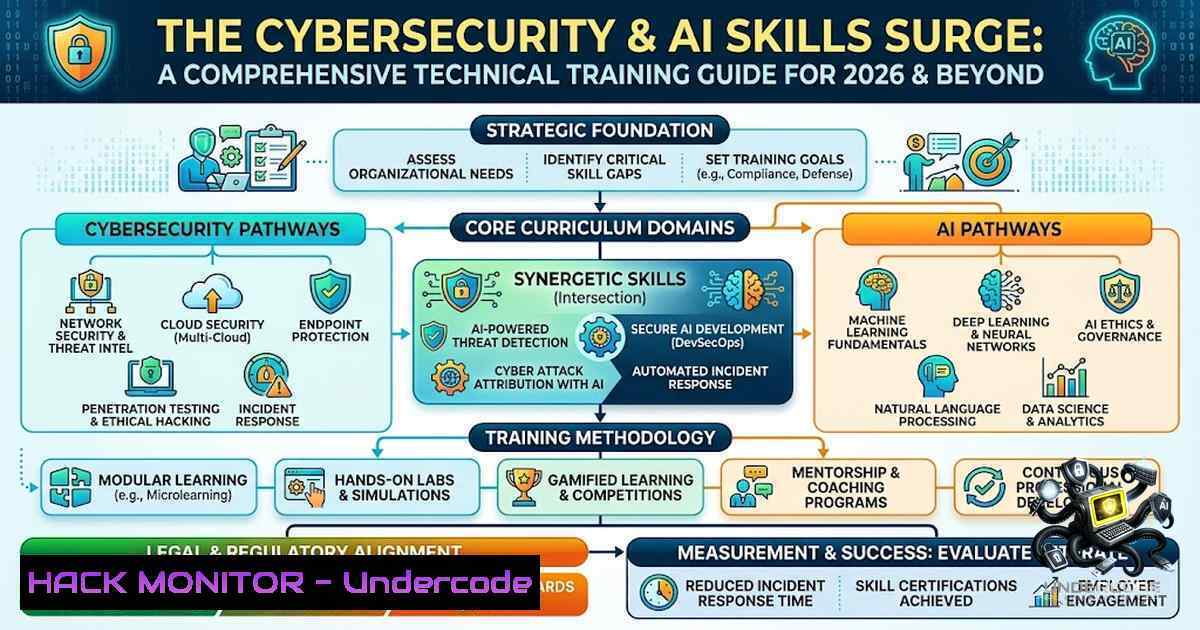
Introduction:
The contemporary technological landscape is experiencing a paradigm shift, driven by the convergence of Artificial Intelligence (AI), cybersecurity threats, and cloud computing. Organizations are not only seeking to defend their digital perimeters but also to innovate using the very technologies that introduce new vulnerabilities. This demand has created an urgent need for skilled professionals across 34 critical domains, from ethical hacking and AI agent development to data visualization and embedded systems. Understanding the core technical competencies and practical applications in these fields is essential for any trainer, academician, or industry professional aiming to bridge the talent gap and fortify the future of IT infrastructure.
Learning Objectives:
- Master the foundational and advanced concepts of AI, Machine Learning, and Data Science, including practical model deployment and security integration.
- Acquire hands-on proficiency in cybersecurity protocols, from ethical hacking and penetration testing to cloud hardening and AI-driven threat intelligence.
- Develop expertise in full-stack development, IoT, and embedded systems, encompassing programming, network configuration, and automation.
- Gain practical skills in data analytics, business intelligence, and digital marketing tools, understanding their application in a corporate and academic environment.
- Build and deploy AI agents and automation scripts, integrating them with existing software and security frameworks.
You Should Know:
1. Building and Hardening an AI-Powered Cybersecurity Framework
The integration of AI into cybersecurity is not just about automating responses; it’s about creating predictive and adaptive defense mechanisms. To implement a basic AI-driven intrusion detection system, trainers and professionals must start with data collection and feature engineering. This involves setting up a honeypot or utilizing system logs to gather network traffic data. For Linux systems, the `tcpdump` and `nmap` commands are invaluable for packet capture and network mapping. A key aspect is using machine learning algorithms like Random Forest or Neural Networks to classify benign and malicious traffic. For instance, an anomaly detection model can be trained using Python’s Scikit-learn library. To ensure security, all AI model APIs must be secured, ideally using OAuth 2.0 and API keys. Below is a step-by-step guide to setting up a basic anomaly detection pipeline in a lab environment.
Step‑by‑step Guide:
- Step 1: Capture network traffic. Run `sudo tcpdump -i eth0 -w capture.pcap` to record packets.
- Step 2: Convert pcap to CSV using tools like
tshark. Command:tshark -r capture.pcap -T fields -e ip.src -e ip.dst -e frame.len > data.csv. - Step 3: Use Python to preprocess the data. This includes encoding categorical data and normalizing numerical values.
- Step 4: Implement an Isolation Forest algorithm from `sklearn.ensemble` to identify outliers in the dataset, flagging them as potential threats.
- Step 5: Deploy the model using Flask and secure the endpoint with JWT tokens.
- Mastery in Full-Stack Development with a Cybersecurity Mindset
Developing secure applications is a cornerstone of modern IT. Whether you are working with Java, Python, or .NET, integrating security from the design phase (DevSecOps) is paramount. For Java Full Stack, developers must implement secure coding practices to prevent SQL injection and XSS attacks. In Python Full Stack, using frameworks like Django or Flask with built-in CSRF and XSS protection is recommended. A critical command for Windows environments involves checking open ports and active connections using `netstat -an` and using PowerShell to audit firewall rules. Additionally, integrating a SAST (Static Application Security Testing) tool like SonarQube into a CI/CD pipeline can automatically detect vulnerabilities.
Step‑by‑step Guide (Securing a Python Flask API):
- Step 1: Use `pip install flask-cors` and `flask-talisman` to enforce HTTPS and set secure headers.
- Step 2: Implement input validation using `marshmallow` to avoid malformed data entry.
- Step 3: For Linux servers, use `ufw` to limit access. Command:
sudo ufw allow from 192.168.1.0/24 to any port 5000. - Step 4: Implement rate limiting using `flask-limiter` to prevent brute-force attacks.
- Step 5: Store environment variables securely in a `.env` file, ensuring they are not uploaded to version control.
- Internet of Things (IoT) and Embedded Systems Hardening
IoT security is a critical area, requiring knowledge of both hardware and software. Trainers focusing on VLSI, PLC, and CNC must emphasize secure firmware updates and network isolation. For PLC and industrial automation, using protocols like Modbus and DNP3 poses risks. A common practice is to segment OT networks using VLANs. For Linux-based IoT devices, disabling unnecessary services and using `iptables` to restrict ports is essential. On Windows-based PLC programming environments, configuring the Windows Firewall to block all inbound traffic except from trusted programming workstations is a baseline security measure. Understanding how to secure communication using MQTT over TLS is vital.
Step‑by‑step Guide:
- Step 1: Identify open ports on an IoT device using
nmap -sS -O 192.168.1.100. - Step 2: On the Linux gateway, use `iptables -A INPUT -p tcp –dport 1883 -j DROP` to block unencrypted MQTT traffic.
- Step 3: Generate a self-signed certificate for TLS using
openssl req -1ew -x509 -days 365 -1odes -out cert.pem -keyout key.pem. - Step 4: Configure the MQTT broker to use the certificate for encrypted communication.
- Step 5: For Windows, use `New-1etFirewallRule -Direction Inbound -Protocol TCP -LocalPort 8883 -Action Block` to deny unencrypted access.
4. Cloud Computing, BIM, and Construction Technology Integration
Cloud computing is revolutionizing fields like BIM and construction project management. Professionals must understand how to deploy BIM tools and large datasets on Azure or AWS. The security of cloud storage is paramount; implementing MFA and using S3 bucket policies to prevent public access is a basic requirement. For Linux servers hosting BIM data, using `rsync` for encrypted backups and `gpg` for file-level encryption are common practices. Windows Server administrators should be comfortable with `PowerShell` scripts to automate the deployment of construction project management software and enforce group policies to secure data integrity.
Step‑by‑step Guide (Cloud Security for BIM Data):
- Step 1: On AWS, create an S3 bucket and block all public access via the AWS Management Console.
- Step 2: Enable server-side encryption (SSE-S3 or KMS).
- Step 3: Use AWS CLI to copy files:
aws s3 cp project.rvt s3://secure-bim-bucket/ --sse. - Step 4: On Linux, set up a cron job to automate `rsync` to the cloud storage with `–encrypt` parameters.
- Step 5: On Windows, use `PowerShell` with the `AWS Tools` module to automate backups using
Write-S3Object.
- Data Science and Visualization with Tableau/Power BI Security
Data visualization tools are powerful but can be gateways to sensitive data. Trainers must teach the importance of data masking and role-level security. When connecting Tableau to a database, using a service account with minimal permissions is crucial. For Linux, using `MySQL` or `PostgreSQL` with SSL enforced is a must. Windows users connecting to SQL Server must use Windows Authentication mode for integrated security. The command `openssl s_client -connect server:3306` can be used to test if MySQL TLS is active. Power BI integrates with Azure AD; enforcing Conditional Access Policies (CAP) ensures only compliant devices can access dashboards.
Step‑by‑step Guide (Securing Power BI Dashboard):
- Step 1: In the Power BI Service, navigate to Dataset Settings and set Row-Level Security (RLS).
- Step 2: Define roles in Power BI Desktop using DAX expressions to filter data.
- Step 3: In Azure AD, configure a Conditional Access policy requiring MFA for all Power BI users.
- Step 4: On the SQL Server, ensure the service account has `db_datareader` access only.
- Step 5: Set up alerts for any non-conforming access attempts using Azure Sentinel.
What Undercode Say:
- The convergence of AI and cybersecurity is not just a trend but a necessity; every domain from VLSI to Full Stack development now requires a baseline of security knowledge and AI integration.
- The sheer breadth of domains (34) listed in the hiring post highlights the fragmentation in the tech skills market; trainers and professionals must pivot toward multidisciplinary expertise to remain competitive, especially in niches like AR Calling, Medical Coding, and Industrial Automation.
- Organizations like REACH are acting as critical intermediaries between academic knowledge and industry application, making the role of a “hybrid trainer”—one who understands theory, can execute code, and hardens systems—invaluable.
Prediction:
- +1 The demand for trainers capable of bridging the gap between theoretical AI models and practical cybersecurity implementation will increase by 40% over the next 24 months, creating a premium for specialized instructors.
- -1 The rapid integration of AI agents into operational technology (OT) and industrial control systems (ICS) without proper security protocols (as seen in VLSI, PLC, and CNC) will likely lead to a wave of sophisticated IoT-based ransomware attacks in 2026-2027.
- +1 The standardization of cloud computing skills across construction and BIM will drastically reduce project lifecycle times but will also require new regulations for data sovereignty and privacy.
▶️ Related Video (78% Match):
🎯Let’s Practice For Free:
🎓 Live Courses & Certifications:
Join Undercode Academy for Verified Certifications
🚀 Request a Custom Project:
Secure, high-velocity infrastructure and disruptive technological engineering. Contact our engineering team for high-tier development and proprietary systems:
[email protected]
💎 Smart Architecture | 🛡️ Secure by Design | ⭐ Trusted by Thousands
IT/Security Reporter URL:
Reported By: Hiring Trainerjobs – Hackers Feeds
Extra Hub: Undercode MoN
Basic Verification: Pass ✅


