Listen to this Post
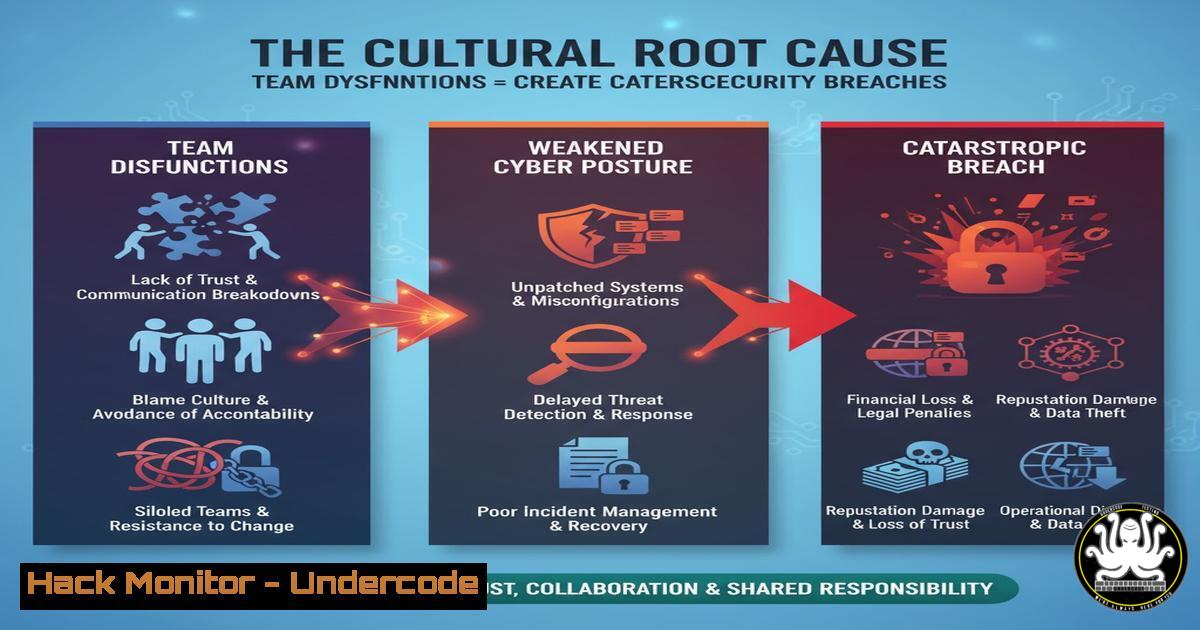
Introduction:
In the high-stakes world of cybersecurity, we often focus on technical controls, advanced threat intelligence, and sophisticated tooling. However, the most critical vulnerability in any organization is not a zero-day exploit or a misconfigured firewall; it is a dysfunctional team culture. Patrick Lencioni’s 5 Dysfunctions of a Team provides a powerful lens through which to diagnose the cultural weaknesses that directly enable security incidents, turning your human layer from your greatest asset into your most significant liability.
Learning Objectives:
- Understand how each of the five team dysfunctions maps directly to specific cybersecurity failures and vulnerabilities.
- Learn practical, actionable steps to diagnose and remediate cultural weaknesses within security and IT teams.
- Implement technical and procedural controls that reinforce a culture of collective security ownership and psychological safety.
You Should Know:
1. From Absence of Trust to Siloed Security
A foundational lack of trust forces team members to conceal their ignorance, uncertainties, and mistakes. In a Security Operations Center (SOC), this means an analyst might hide the fact they don’t understand an alert, allowing a real threat to slip by unchallenged. This culture of fear prevents the open collaboration needed to connect disparate attack signals.
Step-by-step guide explaining what this does and how to use it:
Step 1: Diagnose the Issue. Conduct anonymous surveys using tools like Google Forms or Microsoft Forms asking questions like, “Do you feel comfortable admitting a mistake to your manager?” or “Is it safe to disagree during incident response calls?”
Step 2: Lead with Vulnerability. Team leads must model this behavior. In a daily stand-up or threat briefing, a leader should say, “I missed this IoC in the intel report yesterday; let’s walk through what I should have looked for.” This sets the tone.
Step 3: Implement Technical “Blameless” Post-Mortems. After a simulated or real incident, run a retrospective focused solely on the process and tooling, not the person. Use a framework like: “What was the intended flow? What actually happened? How do we fix the system?”
- Fear of Conflict Creates Echo Chambers and Groupthink
When teams avoid all conflict to preserve artificial harmony, they also avoid the passionate, ideological debates necessary to challenge assumptions about threats, architectures, and controls. This leads to the approval of inherently risky projects and the dismissal of valid security concerns as “being difficult.”
Step-by-step guide explaining what this does and how to use it:
Step 1: Introduce “Red Teaming” as a Formal Process. Mandate that for any major project or security control change, a designated team or individual must argue against it. Their job is to poke holes and find flaws, legitimizing constructive conflict.
Step 2: Establish Debate Protocols. In design meetings, use a “devil’s advocate” role that rotates. Frame it as: “For the next 15 minutes, we will actively try to dismantle this proposed architecture. All criticisms are about the design, not the designer.”
Step 3: Technical Implementation – Attack Drills. Run tabletop exercises where the sole goal is to argue. Present a scenario and split the team into “breach” and “defend” groups. Force them to debate the efficacy of existing controls like EDR rules or WAF policies. The output is a list of validated security gaps.
- Lack of Commitment to Team Decisions Breeds Inconsistent Enforcement
Without buy-in, security policies become suggestions. A security engineer who doesn’t agree with a new hardening standard might enforce it laxly in their domain, creating a weak link in the security chain. This inconsistency is a goldmine for attackers.
Step-by-step guide explaining what this does and how to use it:
Step 1: Implement Infrastructure as Code (IaC) with Automated Compliance Scans. Use tools like Terraform or Ansible to codify security baselines. Then, use tools like `openssl` or `grep` in automated pipelines to check for deviations.
Example Linux Command (Check for weak TLS protocols on a server):
`openssl s_client -connect example.com:443 -tls1_2` This should succeed, while `-tls1` or `-tls1_1` should fail if the policy is correctly enforced.
Example Windows Command (Audit a security policy via PowerShell):
`Get-LocalGroupMember -Group “Administrators”` To verify compliance with the principle of least privilege.
Step 2: Clear Deadlines and Closure. At the end of a security planning meeting, the leader must explicitly state: “Here are the decisions we have made. Does anyone have any unaddressed concerns?” Once consensus is reached, the decision is logged in a shared `SECURITY_DECISIONS.md` file.
Step 3: Automate Enforcement. Use Cloud Security Posture Management (CSPM) tools or scripts to automatically detect and remediate deviations from committed standards, removing the human element from consistent enforcement.
- Avoidance of Accountability Allows Poor Security Hygiene to Fester
When peers fail to hold each other accountable, poor practices spread. This could be as simple as not calling out a colleague who uses a weak password, stores secrets in plaintext, or bypasses a change control process, creating a “normalization of deviance” that erodes the security posture.
Step-by-step guide explaining what this does and how to use it:
Step 1: Create Public, Shared Scorecards. Use a dashboard (e.g., in Grafana or a simple shared spreadsheet) that tracks key security hygiene metrics per team or individual: Secrets in Code, Patching SLA, Failed Login Attempts, Phishing Report Rate.
Step 2: Peer-Review Checklists for Critical Tasks. For operations like deploying a new server or releasing code, require a peer to run through a security checklist before proceeding. This makes accountability a shared, pre-emptive responsibility.
Example Code Review Comment (in Git):
` SECURITY: I see a hardcoded API key in this commit. Please use the vault service. This blocks merge.`
Step 3: Regular Progress Reviews. Hold weekly reviews not with managers, but among peers, to discuss the scorecards and hygiene metrics. The question is not “Why did you fail?” but “What obstacle can we help you remove to meet our collective standard?”
5. Inattention to Results in Security Theater
When individuals prioritize their own status or departmental KPIs over collective outcomes, you get “security theater.” Teams optimize for “number of alerts closed” instead of “mean time to genuine remediation,” or they focus on passing an audit instead of actually being secure.
Step-by-step guide explaining what this does and how to use it:
Step 1: Define and Broadcast a Single, Top-Level Security Metric. This could be “Dwell Time,” “Cybersecurity Maturity Model Certification (CMMC) Level,” or “Business Disruption Avoided.” Every other metric must be a direct contributor to this one.
Step 2: Implement Breach and Attack Simulation (BAS). Use tools to continuously simulate real-world attacks. The results are unambiguous; either the attack was stopped or it wasn’t. This cuts through vanity metrics and focuses the team on the only result that matters: defensive efficacy.
Step 3: Tie Performance to Collective Outcomes. Bonus structures and performance reviews should be heavily weighted towards the team’s performance against the top-level security metric, not individual task completion. This aligns everyone towards the same mission-critical result.
What Undercode Say:
- A dysfunctional team culture will systematically nullify any technical security investment, no matter how advanced. You cannot buy a product to fix a broken team.
- The most effective “vulnerability management program” is often a “team cohesion program.” Investing in off-sites, training, and clear communication provides a higher ROI than many niche security tools.
The persistent focus on technical controls while ignoring the human system that implements them is the primary reason for recurring security failures. A team suffering from the five dysfunctions will misconfigure the cloud environment, ignore the true-positive alert, and fail to collaborate during an incident. The adversary understands this, often exploiting organizational friction and silos more skillfully than they exploit software. To build a truly resilient organization, CISOs must first and foremost act as architects of culture, creating an environment of trust, constructive conflict, and unwavering commitment to the collective security mission. The firewall of human collaboration is the one that must never be allowed to fail.
Prediction:
Organizations that continue to overlook team culture as a primary cybersecurity control will face an increasing wave of “preventable” breaches. We will see a rise in incidents where the root cause analysis points not to a novel technical zero-day, but to a known cultural failure—a lack of communication between departments, fear of reporting an initial phishing click, or inconsistent policy enforcement due to low morale. Conversely, companies that proactively architect their teams using frameworks like Lencioni’s will develop a human-level defense-in-depth, making them significantly harder targets and turning their workforce into a proactive, collective immune system against cyber threats.
🎯Let’s Practice For Free:
IT/Security Reporter URL:
Reported By: Diegope Patrick – Hackers Feeds
Extra Hub: Undercode MoN
Basic Verification: Pass ✅


