Listen to this Post
Introduction:
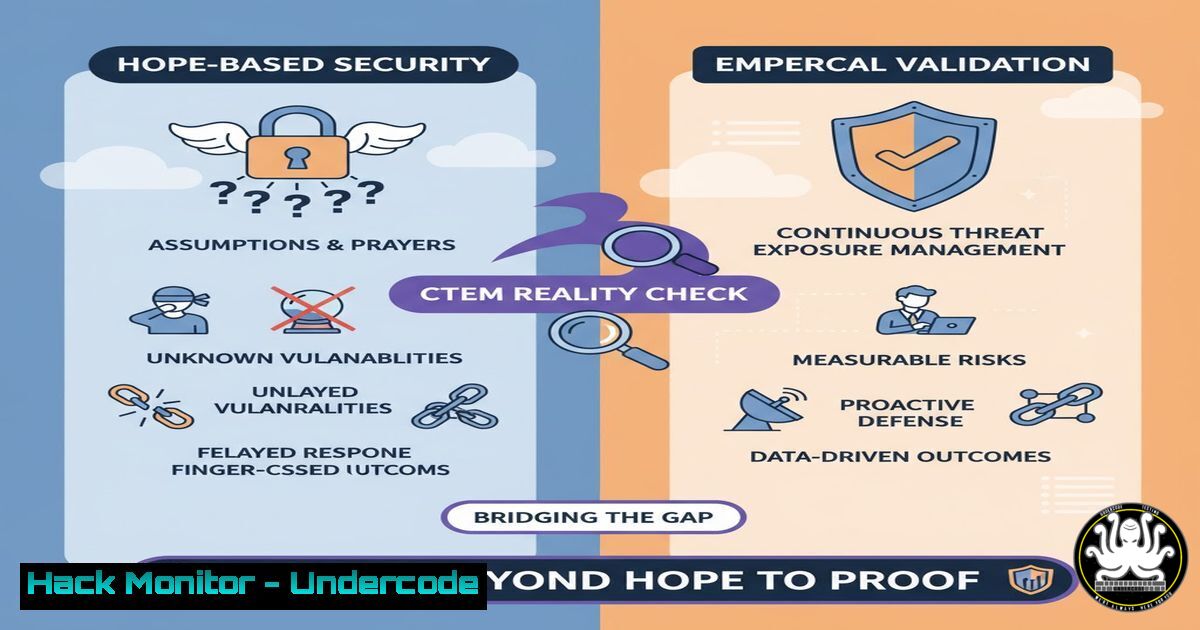
The cybersecurity landscape is shifting from theoretical coverage metrics to evidence-based validation of defensive capabilities. Continuous Threat Exposure Management (CTEM) mandates that organizations move beyond asking “what do we cover?” to empirically answering “what attacks actually succeed against us?” This paradigm transforms cloud security from a hope-based exercise into a data-driven discipline.
Learning Objectives:
- Understand the core components and workflow of Cloud Attack Emulation
- Learn practical commands for security validation across cloud environments
- Implement evidence-based verification of security controls and remediations
You Should Know:
1. Validating IAM Privilege Escalation Vectors
aws iam simulate-principal-policy --policy-source-arn arn:aws:iam::123456789012:user/TestUser --action-names iam:CreateAccessKey
az rest --method post --uri "https://graph.windows.net/myorganization/me?api-version=1.6"
gcloud iam roles describe roles/owner --project=my-project
This AWS CLI command simulates whether a specific IAM user can create new access keys, testing for privilege escalation potential. The Azure command checks current user permissions through Microsoft Graph API, while the GCP command examines IAM role definitions. Run these regularly to validate that least privilege principles are actually enforced and identify potential escalation paths before attackers do.
2. Testing Storage Service Exposure
aws s3api get-bucket-policy --bucket example-bucket --query Policy --output text | jq .
az storage account show --name mystorageaccount --resource-group my-rg --query networkRuleSet
gcloud storage buckets describe gs://my-bucket --format="json(acl,iamConfiguration)"
These commands retrieve and parse storage bucket policies across cloud providers. The AWS command uses jq to format the JSON policy for readability, revealing public access grants. The Azure command checks network rules to validate if storage is exposed to the internet. Regular execution ensures storage services remain properly configured despite continuous infrastructure changes.
3. Cloud Attack Emulation with Stratus Red Team
wget https://github.com/DataDog/stratus-red-team/releases/download/v2.0.0/stratus-red-team_2.0.0_Linux_x86_64.tar.gz
tar xzvf stratus-red-team.tar.gz
./stratus-red-team warmup aws.credential-access.ec2-get-password-data
./stratus-red-team detonate aws.credential-access.ec2-get-password-data
Stratus Red Team provides atomic cloud attack emulation. After downloading and extracting, the warmup command prepares the attack technique while detonate executes it. This specific test attempts to retrieve EC2 password data, validating whether your detection and prevention controls actually work against credential access techniques.
4. Container Security Validation
kubectl auth can-i create pods --as=system:serviceaccount:default:overprivileged-sa
docker run --security-opt apparmor=docker-default --cap-drop=ALL -it alpine:latest
trivy image --severity HIGH,CRITICAL myapp:latest
The Kubernetes command tests whether a service account can create pods, validating RBAC controls. The Docker command runs a container with minimal capabilities, testing security hardening. Trivy scans container images for vulnerabilities. Together, these commands provide empirical evidence of container security posture.
5. Cloud Detection Engineering Validation
 CloudTrail detection simulation
aws logs filter-log-events --log-group-name CloudTrail/DefaultLogGroup --filter-pattern '{ $.eventName = "ConsoleLogin" && $.responseElements.ConsoleLogin = "Success" }' --start-time 20231201
This CloudWatch Logs command filters CloudTrail events for successful console logins, simulating a basic detection rule. Security teams should regularly run such queries to validate that their detection logic actually matches real events in their environment. The 54% detection gap often stems from detection rules that don’t account for environmental specifics.
6. Infrastructure as Code Security Testing
tfsec .
checkov -d /path/to/terraform/code
terrascan scan -i terraform
These commands perform static analysis of Terraform code. Tfsec identifies security misconfigurations before deployment. Checkov validates against hundreds of cloud security best practices. Terrascan provides policy-as-code scanning. Integrating these into CI/CD pipelines provides continuous validation that infrastructure deployments meet security standards.
7. API Security Testing
nmap -sV --script http-enum target-api.com
curl -H "Authorization: Bearer $TOKEN" https://api.example.com/v1/users
sqlmap -u "https://api.example.com/v1/users?id=1" --batch
These commands test API endpoints for common vulnerabilities. Nmap enumerates available endpoints, curl tests authentication requirements, and sqlmap checks for SQL injection vulnerabilities. Regular API security testing provides empirical evidence of your API security posture beyond theoretical assessments.
What Undercode Say:
- Evidence beats assumptions: The 54% detection reality gap proves theoretical coverage means nothing without empirical validation
- Continuous beats point-in-time: Cloud environments change too rapidly for annual assessments to remain relevant
The shift from hope-based to evidence-based security represents the most significant maturation in cybersecurity practice in a decade. Organizations that implement continuous attack emulation move security from a cost center to a measurable business function. The technical commands and methodologies outlined provide the building blocks for this transformation, but success requires cultural adoption of empirical validation over vendor claims. Security leaders must prioritize tools and processes that answer the fundamental question: “Can we prove our security works?” rather than “Do we have security controls?”
Prediction:
Within two years, evidence-based security validation will become a regulatory and insurance requirement, with organizations required to demonstrate empirical proof of security control effectiveness rather than compliance checklist completion. The 54% detection gap will drive massive investment in continuous validation platforms, and security budgets will shift from preventive controls alone to balanced spending on prevention, detection, and validation capabilities.
🎯Let’s Practice For Free:
IT/Security Reporter URL:
Reported By: Activity 7387478415203008512 – Hackers Feeds
Extra Hub: Undercode MoN
Basic Verification: Pass ✅


