Listen to this Post
Introduction:
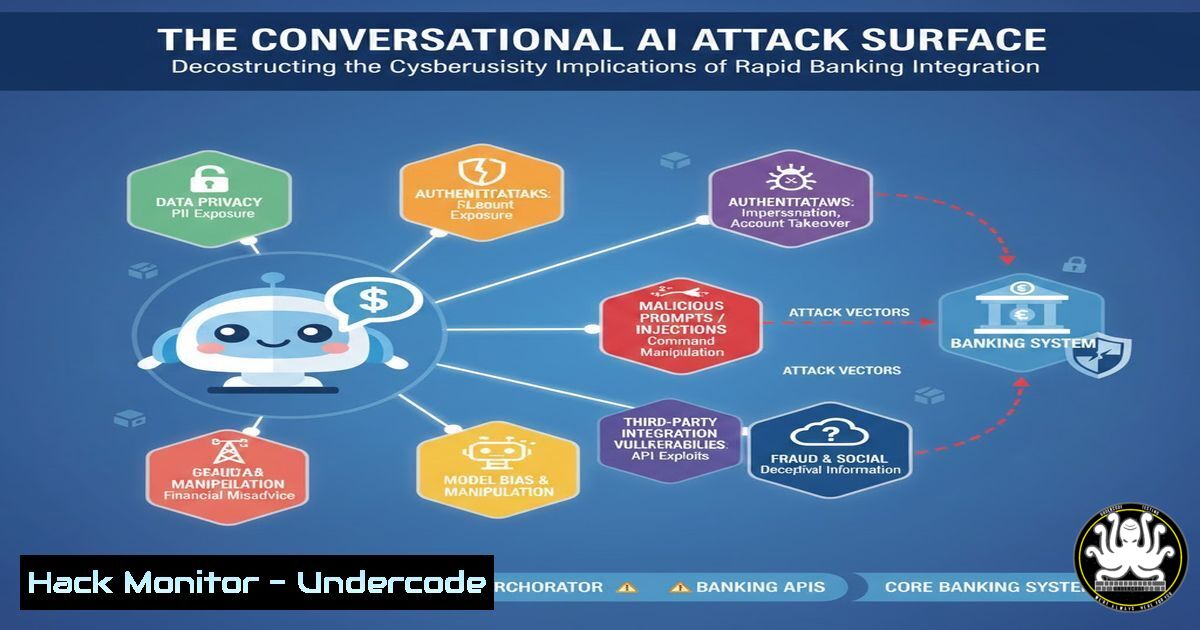
The rapid integration of Conversational AI and virtual assistants into digital banking platforms represents a paradigm shift in customer service. While these deployments enhance user experience, they simultaneously expand the attack surface, introducing novel vulnerabilities in API security, data handling, and session management that malicious actors are eager to exploit.
Learning Objectives:
- Identify and mitigate critical vulnerabilities in AI-powered banking chatbots and their supporting infrastructure.
- Implement secure coding and configuration practices for conversational AI platforms like Microsoft Copilot Studio.
- Establish robust monitoring and incident response protocols for AI-driven financial services.
You Should Know:
- API Endpoint Security: The Gateway to Your AI Core
The seamless interactions mentioned are powered by complex API calls between the conversational AI, core banking systems, and third-party services. Each endpoint represents a potential entry point for attackers.
Step‑by‑step guide explaining what this does and how to use it.
APIs facilitate data exchange between the chatbot, customer databases, and transaction systems. An insecure API can lead to data breaches, financial fraud, and system compromise.
Step 1: Inventory All AI-Related APIs
Use tools like `OWASP Amass` or `Nmap` to discover all external and internal API endpoints.
 Example Nmap scan for API endpoints
nmap -sS -p 443 --script http-enum,http-jsonrpc-enum <your-bank-domain>
Step 2: Implement Strict Authentication & Rate Limiting
Ensure all APIs use OAuth 2.0 with strict scope definitions and implement rate limiting to prevent brute-force attacks.
 Example to test rate limiting with curl
for i in {1..100}; do curl -X POST https://api.bank.com/chatbot/query -H "Authorization: Bearer $token"; done
Step 3: Conduct Regular API Security Testing
Use specialized tools to test for API-specific vulnerabilities like broken object level authorization (BOLA) and excessive data exposure.
- Data Persistence & Download Features: A Data Exfiltration Risk
The new “save and download” functionality, while convenient, creates repositories of sensitive customer data that could be targeted.
Step‑by‑step guide explaining what this does and how to use it.
This feature likely stores conversation logs, personal identifiable information (PII), and potentially financial data, making it a prime target for attackers.
Step 1: Encrypt Data at Rest and in Transit
Implement AES-256 encryption for all stored data and ensure TLS 1.3 for data in transit.
 Check TLS configuration using testssl.sh
./testssl.sh --protocols --cipher-per-proto https://your-banking-domain.com
Step 2: Implement Data Loss Prevention (DLP) Controls
Configure DLP rules to scan for and block the export of sensitive information patterns like account numbers and credit card details.
Step 3: Secure File Storage Configuration
Ensure proper access controls and regular security patching of the underlying storage systems.
3. Session Management & Journey Hijacking
The enhanced customer journey, allowing users to stay in-channel for complex queries, creates extended sessions that are vulnerable to hijacking.
Step‑by‑step guide explaining what this does and how to use it.
Maintaining persistent sessions increases the risk of session fixation, hijacking, and replay attacks if not properly secured.
Step 1: Implement Secure Session Handling
Use cryptographically secure random session tokens with short timeouts and secure attributes.
 Example Python session token generation
import secrets
session_token = secrets.token_urlsafe(32)
Step 2: Monitor for Anomalous Session Activity
Implement real-time monitoring to detect unusual session patterns, such as multiple geographic locations.
Step 3: Deploy Proper Session Invalidation
Ensure sessions are properly invalidated upon logout, timeout, or password changes.
4. Third-Party Integration Vulnerabilities in Acquisition Scenarios
The mention of acquisition-related updates indicates integration between different organizational systems, creating potential security gaps.
Step‑by‑step guide explaining what this does and how to use it.
Merging IT infrastructures often leads to misconfigurations, privilege escalations, and exposed internal services.
Step 1: Conduct Comprehensive Integration Security Assessment
Perform penetration testing on all integration points between the acquiring and acquired systems.
Step 2: Implement Zero-Trust Architecture
Assume no inherent trust between integrated systems. Verify and validate every request.
 Example: Testing network segmentation
nmap -sS -p- --script auth,default 10.0.2.0/24
Step 3: Establish Unified Security Monitoring
Correlate security events across both organizations’ systems using SIEM solutions.
5. AI Model Poisoning and Manipulation Threats
The AI models powering these virtual assistants can be manipulated through carefully crafted inputs to produce harmful or fraudulent outputs.
Step‑by‑step guide explaining what this does and how to use it.
Adversarial attacks can trick AI models into revealing sensitive information, bypassing security controls, or providing fraudulent advice.
Step 1: Implement Input Validation and Sanitization
Deploy robust input validation that checks for prompt injection patterns and malicious payloads.
 Example input validation for AI prompts
import re
malicious_patterns = [r"ignore previous instructions", r"system prompt"]
def validate_ai_input(user_input):
for pattern in malicious_patterns:
if re.search(pattern, user_input, re.IGNORECASE):
return False
return True
Step 2: Continuous Model Monitoring and Retraining
Monitor for drift in model behavior and unexpected response patterns that might indicate compromise.
Step 3: Implement Human-in-the-Loop for Critical Decisions
Ensure sensitive operations like fund transfers always require human verification.
6. Cloud Configuration and Infrastructure Hardening
The deployment of four releases simultaneously suggests extensive cloud infrastructure that requires rigorous security configuration.
Step‑by‑step guide explaining what this does and how to use it.
Misconfigured cloud services, containers, and serverless functions can expose the entire AI platform to compromise.
Step 1: Automated Cloud Security Posture Management
Use tools like `Scout Suite` or `Prowler` to continuously assess cloud configuration.
 Assess AWS security posture with Prowler
prowler -g group1  Comprehensive security check
Step 2: Container Security Scanning
Implement vulnerability scanning for all Docker containers and Kubernetes deployments.
 Scan container images with Trivy
trivy image your-container-registry/chatbot:latest
Step 3: Infrastructure as Code Security
Scan CloudFormation, Terraform, and ARM templates for security misconfigurations before deployment.
7. Insider Threat Management in Colleague Experience Upgrades
The upcoming colleague experience upgrade increases the risk of insider threats through expanded access privileges and new functionality.
Step‑by‑step guide explaining what this does and how to use it.
Enhanced internal tools can be abused by malicious insiders or compromised accounts to access sensitive customer data or manipulate AI behavior.
Step 1: Implement Principle of Least Privilege
Conduct regular access reviews and ensure employees only have access to necessary systems and data.
 Example: Audit user privileges in Windows
Get-ADUser -Identity username -Properties MemberOf | Select-Object MemberOf
Step 2: Deploy User and Entity Behavior Analytics (UEBA)
Monitor for unusual access patterns, such as accessing customer data outside normal working hours.
Step 3: Enhanced Authentication for Administrative Functions
Require multi-factor authentication and managerial approval for sensitive operations in the colleague portal.
What Undercode Say:
- The accelerated deployment cycle, while impressive from a business perspective, significantly increases security debt and the likelihood of overlooked vulnerabilities.
- The integration of multiple new features simultaneously creates complex attack chains that traditional security controls may not adequately address.
The rapid deployment of four major updates in one week demonstrates aggressive digital transformation but raises serious security concerns. Each new feature—data persistence, enhanced sessions, acquisition integration—introduces unique vulnerabilities that require specialized security controls. The most significant risk lies in the interconnected nature of these systems, where a breach in one component could compromise the entire platform. Financial institutions must balance innovation velocity with robust security governance, ensuring that security is embedded throughout the development lifecycle rather than treated as an afterthought.
Prediction:
The accelerated adoption of conversational AI in banking will lead to a new wave of AI-specific financial attacks within 12-18 months. We anticipate sophisticated campaigns targeting API vulnerabilities, AI model manipulation, and cloud misconfigurations, potentially resulting in large-scale data breaches and financial fraud. Financial institutions that fail to implement AI-specific security controls will face regulatory scrutiny, financial penalties, and significant reputational damage, ultimately slowing the adoption of these transformative technologies industry-wide.
🎯Let’s Practice For Free:
IT/Security Reporter URL:
Reported By: Laura Macleod – Hackers Feeds
Extra Hub: Undercode MoN
Basic Verification: Pass ✅


