
Listen to this Post
Introduction:
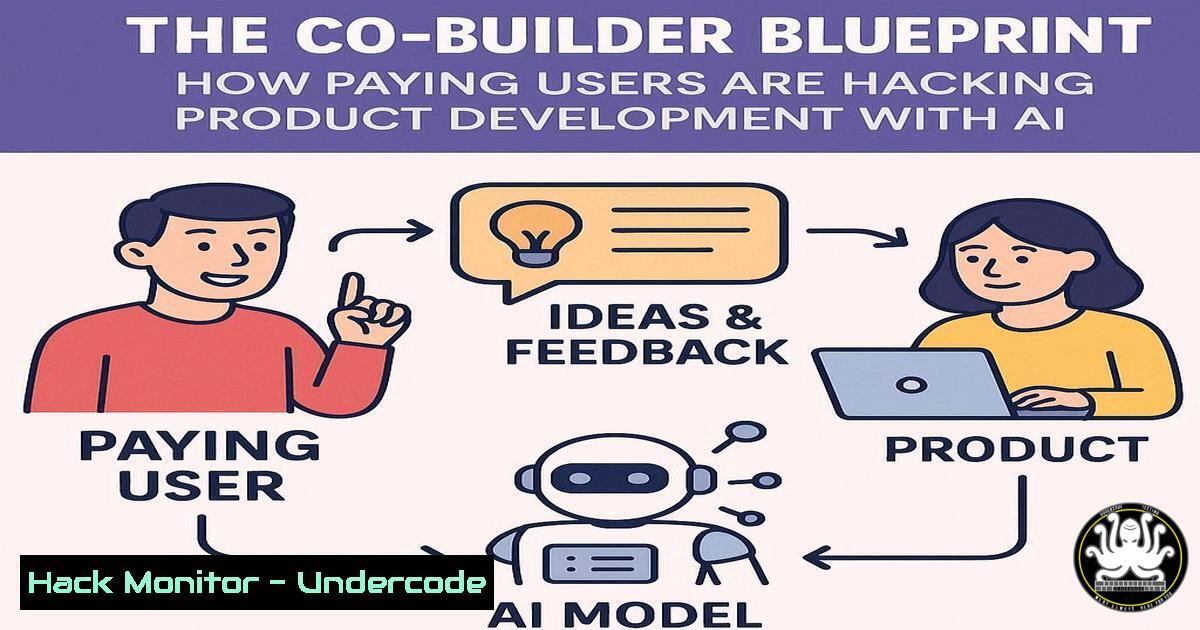
The traditional product development cycle is being disrupted by a new model: the co-builder. By integrating a paying, invested user base directly into feature voting, companies are not only validating demand but also creating a defensible moat against competitors. This collaborative approach, powered by strategic communication and AI, turns users into active participants in the software’s evolution.
Learning Objectives:
- Understand the security and operational benefits of a paid, early-access user base versus a free, open beta.
- Learn how to architect secure, user-triggered AI workflows within common platforms like Gmail.
- Implement logging, monitoring, and access control mechanisms to protect proprietary AI data and user input.
You Should Know:
1. Securing User Input Channels
When allowing users to trigger AI actions via email, securing the intake channel is paramount to prevent abuse and data leakage.
 Example: Cloudflare Email Routing Worker to sanitize and route inbound emails to your AI API
export default {
async email(message, env, ctx) {
// Sanitize sender address to prevent impersonation
const from = message.from.replace(/[^a-zA-Z0-9@._-]/g, "");

// Validate sender is from an allowed domain (e.g., your company domain for internal use)
const allowedDomains = ["company.com"];
const senderDomain = from.split('@')[bash];
if (!allowedDomains.includes(senderDomain)) {
message.setReject("Address not allowed.");
return;
}

// Forward sanitized email to internal AI processing API
await fetch('https://api.internal.company.com/ai/trigger', {
method: 'POST',
headers: { 'Content-Type': 'application/json' },
body: JSON.stringify({
from: from,
subject: message.headers.get('subject'),
text: message.text
})
});
}
}
Step-by-step guide:
This Cloudflare Worker script acts as a secure gateway for emails triggering AI functions. It first sanitizes the “from” address by removing potentially dangerous characters to prevent header injection attacks. It then checks the sender’s domain against a pre-approved list, rejecting messages from unauthorized sources. Finally, it forwards the sanitized email content to a protected internal API endpoint, ensuring that the raw, untrusted email never directly interacts with the core AI logic.
2. Gmail API Integration for Label-Based Triggers
Leveraging the Gmail API allows for a seamless user experience but requires robust authentication and scope limitation.
from googleapiclient.discovery import build
from google.oauth2.credentials import Credentials

Authenticate with limited, specific scopes
SCOPES = ['https://www.googleapis.com/auth/gmail.labels', 'https://www.googleapis.com/auth/gmail.readonly']
creds = Credentials.from_authorized_user_file('token.json', SCOPES)
service = build('gmail', 'v1', credentials=creds)

Watch for new emails with the specific label
def watch_gmail_label(label_name='Trigger draft'):
request = {
'labelIds': [get_label_id(service, label_name)],
'topicName': 'projects/your-project-id/topics/gmail-notifications'
}
return service.users().watch(userId='me', body=request).execute()
Step-by-step guide:
This Python code uses the Google API client library to interact with a user’s Gmail. The key security step is defining `SCOPES` that request only the minimum permissions necessary (gmail.labels and gmail.readonly), adhering to the principle of least privilege. The `watch_gmail_label` function then sets up a push notification to a secure Google Cloud Pub/Sub topic whenever an email is tagged with the specified label, triggering the subsequent AI workflow without continuous, resource-intensive polling.
3. Implementing Audit Logs for AI Actions
Every user-triggered AI action must be logged for security, compliance, and product insight.
-- SQL Schema for an AI Action Audit Table
CREATE TABLE ai_audit_log (
log_id UUID PRIMARY KEY DEFAULT gen_random_uuid(),
user_id UUID NOT NULL,
trigger_method VARCHAR(50) NOT NULL, -- 'email' or 'gmail_label'
trigger_input TEXT, -- Sanitized subject line or label name
ai_model_used VARCHAR(100),
prompt_tokens INTEGER,
completion_tokens INTEGER,
timestamp TIMESTAMPTZ DEFAULT NOW(),
ip_address INET
);

-- Create an index for fast querying by user and time
CREATE INDEX idx_ai_audit_user_time ON ai_audit_log (user_id, timestamp);
Step-by-step guide:
This SQL schema creates a dedicated table to log every AI interaction. Storing the user_id, trigger_method, and a sanitized version of the `trigger_input` provides a clear audit trail. Recording token usage helps monitor costs and potential abuse. The `ip_address` field can be crucial for security incident investigations. Creating an index on `user_id` and `timestamp` ensures that generating user-specific reports or investigating suspicious activity remains performant, even with massive log data.
4. Hardening the AI API Endpoint
The API receiving user triggers must be fortified against common web vulnerabilities.
 Example Nginx configuration snippet for rate limiting and security headers
http {
limit_req_zone $binary_remote_addr zone=ai_trigger:10m rate=1r/s;

server {
listen 443 ssl;
server_name api.heyhelp.ai;

Rate limiting for the AI trigger endpoint
location /v1/trigger_draft {
limit_req zone=ai_trigger burst=5 nodelay;
proxy_pass http://ai_backend;

Security headers
add_header X-Frame-Options DENY always;
add_header X-Content-Type-Options nosniff always;
add_header Strict-Transport-Security "max-age=63072000; includeSubDomains; preload" always;
}
}
}
Step-by-step guide:
This Nginx configuration protects the AI API from being overwhelmed. The `limit_req_zone` directive defines a zone named “ai_trigger” that allows 1 request per second per IP address, with a burst of 5. This prevents brute-force attacks and ensures service stability. The `proxy_pass` directive forwards allowed requests to the actual backend. The added security headers (X-Frame-Options, X-Content-Type-Options, HSTS) protect against clickjacking, MIME sniffing attacks, and enforce secure HTTPS connections.
5. Data Segregation and Prompt Isolation
Ensure that user data and prompts are logically isolated to prevent cross-contamination and data leaks.
 Example Docker Compose snippet for isolated AI microservices
version: '3.8'
services:
ai-orchestrator:
image: company/ai-orchestrator:latest
environment:
- USER_CONTEXT_DB=user_context_db
networks:
- backend

user-context-db:
image: postgres:15
volumes:
- user_context_data:/var/lib/postgresql/data
environment:
- POSTGRES_DB=user_context
networks:
- backend

Separate service for handling external API calls (e.g., to OpenAI)
ai-gateway:
image: company/ai-gateway:latest
environment:
- OPENAI_API_KEY=${OPENAI_SECRET}
networks:
- backend
Step-by-step guide:
This Docker Compose file illustrates a microservices architecture that separates concerns. The `ai-orchestrator` handles business logic but does not directly hold the API keys for external AI providers. The `user-context-db` is a dedicated database for storing user-specific information, isolated in its own container. The `ai-gateway` is the only service with permission to call external AI APIs, centralizing and securing credential management. This isolation limits the “blast radius” if any single component is compromised.
6. Vulnerability Mitigation: Input Sanitization for AI Prompts
User input used in AI prompts must be sanitized to prevent prompt injection attacks that could steal context or cause unintended behavior.
import re

def sanitize_prompt_input(user_input):
"""
Sanitize user input to be used in an AI prompt.
"""
 Remove potential command injection sequences
sanitized = re.sub(r'([\`\"\'])|(..\/)', '', user_input)

Limit input length to prevent resource exhaustion
max_length = 1000
if len(sanitized) > max_length:
sanitized = sanitized[:max_length]

Escape remaining curly braces to prevent template breaking
sanitized = sanitized.replace('{', '{{').replace('}', '}}')

return sanitized

Usage in the AI workflow
user_email_subject = get_user_input()
safe_prompt = f"""
Summarize the following email subject for me, focusing on action items:
Subject: {sanitize_prompt_input(user_email_subject)}
"""
Step-by-step guide:
This Python function demonstrates a multi-layered approach to sanitizing user input before it’s inserted into an AI prompt. It first uses a regular expression to remove characters and sequences often used in injection attacks. It then enforces a maximum length to prevent overly long inputs from consuming excessive AI processing resources (a potential denial-of-wallet attack). Finally, it escapes curly braces, which are often used in prompt templating languages, to prevent the user from breaking out of the intended prompt structure and manipulating the AI’s behavior.
7. Cloud Hardening for User Data
Protect the cloud infrastructure hosting the co-builder platform and its valuable user data.
 Example AWS CLI command to create a tightly-scoped IAM policy for a Lambda function
aws iam create-policy \
--policy-name LambdaAIDynamoDBReadWrite \
--policy-document '{
"Version": "2012-10-17",
"Statement": [{
"Effect": "Allow",
"Action": [
"dynamodb:GetItem",
"dynamodb:PutItem",
"dynamodb:UpdateItem"
],
"Resource": "arn:aws:dynamodb:us-east-1:123456789012:table/UserPreferences"
}]
}'
Step-by-step guide:
This AWS CLI command creates a fine-grained IAM policy that follows the principle of least privilege. Instead of granting broad `dynamodb:` permissions, it explicitly allows only three specific actions (GetItem, PutItem, UpdateItem) on a single, specified DynamoDB table (UserPreferences). This policy would then be attached to a Lambda function that handles user preferences for the co-builder platform. If the Lambda function is ever compromised, the attacker’s access is severely limited to just that one table, preventing a lateral movement attack across your cloud environment.
What Undercode Say:
- Security as a Feature: The “paying user” filter is an underrated cybersecurity control. It dramatically increases the attack cost for malicious actors, as they must financially commit, creating a strong audit trail and reducing noise from casual abusers.
- Architectural Accountability: Building features specifically voted on by a invested user base creates a natural accountability loop. This forces a more disciplined, documented, and secure development process, as the cost of a security failure is multiplied by the trust invested by the co-builders.
The shift from open betas to paid co-builder communities is not merely a business model innovation; it’s a strategic security upgrade. By design, this model filters out the low-effort attacker and the casual troll, allowing security teams to focus on sophisticated threats rather than background noise. The very act of payment creates a legal and psychological barrier to abuse. Furthermore, this model encourages a more modular and secure system architecture. When features are built as discrete, user-voted units, they are naturally containerized, making it easier to implement strict access controls and monitor for anomalous behavior specific to each module. This turns product development into a continuous, user-driven security stress test.
Prediction:
The “co-builder as a security layer” model will become a standard practice for B2B SaaS platforms within three years. As AI integration becomes ubiquitous, the attack surface will expand dramatically. Companies that leverage a vetted, invested user base to guide and test features will inherently build more resilient systems. This approach will be recognized not just for its product-market fit benefits but as a fundamental component of a modern DevSecOps pipeline, effectively crowdsourcing penetration testing and robust design from a friendly, motivated audience. This will create a market advantage where security and user engagement are intrinsically linked.
🎯Let’s Practice For Free:
IT/Security Reporter URL:
Reported By: Ebardavid Buildinpublic – Hackers Feeds
Extra Hub: Undercode MoN
Basic Verification: Pass ✅


