Listen to this Post
Introduction:
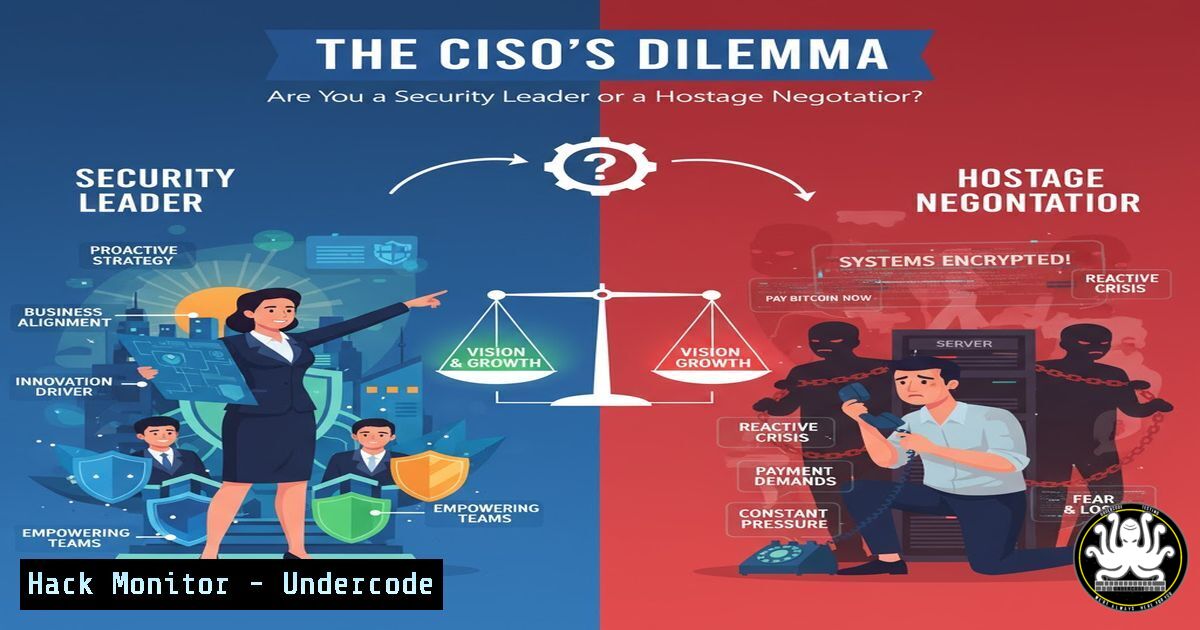
The organizational structure of a modern CISO often places them in a direct reporting line to executives, like the CIO or CEO, who are primarily driven by business objectives and revenue generation. This creates a fundamental conflict where the executive who creates and accepts business risk also oversees the individual responsible for mitigating it. This article explores the technical and governance implications of this structural flaw and provides security professionals with the tools to demonstrate risk and advocate for effective oversight.
Learning Objectives:
- Understand the technical and procedural mechanisms for independently quantifying and reporting security risk.
- Learn to implement logging, monitoring, and auditing controls that provide an immutable record of security events and decisions.
- Develop strategies for communicating technical risk to non-technical leadership and board members.
You Should Know:
1. Independent Risk Quantification with Nmap and Nessus
A CISO must be able to independently verify the organization’s attack surface, regardless of what other business units report.
`nmap -sV -sC -O -p- 192.168.1.0/24 -oA network_scan`
This Nmap command performs a comprehensive scan of a subnet, detecting service versions (-sV), running default scripts (-sC), attempting OS detection (-O), scanning all ports (-p-), and outputting results in all major formats (-oA) for evidence.
`nessuscli scan –policy “Basic Network Scan” –targets 192.168.1.0/24 –output network_vulnerabilities.db`
Using the Nessus command-line interface to execute a vulnerability scan against the same subnet, storing results in a portable database for tracking.
Step-by-step guide:
- Schedule regular, automated scans using a dedicated, isolated assessment server.
- Correlate scan results with asset management databases to identify unapproved systems.
- Generate risk scores based on CVSS ratings and exposure, creating a data-driven risk assessment independent of business pressure.
2. Immutable Logging for Accountability
To prevent the “editing for comfort” of security events, implement centralized, immutable logging.
` Linux (rsyslog) – Send to a central SIEM`
`. @192.168.2.100:514`
` Windows (PowerShell) – Forward events`
`$Log = New-WinEvent -LogName ‘Security’ -Id 4625 -Message ‘Failed logon audit’`
`Send-SyslogMessage -ComputerName ‘192.168.2.100’ -Port 514 -Message $Log.Message`
` Linux `journalctl` for systemd auditing`
`journalctl –since=”1 hour ago” –no-pager | grep “FAILED”`
` Windows `Get-WinEvent` for security auditing`
`Get-WinEvent -FilterHashtable @{LogName=’Security’; ID=4625} | Select-Object -First 10`
Step-by-step guide:
- Configure all critical servers and network devices to forward logs to a dedicated Security Information and Event Management (SIEM) system.
- Ensure the SIEM is managed by the security team with strict, role-based access control and write-once-read-many (WORM) storage capabilities.
- Use these logs to generate reports on policy overrides, failed access attempts, and configuration changes, providing an auditable trail.
3. Cloud Security Posture Management (CSPM) Commands
In cloud environments, risk is often created through misconfigurations. Automate their detection.
` AWS CLI to check for public S3 buckets`
`aws s3api list-buckets –query “Buckets[].Name”`
`aws s3api get-bucket-policy-status –bucket `
` Azure CLI to check for NSG misconfigurations`
`az network nsg list –query “[].name”`
`az network nsg rule list –nsg-name `
` GCP gcloud to check for firewall rules`
`gcloud compute firewall-rules list –format=”table(name,sourceRanges,direction,allowed)”`
Step-by-step guide:
- Use CSPM tools or the native cloud CLIs to script daily compliance checks against benchmarks like CIS.
- Automatically ticket any deviations from the secure baseline, such as publicly accessible storage or overly permissive firewall rules.
- Report the volume and severity of misconfigurations directly to leadership as a measure of operational risk.
4. Vulnerability Exploitation and Mitigation Proof
Demonstrate the real-world impact of unmitigated vulnerabilities.
` Metasploit console command to search for exploits`
`msf6 > search type:exploit platform:linux wordpress`
` Searchsploit for finding public exploits`
`searchsploit “Apache 2.4.49″`
` Snort rule to detect a specific exploit attempt`
`alert tcp any any -> $HOME_NET 80 (msg:”ET EXPLOIT Possible CVE-2021-44228 Log4Shell Exploit”; flow:to_server,established; content:”jndi:”; nocase; http_uri; reference:cve,2021-44228; classtype:attempted-admin; sid:2030010; rev:1;)`
Step-by-step guide:
- In a controlled lab environment, use a framework like Metasploit to safely demonstrate how a critical, unpatched vulnerability can be exploited.
- Show the corresponding network detection rule (e.g., Snort/Suricata) or host-based mitigation (e.g., YARA rule) that could block the attack.
- Present this “cause and effect” to leadership to translate abstract CVEs into tangible business impact.
5. API Security Testing with OWASP ZAP
Modern business ambition is driven by APIs, which are a major source of risk.
` Basic ZAP CLI automated scan`
`zap-baseline.py -t https://api.target.com/v1/users`
` Full active scan with API key context</h2>
`zap-full-scan.py -t https://api.target.com -U "admin" -c "/zap/session" -r report.html`
<h2 style="color: yellow;">
cURL commands for manual API testing</h2>
`curl -H "Authorization: Bearer " https://api.target.com/v1/users/1`
`curl -X POST https://api.target.com/v1/users -d '{"email":"[email protected]", "admin":true}'
Step-by-step guide:
- Integrate API security scanning into the CI/CD pipeline using the ZAP baseline scan to catch low-hanging fruit.
- Perform quarterly in-depth active scans against production-like staging environments.
- Document findings like broken object level authorization (BOLA) and excessive data exposure, linking them directly to potential data breaches and compliance failures.
6. Implementing Least Privilege and Auditing Access
Control who can do what and prove it.
` Linux: Create a group and set permissions`
`groupadd -r security_auditors`
`chown -R :security_auditors /var/log/audit/`
`chmod -R 0640 /var/log/audit/`
` Windows: PowerShell to audit user rights`
`zap-full-scan.py -t https://api.target.com -U "admin" -c "/zap/session" -r report.html`
<h2 style="color: yellow;">
`curl -H "Authorization: Bearer
`curl -X POST https://api.target.com/v1/users -d '{"email":"[email protected]", "admin":true}'
`Get-WinEvent -FilterHashtable @{LogName=’Security’; ID=4672} | Where-Object {$_.Message -like “Special”}`
` Linux `auditd` rule to monitor sensitive files`
`-w /etc/passwd -p wa -k identity_management`
Step-by-step guide:
- Enforce the principle of least privilege using groups and role-based access control (RBAC) across all systems.
- Implement detailed auditing for privileged actions (sudo commands, Windows Event ID 4672) and changes to critical files (using
auditd). - Regularly review these audit logs to detect unauthorized privilege escalation or misuse, reporting on compliance with access policies.
7. Network Segmentation and Zero Trust Configuration
Contain the blast radius of a potential breach.
` iptables rule to segment a network`
`iptables -A FORWARD -s 10.1.1.0/24 -d 10.1.2.0/24 -j DROP`
` Windows Firewall rule via PowerShell`
`New-NetFirewallRule -DisplayName “Block Database from Web” -Direction Outbound -LocalPort 1433 -Protocol TCP -Action Block`
` Zero Trust: Check for MFA enrollment in Azure AD`
`Get-MgUser -All | Select-Object DisplayName, StrongAuthenticationMethods`
Step-by-step guide:
- Use network access control lists (ACLs) and host-based firewalls to create segments between user, application, and database tiers.
- Implement a Zero Trust model by enforcing multi-factor authentication (MFA) for all access, especially administrative consoles.
- Test segmentation by running vulnerability scans from one segment against another to verify that lateral movement is blocked.
What Undercode Say:
- True security oversight requires structural independence from the business functions that create the most significant risk.
- Technical evidence, gathered through independent scanning and immutable logging, is the CISO’s most powerful tool for breaking free from “hostage negotiation” dynamics.
The core analysis is that the CISO role is fundamentally compromised when its success metrics and career progression are controlled by the same leadership it must challenge. The technical controls and commands outlined above are not just operational necessities; they are the foundation for objective, data-driven governance. They transform security from a subjective, political discussion into an objective, evidence-based discourse. A CISO armed with independent data can shift the conversation from “Why is this control blocking us?” to “Here is the quantified risk of bypassing this control, and here is the evidence of past attempts to exploit it.” This moves the security function from being a cost center to being the primary guardian of sustainable business operations.
Prediction:
The increasing frequency and cost of major cyber incidents, coupled with stringent new regulations, will force a structural evolution in corporate governance. Within the next 5-7 years, it will become a standard best practice, and potentially a regulatory requirement, for the CISO to have a direct, independent reporting line to the Board of Directors or a dedicated risk committee. This shift will be driven by shareholder lawsuits and insurance premiums that explicitly penalize organizations with demonstrably flawed and conflicted security oversight structures.
🎯Let’s Practice For Free:
IT/Security Reporter URL:
Reported By: Joshuacopeland Unpopularopinion – Hackers Feeds
Extra Hub: Undercode MoN
Basic Verification: Pass ✅


